
Looking for easy DIY activities for kids at home? Discover fun, creative and screen-free activities using everyday household materials. From paper crafts and indoor treasure hunts to building challenges and hands-on learning games, these ideas help children stay engaged while developing creativity, problem-solving skills and independence.
When "I'm Bored" Becomes the Most Repeated Sentence at Home
It often starts with a simple question: "Can I watch something?"
Your child has already played with their favourite toys, finished a drawing and wandered around the house looking for something interesting to do. Within minutes, the television or tablet begins to look like the easiest solution.
For parents, keeping children entertained without screens can sometimes feel like a challenge. But children don't always need another expensive toy or a complicated activity to stay engaged. Sometimes, a cardboard box, a few coloured papers, some building blocks or an interesting challenge are enough to spark their imagination.
DIY activities for kids offer a simple way to turn ordinary household materials into opportunities for creativity, exploration and learning. Here are some easy DIY activities that parents can try at home with children aged 2–8 years.
Why Are DIY Activities Important for Children?
DIY activities give children opportunities to create something using their own ideas rather than simply watching someone else do it. Whether they are making a paper animal, building a cardboard house or designing a treasure map, they actively participate in the process.
These hands-on experiences can support fine motor development, creativity, concentration, logical thinking and problem-solving. They also encourage children to make decisions, experiment with materials and develop confidence in their abilities.
For young children especially, learning through play makes everyday experiences more meaningful. A simple craft activity can become an opportunity to explore colours, shapes, patterns, textures and language.
What Are the Best DIY Activities for Kids at Home?
You don't need specialised craft supplies to get started. These easy DIY activities use materials commonly found at home and can be adapted to suit different age groups.
1. Create Your Own Paper Animal Garden

Turn coloured paper, old magazines or cardboard into a little animal garden. Ask your child to choose their favourite animals, draw their shapes, cut them out with child-safe scissors and decorate them with colours, patterns and paper details. Younger children can enjoy colouring pre-drawn shapes with adult assistance, while older children can create their own animals and invent names and stories for them.
This DIY craft activity encourages creativity, hand-eye coordination and fine motor skills. It also creates opportunities to discuss animal names, habitats, colours and nature. Parents can extend the activity by asking children to invent a story about the animals living in their paper garden.
2. Build a Cardboard City

Before recycling empty cardboard boxes, turn them into a creative building challenge. Give your child small boxes, paper rolls and reusable cardboard pieces to create houses, roads, bridges, shops or an entire imaginary city. They can decorate the structures and decide where everything belongs.
This is a particularly engaging indoor activity for children aged 4–8. While building, children explore shapes, balance, space and simple engineering concepts. They also practise planning and problem-solving when their structures don't stand properly or their roads don't connect.
3. Make a DIY Treasure Hunt

Hide a few familiar objects around the house and create simple clues that guide your child towards them. For younger children, use picture clues or colour hints. Older children can follow simple written clues, solve riddles or complete small challenges before finding the next object.
A treasure hunt turns an ordinary afternoon into an exciting indoor adventure. It encourages observation, listening, memory, language development and logical thinking. You can make the game more interesting by creating a theme, such as finding hidden animals, discovering colours or exploring a pretend jungle.
4. Design a Reusable Drawing and Tracing Board

Give your child a reusable drawing surface, washable markers or crayons and a few creative challenges. They can practise drawing shapes, completing patterns, tracing simple lines or creating their own pictures. Invite them to draw a house, an imaginary creature or a favourite place.
For children who enjoy drawing, GiniMini's Draw Step by Step Creative Learning Activity Pack offers another way to explore drawing and creative practice. This activity pack is designed for children aged 4+.
Drawing and tracing activities can support pencil control, visual coordination, creativity and early writing readiness. Encourage children to experiment with their own ideas instead of expecting every drawing to look perfect.
5. Create a Colour and Counting Game

Take coloured paper, buttons, large craft counters or other age-appropriate objects and create a simple sorting and counting challenge. Ask your child to group objects by colour, arrange them in a sequence or count how many belong in each group.
For younger children, begin with two or three colours and small numbers. As they become comfortable, introduce repeating patterns and simple counting challenges.
GiniMini's DOT POP Colour and Counting Activity Kit is another hands-on option for children aged 2–5 years. It includes colour counters, activity sheets, pattern materials and number cards that support colour recognition, counting, pattern building and logical thinking.
This kind of playful activity helps children explore early mathematical concepts through active participation.
6. Make a Mini Storybook

Give your child a few folded sheets of paper and invite them to create their own little storybook. They can draw characters, invent a setting and decide what happens in the beginning, middle and end of their story. Younger children can tell you the story while you write their words, whereas older children can try writing simple sentences themselves.
This DIY activity combines creativity with language development. It encourages imagination, storytelling, vocabulary, sequencing and communication. The finished book can also become something children enjoy reading with their family.
7. Try a DIY Clay Creation Challenge

If you have child-safe modelling clay, invite your child to create something around a simple theme. It could be a fruit basket, a miniature garden, their favourite animal or an imaginary planet. Give them time to shape, combine and experiment with the materials.
GiniMini's Clay-O-Pedia 12-in-1 Activity Kit offers a structured alternative for children aged 3–6 years, combining clay-based activities with opportunities to explore creativity, early maths, colours and fine motor skills.
Working with clay encourages hand strength, finger control, imagination and sensory exploration. It also gives children the freedom to create something unique without worrying about getting the result exactly right.
8. Create a Mini Science Exploration Station
Turn a small table into a discovery corner using safe household materials. Try a colour-mixing activity with water and food colouring, observe which safe household objects float or sink, or explore how shadows change when a light source moves.
Ask your child to predict what might happen before trying the activity. Afterwards, talk about what they noticed and whether the result matched their prediction. Always supervise children closely, use age-appropriate materials and avoid small objects or substances that may be unsafe for younger children.
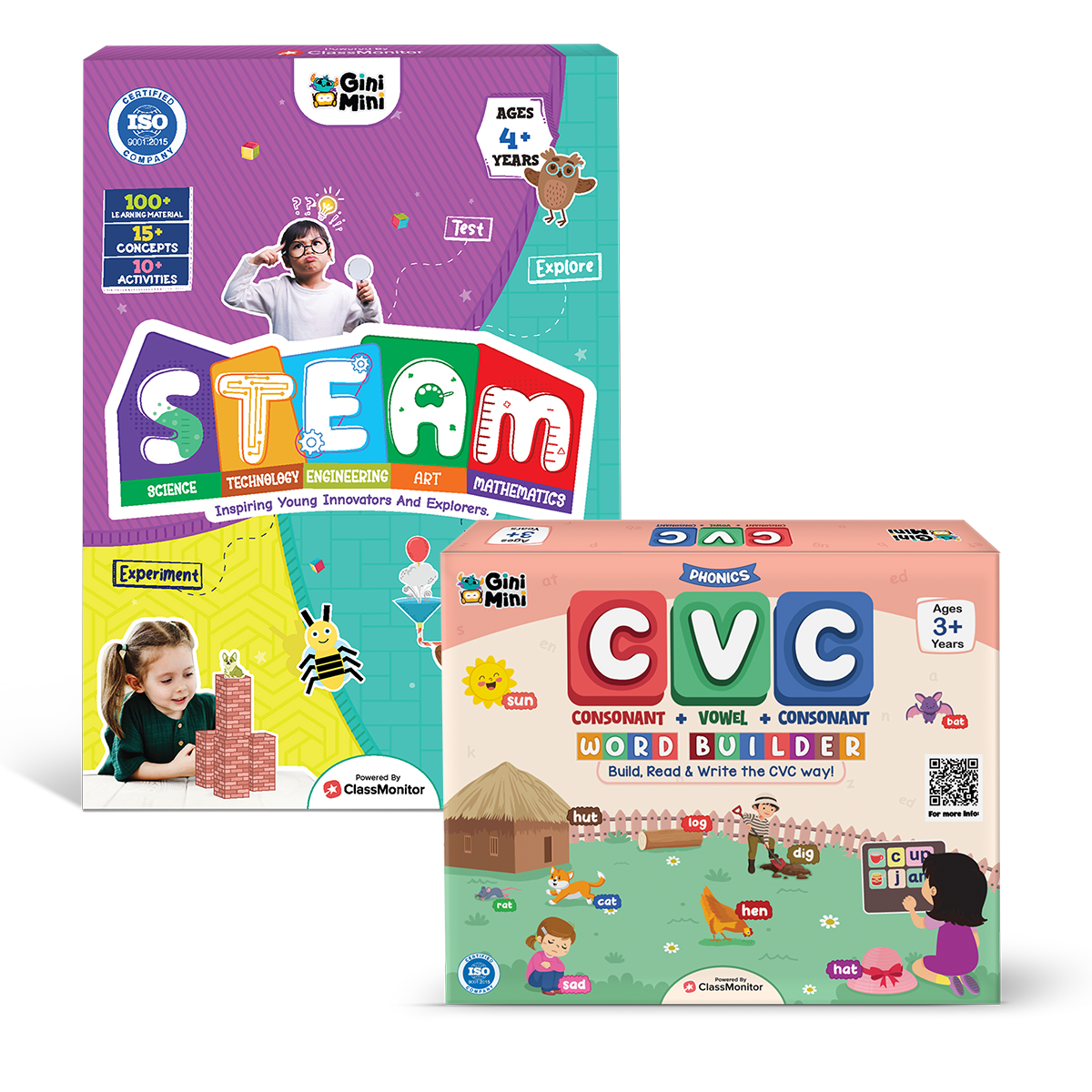
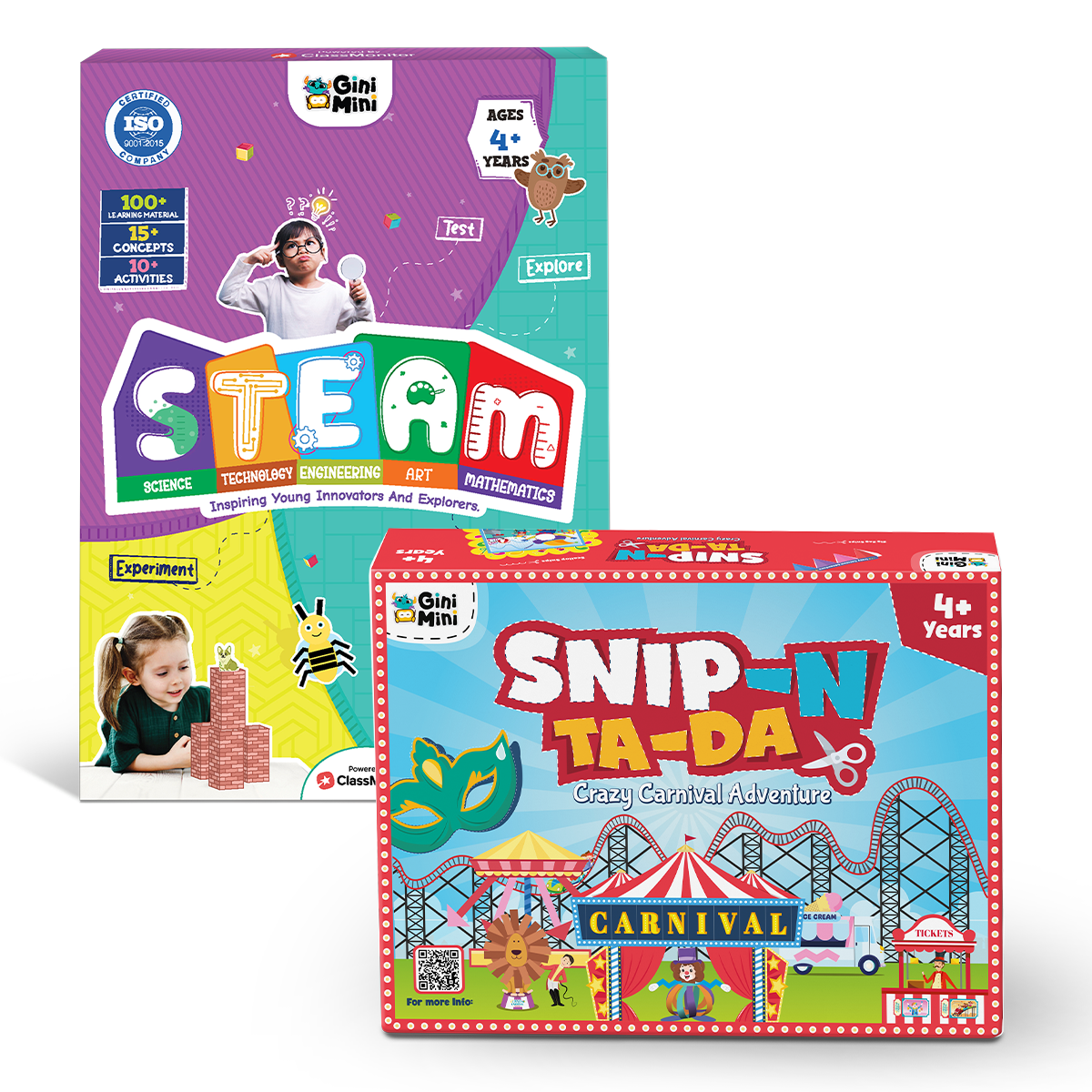
For children aged 4+, the GiniMini STEAM Kit offers hands-on activities across Science, Technology, Engineering, Art and Mathematics. It includes 100+ learning materials and activities that introduce concepts through exploration and experimentation.
These experiences encourage curiosity, observation, questioning and early scientific thinking.
How Do DIY Activities Benefit Children?
The value of DIY activities goes beyond keeping children occupied. When children make, build, draw, sort and experiment, they practise skills that are useful in everyday learning.
Creative projects encourage imagination and self-expression. Cutting, folding, drawing and shaping materials give children opportunities to practise fine motor coordination. Building challenges and treasure hunts encourage logical thinking and problem-solving, while storytelling activities support communication and language development.
DIY projects can also help children become more independent. When they choose their materials, decide how to complete an activity and find solutions when something doesn't work, they begin taking greater ownership of their play.
Most importantly, these experiences remind children that entertainment doesn't always need to come from a screen. They can create it themselves.
How Can Parents Make DIY Activities More Enjoyable?
The best DIY activity is not necessarily the most elaborate one. Start with your child's interests and choose something that matches their age and abilities. A two-year-old may enjoy sorting colours or exploring simple textures, while a six-year-old may prefer building a cardboard city or creating a storybook.
Keep materials ready in a small activity box so you don't have to prepare everything from scratch each time. Allow children to make choices, experiment and even change the original activity. Avoid focusing too much on the finished result. The process of exploring and creating is just as valuable.
It also helps to introduce one activity at a time rather than presenting too many options. Give children enough space to explore independently, while staying nearby to offer assistance when needed. For younger children, supervise activities involving scissors, small objects, water, clay or other craft materials.

Frequently Asked Questions
1. What are some easy DIY activities for kids at home?
Paper crafts, cardboard building, treasure hunts, drawing, clay modelling, storytelling and colour-sorting games are easy DIY activities for kids. Most can be organised using everyday household materials.
2. How can I keep my child busy without screens?
Offer interesting alternatives such as creative crafts, puzzles, indoor treasure hunts, pretend play, building challenges and hands-on learning games. Let children choose activities they enjoy so screen-free play feels exciting rather than forced.
3. Which DIY activities are suitable for children aged 2–5?
Younger children can enjoy colour sorting, simple drawing, supervised clay modelling, large-piece puzzles, sensory exploration and basic matching games. Choose activities according to your child's developmental stage and supervise them throughout.
4. What are the benefits of DIY activities for children?
DIY activities can encourage creativity, fine motor development, concentration, problem-solving, communication, independence and imagination. They also provide opportunities for children to learn through hands-on experiences.
5. Do I need expensive materials for DIY activities?
No. Many DIY activities use cardboard boxes, paper, crayons, reusable containers and other everyday household materials. A few versatile learning resources can also offer different ways to play without needing to buy new toys frequently.
6. Are educational activity kits a good alternative to screen time?
Yes. Hands-on activity kits can provide structured, screen-free opportunities to explore concepts through puzzles, crafts, games and experiments. Choose kits that match your child's age, interests and learning needs.
7. How much time should children spend on DIY activities?
There is no fixed duration. Younger children may prefer shorter activities, while older children may spend longer on projects that interest them. Follow your child's engagement rather than forcing them to complete an activity.
Recommended Blogs
If you are looking for more ideas to make everyday play interesting, explore these GiniMini articles:
How to Keep Kids Busy at Home With Fun Screen-Free Activities – Discover practical ways to keep children engaged with creative, educational and screen-free activities.
How to Make Screen-Free Activities Feel Exciting Again – Find ideas to make familiar activities more interesting through challenges, choices and imaginative play.
Discover Simple Ways to Reduce Screen Time for Kids Today – Explore practical ways to build balanced screen habits and introduce enjoyable offline alternatives.
Let Boredom Become the Beginning of Something Creative
The next time your child says, "I'm bored," you don't necessarily need to turn on the television or look for another toy. Sometimes, all they need is a little encouragement, a few everyday materials and the freedom to create something of their own.
A cardboard box can become a house, a sheet of paper can become a story and a handful of colours can become an entirely new world.
At GiniMini, we believe children learn through exploring, creating and playing. Our thoughtfully designed, screen-free learning kits and activities aim to make these experiences more engaging for growing minds.
Because sometimes the best thing a child can make is not just a craft or a game, but a new idea.
Explore more creative, hands-on and screen-free learning experiences at GiniMini.