
At 2 years old, children learn best through everyday experiences, exploration and hands-on play. The most important things a 2-year-old should be learning through play include recognising colours and shapes, developing language, improving coordination, exploring simple problem-solving and becoming more independent. Parents can encourage these skills through puzzles, pretend play, sorting games, storytelling, music and simple sensory activities at home.
Is Your 2-Year-Old Learning Enough?
If you have a 2-year-old at home, you have probably wondered whether your child is learning everything they should at this age. Perhaps you see other children recognising colours, naming objects, completing puzzles or speaking in short sentences, and you start questioning whether your little one is progressing at the right pace.
It is natural to think about your child's early education, but learning at this age looks very different from formal classroom learning. A toddler does not need hours of structured lessons, worksheets or academic exercises. They need opportunities to explore, experiment, communicate and discover things through everyday experiences.
A simple activity like stacking blocks, sorting toys, looking through a picture book or pretending to cook can introduce valuable learning experiences. Let's understand what a 2-year-old should actually be learning through play and how parents can encourage these skills at home.
Why Is Play Important for a 2-Year-Old?
The first few years of childhood are an important period for developing foundational skills. At age two, children are curious about their surroundings and increasingly interested in understanding how things work.
Play allows them to explore these ideas naturally. When a toddler puts objects into a container, builds a tower or tries to fit a puzzle piece, they are experimenting, making decisions and learning through trial and error.
According to the National Association for the Education of Young Children (NAEYC), play gives toddlers opportunities to explore materials, test ideas and understand cause and effect. It also allows adults to support learning by encouraging curiosity and introducing small challenges.
The goal is not to teach children everything at once. It is to provide meaningful experiences that support their development at their own pace.
What Should a 2-Year-Old Actually Be Learning Through Play?
A 2-year-old should have opportunities to develop several foundational skills through simple, enjoyable activities. Here are the important areas parents can focus on.
1. Language and Communication Skills
At this age, children are gradually learning to express their thoughts, understand instructions and communicate their needs. Talking, singing, storytelling and looking at picture books can create opportunities for language development.
Try looking at an animal picture book together. Instead of simply reading the names, point to an animal and ask, "Where is the elephant?" Encourage your child to identify familiar objects, imitate animal sounds or name pictures.
You can also describe everyday activities. For example, while preparing food, say, "We are cutting an apple" or "Let's put the cup on the table."
These simple conversations introduce new vocabulary and help children connect words with objects and experiences.

Skills supported: Vocabulary, listening, communication, comprehension and early language development.
2. Colour, Shape and Object Recognition
Two-year-olds are beginning to notice similarities and differences between objects. Sorting and matching games can introduce early concepts such as colours, shapes, sizes and categories.
Give your child a few large, colourful objects and ask them to place similar colours together. You can also introduce simple shape-matching activities using large circles, squares and triangles.
For example, while playing with building blocks, say, "Can you find another red block?" or "Let's put the round one here."
Keep the activity playful rather than expecting your child to identify every colour or shape correctly.

Skills supported: Visual recognition, observation, classification, early mathematical thinking and attention.
3. Fine Motor Skills and Hand Coordination
Fine motor skills involve using the small muscles in the hands and fingers. These skills are important for everyday activities such as holding a spoon, turning book pages, picking up objects and eventually developing early writing movements.
Offer large building blocks, chunky crayons, simple puzzles and supervised play materials that encourage children to grasp, release, stack and arrange objects.

A simple activity is transferring large, safe objects from one container to another using their hands or a large spoon. You can also encourage your child to make marks on paper using washable, non-toxic crayons.
Skills supported: Hand-eye coordination, finger control, object manipulation and early independence.
4. Problem-Solving and Logical Thinking
Problem-solving begins with small everyday challenges. When a child tries to fit a shape into the correct opening, open a container or stack blocks without making them fall, they are learning to experiment and adjust their actions.
Try giving your toddler a simple shape puzzle or a set of large stacking blocks. Allow them to explore before showing them how everything works.
If a piece does not fit, ask, "Shall we try turning it?" rather than immediately completing the activity for them.
These experiences introduce the idea that trying a different approach can help solve a problem.

Skills supported: Logical thinking, observation, experimentation, persistence and early problem-solving.
5. Sensory Exploration
Toddlers learn a great deal by exploring different textures, sounds, movements and materials. Sensory play gives them opportunities to touch, squeeze, pour, listen and observe.
Try supervised water play using a shallow container, large cups and a sponge. Let your child pour water from one container into another while exploring what happens.
You can also introduce playdough designed for the appropriate age, textured fabric books or simple sound-based games.
Always supervise closely, use age-appropriate materials and avoid small objects or materials that could pose choking or ingestion risks.

Skills supported: Sensory awareness, curiosity, hand coordination, exploration and observation.
6. Pretend Play and Imagination
Pretend play helps children explore familiar situations and begin understanding the world around them.
Give your child a doll, soft toy, toy kitchen set or pretend food. Encourage them to feed a teddy bear, prepare imaginary meals or pretend to talk to a toy animal.
You can participate by asking, "Is teddy hungry?" or "What should we cook today?"
Rather than directing every step, allow your child to create their own little story.

Skills supported: Imagination, language, emotional expression, social understanding and creative thinking.
7. Movement, Balance and Physical Coordination
Learning through play is not limited to sitting at a table. Toddlers also need opportunities to move, climb safely, walk, run, kick and explore their surroundings.
Play simple movement games such as rolling a ball towards each other, kicking a soft ball or walking along a clear path.
You can also sing action songs that encourage children to clap, jump, stretch and move their bodies.
These experiences make physical development enjoyable while helping children become more aware of their movements.

Skills supported: Gross motor coordination, balance, body awareness and physical confidence.
How Can Parents Support Learning at Different Ages?
Children develop at different rates, so activities should be adjusted according to their abilities rather than following a strict academic timetable.
For children aged 0–2, focus on sensory exploration, movement, interaction, familiar sounds and simple object play. For ages 2–3, introduce basic matching, sorting, pretend play, picture books and simple puzzles. Between 3–4, children can gradually explore more complex matching activities, creative projects and early counting games.
The important thing is to let children progress naturally. Avoid comparing your child's abilities with those of other children or expecting every skill to develop at the same time.
How Does Learning Through Play Benefit a 2-Year-Old?
Play brings different areas of development together. A simple sorting activity, for example, can encourage observation, language, hand coordination and early mathematical thinking at the same time.
Regular opportunities for meaningful play can support:
Cognitive development: Children begin recognising patterns, understanding relationships and exploring cause and effect.
Language development: Conversations, songs and stories introduce vocabulary and encourage communication.
Physical development: Building, stacking, drawing and movement activities help develop coordination.
Social and emotional development: Pretend play and shared activities introduce turn-taking, emotional expression and interaction.
Independence: Everyday activities encourage children to make simple choices, explore solutions and participate in routines.
These skills develop gradually through repeated experiences, interaction and opportunities to explore.
Expert Tips for Parents: Making Play More Meaningful
You do not need an elaborate activity plan to support your toddler's learning. Start by including small opportunities for exploration in everyday routines.
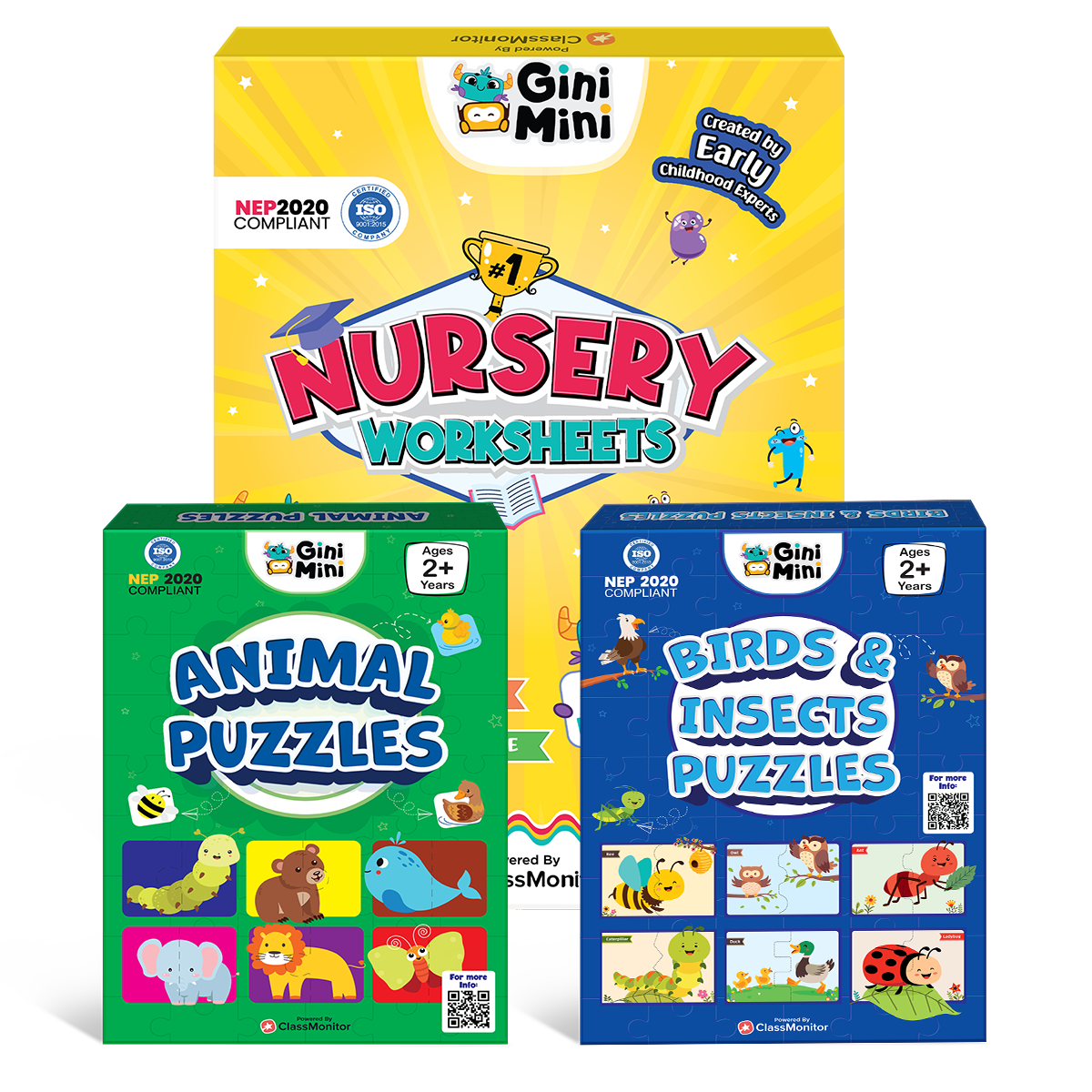
First, follow your child's interests. If your toddler enjoys animals, introduce animal puzzles, picture books and animal sounds. Second, keep activities short and flexible. Young children may move between activities quickly, and that is perfectly normal.
Third, ask simple, open-ended questions instead of constantly giving instructions. Questions such as "What do you see?" or "Where should this go?" encourage children to observe and respond.
Fourth, allow your child to try independently before stepping in. Offer support when needed, but avoid completing every activity for them.
Finally, prioritise interaction over perfect results. A child does not need to complete a puzzle or identify every colour correctly for the activity to be meaningful.

How Does GiniMini Support Learning Through Play?
At GiniMini, the focus is on making early learning engaging through hands-on, play-based experiences. The right learning resources can give toddlers opportunities to explore colours, shapes, textures, language and simple problem-solving without turning playtime into formal lessons.
One relevant option is the GiniMini 10-in-One Toddler Busy Box, designed for children aged 18 months and above. It includes activities such as playdough fun cards, first-word flashcards, colour and shape matching, animal matching, lacing activities, storybooks and counting play.
These activities offer different ways for parents and toddlers to explore early learning concepts together. Parents can introduce one activity at a time and adapt the experience according to their child's interests and abilities.
Explore the GiniMini 10-in-One Toddler Busy Box to discover a hands-on play-and-learn resource for early childhood.
Frequently Asked Questions (FAQs)
What should a 2-year-old be learning?
A 2-year-old can explore language, object recognition, simple problem-solving, movement, pretend play, sensory experiences and basic independence through everyday activities.
What are the best learning activities for a 2-year-old at home?
Picture-book reading, stacking blocks, sorting large objects, simple puzzles, pretend play, music and supervised sensory activities are useful options for toddlers.
How can I improve my 2-year-old's brain development through play?
Encourage conversations, storytelling, exploration, movement and hands-on activities. Give your child opportunities to make choices, experiment and discover how things work.
Should a 2-year-old start learning numbers and alphabets?
Children can become familiar with numbers, letters and sounds through songs, books and everyday interactions. However, formal reading and writing lessons are not necessary at this age.
How much should a 2-year-old play each day?
Play should be a regular part of a toddler's daily routine, including active movement, independent exploration and interaction with adults. Rather than following a rigid lesson schedule, offer varied opportunities throughout the day.
Are educational toys useful for 2-year-olds?
Yes. Age-appropriate educational toys can encourage exploration, coordination, matching, language and problem-solving. Choose safe, simple toys that allow children to interact and experiment.
Recommended GiniMini Blogs
Let Your Toddler Learn Through Everyday Play
At two years old, learning does not have to look like a classroom lesson. It can happen while stacking blocks, turning book pages, sorting toys, exploring textures or pretending to cook.
Give your child opportunities to explore, communicate, move and experiment. Be present, offer encouragement and allow them the freedom to discover things at their own pace.
At GiniMini, we believe that meaningful learning begins with curiosity and grows through play. Sometimes, the simplest moments of play become the most valuable learning experiences.