
Play-based learning gives children the freedom to explore, make choices, test ideas, and learn from mistakes. Discover how play teaches problem-solving skills in children and how simple games, puzzles, building activities, and everyday challenges can encourage independent thinking.
“Can you do it for me?” is something parents hear often. Whether a puzzle piece will not fit, a tower keeps falling, or a child cannot decide how to complete a game, the natural instinct is to step in and help. But what if these small struggles are actually valuable learning opportunities?
Children develop problem-solving skills through play because play gives them a safe space to experiment. They can try something, see what happens, change their approach, and try again. Unlike activities where there is only one correct answer, open-ended play allows children to discover different ways of reaching a goal.
At GiniMini, play is viewed as an opportunity for children to stay curious, engaged, and actively involved in their learning. The brand focuses on hands-on activities that support skills such as creativity, critical thinking, and problem-solving.
Why Is Independent Problem-Solving Important for Children?
Independent problem-solving in children is more than finding the right answer. It involves observing a situation, understanding what needs to be done, thinking about possible solutions, making a choice, and learning from the result.
When children regularly experience these steps during play, they begin to understand that a difficult task does not always require an adult to solve it for them. A failed attempt can become information: “That didn't work, so what could I change?”
This mindset can support confidence, persistence, logical thinking, decision-making, creativity, and independent learning. GiniMini's approach similarly emphasizes hands-on activities, curiosity, creativity, critical thinking, and problem-solving as part of holistic development.
How Does Play Teach Children to Solve Problems Independently?
The best problem-solving activities for kids do not necessarily look like lessons. They can be puzzles, games, construction challenges, pretend play, sorting activities, or simple household challenges. The important part is that the child has something to figure out.
1. Puzzles Teach Children to Try, Adjust, and Try Again
A puzzle naturally creates a problem: the child has to determine where each piece belongs. They observe shapes, colours, images, and patterns before making a choice.
When a piece does not fit, children receive immediate feedback. Instead of simply telling them where it goes, parents can ask, “What do you notice about this piece?” or “Where else could it fit?”

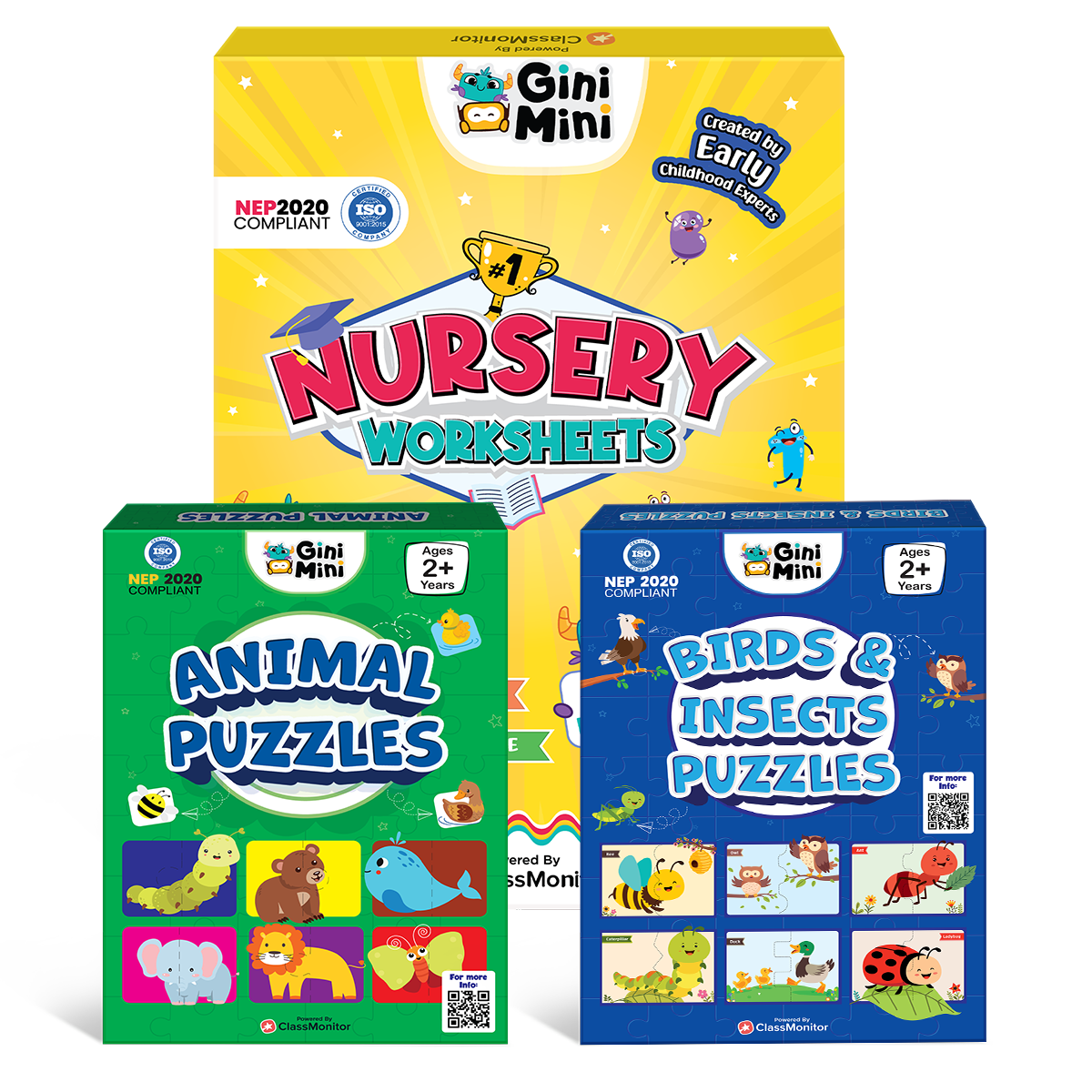
This encourages logical thinking and problem-solving for kids while also supporting observation, patience, and spatial awareness. GiniMini offers puzzles and image-based activities as part of its learning range, including Jungle Jumble, a 3-in-1 puzzle and guessing activity.
2. Building Activities Encourage Children to Think Like Problem-Solvers
Give a child some blocks and a simple challenge such as, “Can you build a bridge that stays up?” Suddenly, play becomes a design problem.
The child needs to decide what to build, choose materials, test the structure, notice what goes wrong, and modify the design. If the structure falls, the process starts again with new information.

This kind of learning through play helps children experience planning, experimentation, creativity, and persistence without making the activity feel like formal instruction.
3. Games Help Children Make Decisions
Games introduce small but meaningful decisions. A child may need to choose which card to pick, where to place a piece, what question to ask, or which move to make next.
These moments help children practise thinking before acting. They also learn that different choices can lead to different outcomes.
For example, GiniMini's Who Am I? guessing game involves asking questions and solving clues, while its Mind & Memory game focuses on matching, observation, logical thinking, and problem-solving.
4. Pretend Play Turns Everyday Situations Into Problems to Solve
Pretend play is another powerful form of problem-solving play for children. When children pretend to be doctors, shopkeepers, teachers, chefs, or explorers, they create situations that require decisions.

A child playing “doctor” may decide how to help a teddy bear. A child playing “shopkeeper” may need to organise pretend food or calculate what a customer needs. There may not be one predetermined solution, which gives children room to think creatively.
The value lies in allowing children to lead the story instead of constantly directing the play.
5. Sorting and Matching Activities Build Logical Thinking
Sorting may look simple, but it requires children to identify similarities and differences and create categories.
Ask your child to sort household objects by colour, size, shape, or purpose. Then change the question: “Can you find another way to sort them?”

This small variation encourages flexible thinking. Children discover that the same group of objects can sometimes be organised in more than one way, an important foundation for critical thinking and problem-solving skills.
6. “What Would You Do?” Questions Encourage Independent Thinking
Parents do not always need to provide physical materials to create a problem-solving activity. Everyday conversations can become opportunities for thinking.
Ask questions such as, “What could we do if the toy is stuck?” “How can we make the tower stronger?” or “What could we try differently?”
The goal is not to test the child. It is to give them time to think aloud. Instead of immediately correcting their idea, encourage them to explain why they chose it.
7. STEAM Activities Make Problem-Solving Hands-On
STEAM activities combine creativity with exploration, experimentation, and practical challenges. Children can build, test, observe, redesign, and discuss what happened.
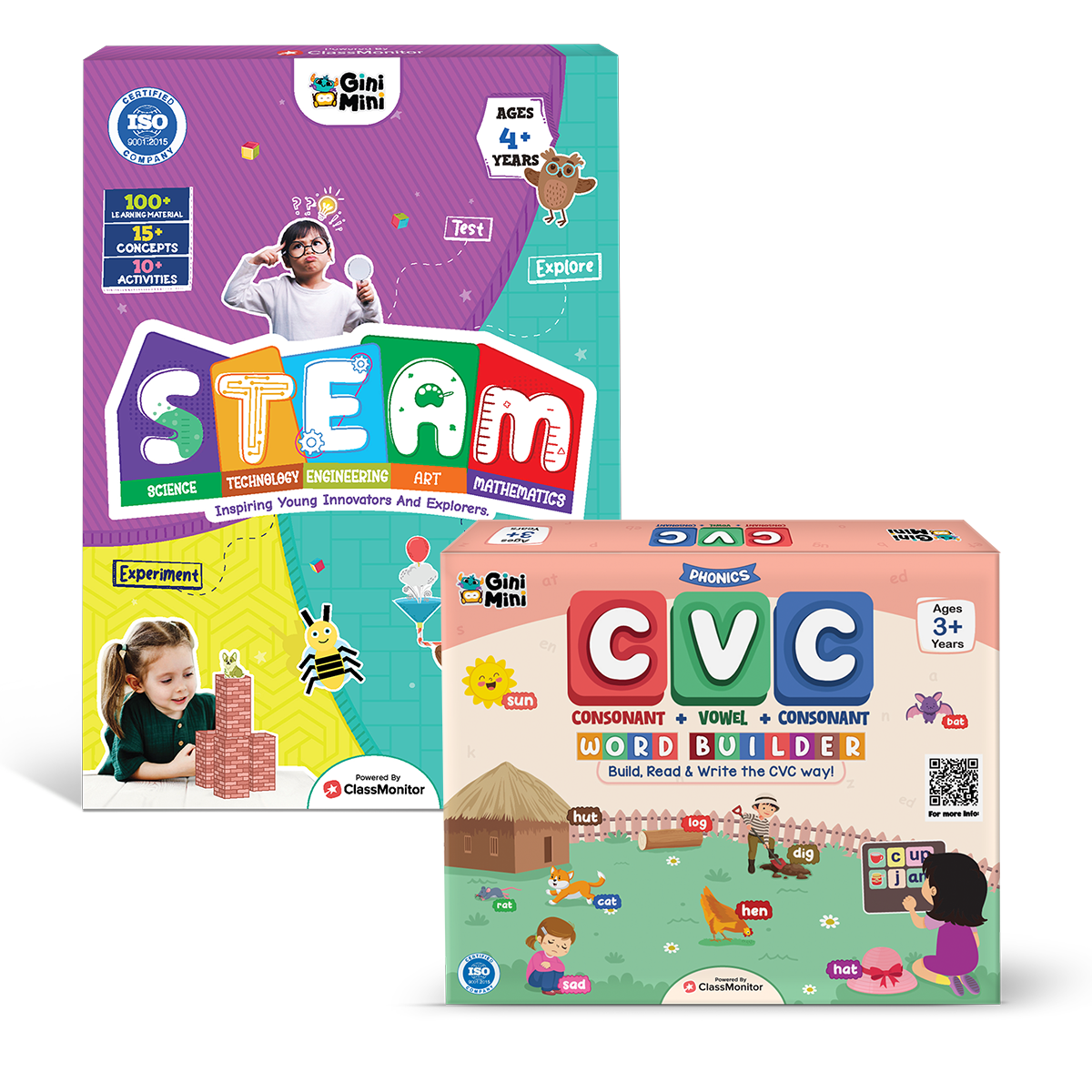
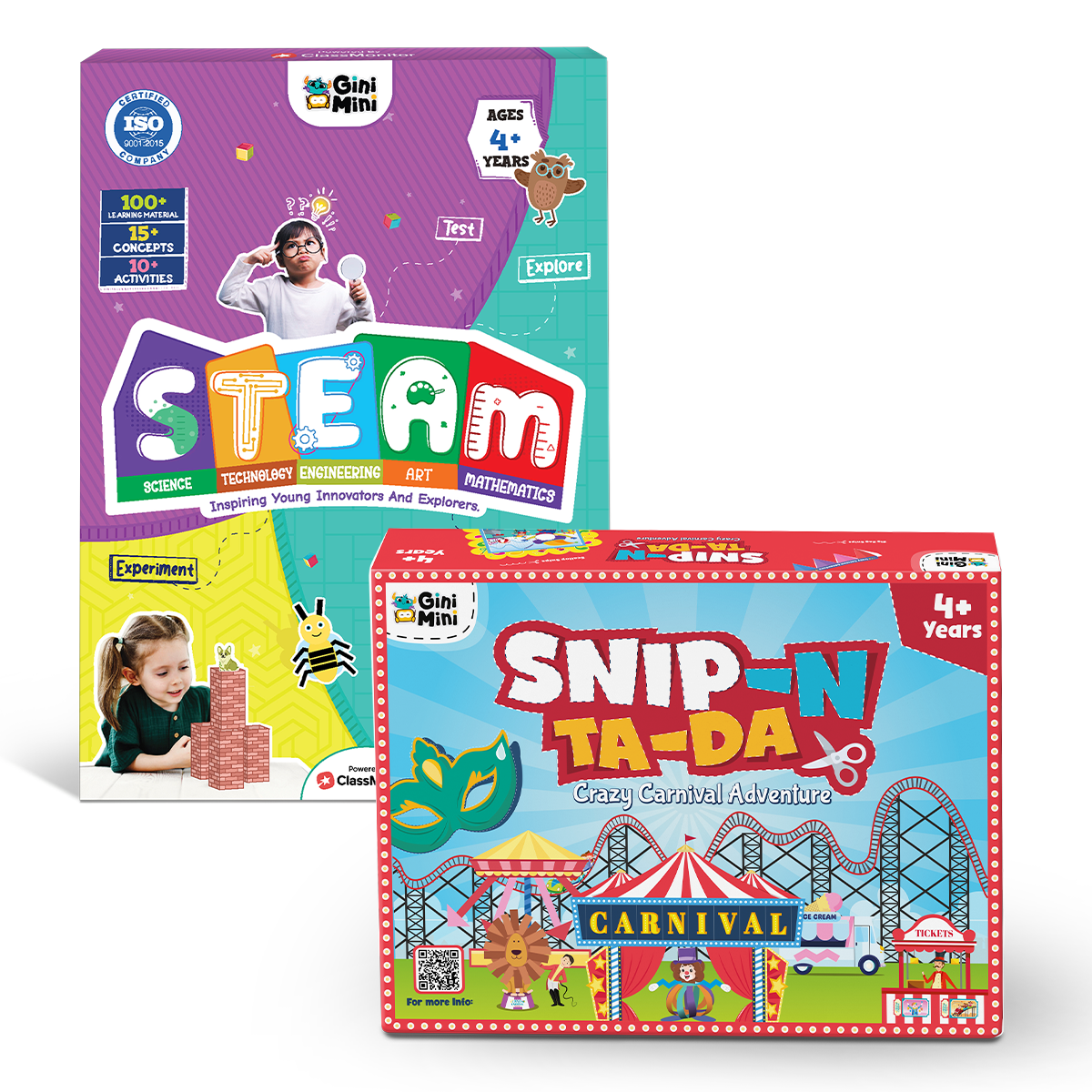
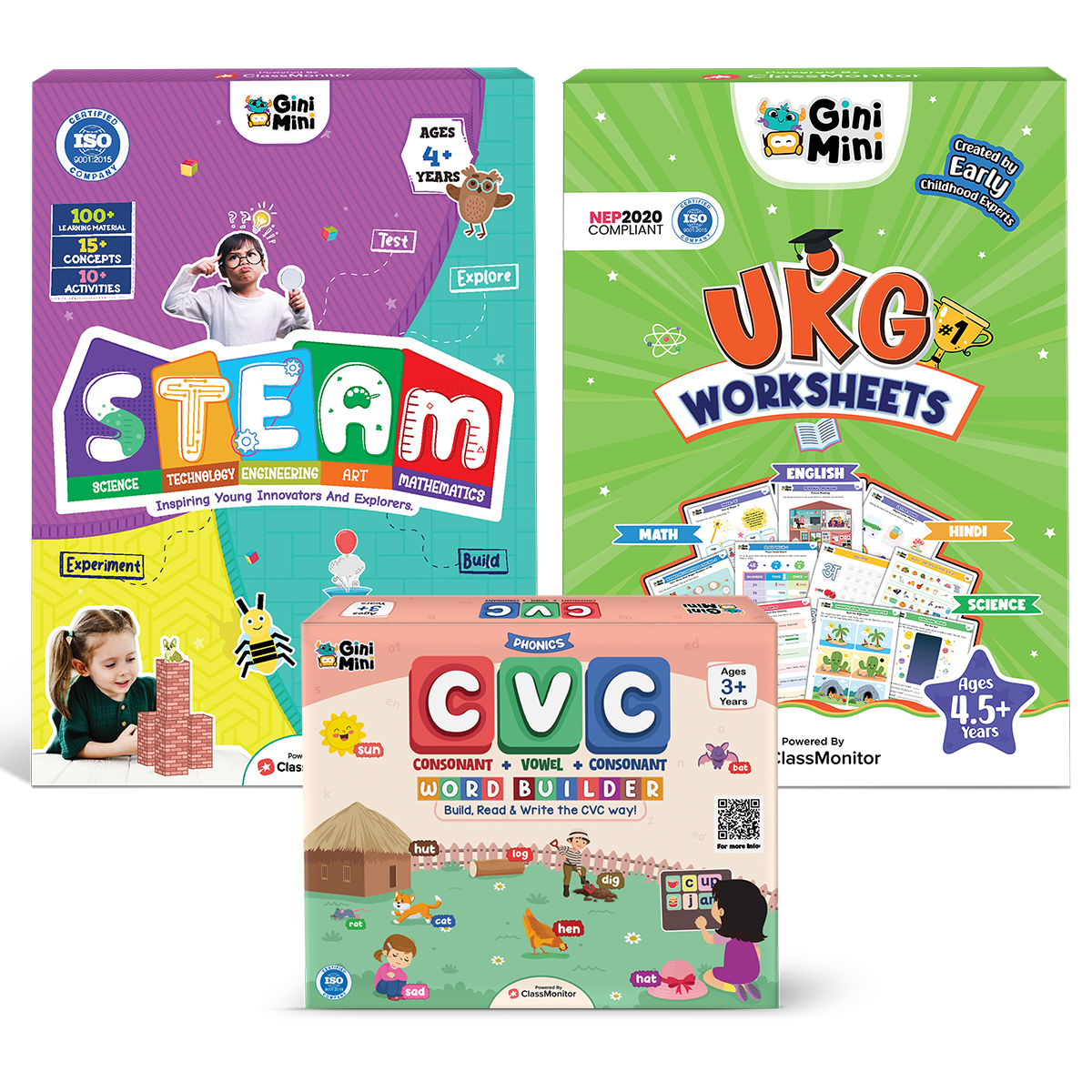
GiniMini's STEAM Kit is designed for children aged 4+ and includes hands-on activities and materials around concepts such as planning and design, scientific inquiry, mathematical thinking, questioning, reflection, creativity, and early engineering.

These experiences show children that solving a problem can involve several attempts rather than one immediate answer.
How Does Play Benefit Children's Problem-Solving Skills?
Play gives children repeated opportunities to move through a natural problem-solving cycle: notice → think → try → observe → adjust → try again.
Over time, this can help children become more comfortable with challenges. They begin to understand that mistakes are part of the process rather than something to avoid.
Play can also support related skills such as decision-making, logical thinking, creativity, observation, patience, communication, and independent learning. For example, GiniMini's Spot & Fix game specifically focuses on observation, logical thinking, problem-solving, attention, hand-eye coordination, turn-taking, and patience.
The important point for parents is that independence does not mean leaving a child completely alone. It means giving them an appropriate amount of space to think before stepping in.
How Can Parents Encourage Independent Problem-Solving Through Play?

Give Hints Instead of Answers
When your child is stuck, resist the urge to immediately solve the problem. Offer a small clue instead. Questions such as “What have you tried?” or “What could you change?” keep the thinking with the child.
Let Children Experience Small Failures
A fallen block tower or incorrectly matched puzzle piece is not necessarily a failure. It is feedback. Allowing children to experience manageable mistakes helps them understand that they can adjust their approach and try again.
Choose Open-Ended Activities
Look for activities that allow children to make choices rather than simply follow instructions. Building, pretend play, drawing, sorting, puzzles, and creative challenges can all create opportunities for independent thinking.
Celebrate the Process
Instead of focusing only on whether the child got the correct answer, notice the thinking behind it. Say, “You tried another way when that didn't work,” or “You noticed that the pieces were different sizes.”
This teaches children that persistence and thinking are valuable outcomes of play.
Recommended GiniMini Reads
For parents who want to explore more about learning through play, these GiniMini articles are useful next reads:
- Can a Simple Game Really Make Kids Better Thinkers? — explores how games can encourage critical thinking, decision-making, and problem-solving.
- One Box, Five Skills: What Can a Simple Activity Kit Actually Teach? — looks at how hands-on activities can develop multiple skills through play.
- The Difference Between Keeping Kids Busy and Helping Them Learn — explores the difference between simply occupying children and creating meaningful learning experiences.
FAQs
What is problem-solving through play?
Problem-solving through play happens when children encounter a challenge during an activity and work out how to overcome it. They may experiment, make decisions, test ideas, make mistakes, and try again.
How does play develop problem-solving skills in children?
Play gives children opportunities to observe, plan, make choices, test solutions, and adjust their approach. Puzzles, building activities, games, sorting, pretend play, and STEAM activities can all provide these experiences.
How can I encourage my child to solve problems independently?
Give your child time to think before helping. Ask guiding questions such as “What could you try?” or “What happened when you tried that?” Rather than providing the answer immediately, offer small hints when necessary.
What are the best problem-solving activities for kids?
Puzzles, construction challenges, matching and sorting games, guessing games, pretend play, and hands-on STEAM activities are useful options. The best activity is one that gives the child an achievable challenge and freedom to explore different solutions.
Does independent play help children develop problem-solving skills?
Yes. When children have opportunities to direct their own play, they can make choices, experiment, create solutions, and manage small challenges. Independent play works particularly well when the environment provides safe, age-appropriate activities with room for exploration.
Children do not need every problem solved for them. Sometimes, the most valuable thing a parent can do is pause and give them a little more time to figure it out.
Through play-based learning, children can practise observing, thinking, experimenting, making decisions, and trying again. A puzzle that does not fit, a tower that falls, or a game that requires a new strategy can become a small lesson in independent thinking.
At GiniMini, the idea is simple: when children get the freedom to explore, play becomes a powerful pathway to learning, creativity, and problem-solving. GiniMini's product range is built around hands-on, engaging experiences designed to support children's curiosity and essential developmental skills.