
A child's first drawing may look like a collection of random lines. Their first clay model may not resemble anything recognisable, and their first craft project may turn out differently from what they imagined. That's perfectly fine. Process art for kids is about exploring, experimenting and expressing ideas rather than creating a perfect final result. When parents focus on effort instead of appearance, children get more opportunities to develop creativity, confidence and independent thinking.
Why Do Parents Need to Focus on the Learning Process Instead of the Final Result?
Imagine your child proudly showing you a drawing. You look at it and see uneven circles, unusual colours and shapes that are difficult to identify. Your first instinct might be to show them how to make it look better.
But consider another possibility: your child has been experimenting with colours, practising how to hold a crayon and turning an idea into something they can see.
Young children are still discovering how materials work and how to communicate their ideas. Their early attempts will naturally look different from an adult's expectations. When we correct every uneven line or try to make every activity look perfect, children may begin to worry more about getting things right than enjoying the experience.
This is why parents should make room for trial and error. A child's first attempt does not need to be beautiful. It needs to be an opportunity to explore.

Why Is Process Art Important for Children?
Process art is a creative approach in which children explore materials and make their own choices without following a fixed example or aiming for a predetermined result. The experience of creating matters more than what the finished artwork looks like.
According to the National Association for the Education of Young Children (NAEYC), process-focused art gives children opportunities to explore materials, express ideas and create original work. These experiences can support physical, language, cognitive and social-emotional development.
For example, when a child uses clay, they are not simply making shapes. They are squeezing, rolling, pressing and experimenting with texture. When they paint, they may discover how colours mix or how different tools create different marks.
The important part is that children get to make choices and discover what happens next.

What Are the Best Activities to Help Children Enjoy the Learning Process?
The best creative activities are those that allow children to experiment without worrying about whether the result looks perfect. Here are some simple activities parents can introduce at home.
1. Free Drawing and Colour Exploration

Suitable age: 2–8 years
Give your child blank paper, crayons, washable markers or age-appropriate colouring materials. Instead of asking them to draw a specific object, invite them to create anything they like.
They might draw colourful circles, unusual patterns or an imaginary animal. Let them choose the colours and decide when their picture is finished.
This activity encourages creativity, visual expression, hand control and imagination. Try asking, "Can you tell me about your picture?" rather than guessing what it is supposed to represent.
2. Playdough and Clay Creations

Suitable age: 3–6 years
Provide child-safe playdough or modelling clay and invite your child to roll, press, pinch and shape it. They could make pretend food, animals, shapes or completely imaginary creations.
There is no need to demonstrate a perfect model. Let your child discover what happens when they combine different shapes or change the size of a creation.
This activity gives children opportunities to practise fine motor movements, explore textures, recognise shapes and use their imagination.
Parent tip: Ask, "What else could you make with this?" instead of showing them exactly what to create.
3. Open-Ended Collage Making

Suitable age: 3–8 years
Collect large pieces of coloured paper, tissue paper, child-safe glue and pre-cut shapes. Invite your child to arrange and stick the materials on a sheet of paper to make their own collage.
They may create a colourful pattern, an imaginary landscape or an arrangement that has no obvious meaning. Let them decide.
Collage activities encourage visual exploration, creativity, decision-making and hand-eye coordination. For younger children, prepare larger pieces in advance and supervise the activity closely.
4. Build, Test and Rebuild

Suitable age: 2–8 years
Offer age-appropriate building blocks, stacking pieces or construction materials. Give your child a simple challenge, such as building a tall tower or making a bridge.
If the structure falls, resist the urge to rebuild it for them. Ask what they might change and let them try another arrangement.
This activity encourages spatial awareness, problem-solving, logical thinking and persistence. It also helps children understand that an unsuccessful attempt can provide useful information for the next one.
5. Explore Colours and Textures

Suitable age: 0–4 years, with age-appropriate materials and adult supervision
For babies and younger toddlers, introduce safe sensory experiences using large, non-toxic, age-appropriate materials. They can explore different textures, colours and surfaces with their hands.
Older toddlers can experiment with washable paints, textured rollers or large sensory objects under supervision.
These experiences encourage sensory exploration, observation and early vocabulary. Talk about what your child is experiencing: "This feels soft," "That colour is bright," or "You made a big mark."
How Can Parents Encourage Children at Different Ages?
Children explore and create differently as they grow. Choose activities according to their abilities, interests and developmental stage.
Ages 0–2: Focus on safe sensory exploration. Offer age-appropriate textures, colours and objects that are too large to swallow. Stay close and follow your baby's interest rather than expecting a finished creation.
Ages 2–4: Introduce simple drawing, stacking, sorting, playdough and large-shape activities. Let toddlers repeat actions and explore materials at their own pace.
Ages 4–6: Offer clay, collage, painting, puzzles and building challenges. Encourage children to make decisions, experiment with different approaches and explain their ideas.
Ages 6–8: Introduce more detailed creative projects, construction challenges, origami and open-ended problem-solving activities. Encourage children to plan, test ideas and make changes independently.
Remember that these are broad age suggestions, not strict milestones. Every child develops at their own pace.
How Does Trying Again Support Children's Development?
When children are allowed to experiment without constant correction, they get opportunities to practise several important skills.
Creativity and imagination: Children learn to explore different possibilities and express original ideas rather than simply copying an example.
Problem-solving and logical thinking: When something does not work, children can observe what happened, consider alternatives and try a different approach.
Fine motor development: Activities such as drawing, folding, moulding clay and arranging small, age-appropriate pieces involve controlled hand and finger movements.
Language development: Talking about colours, textures, shapes and ideas introduces vocabulary and encourages children to describe their experiences.
Confidence and independence: Making choices and completing manageable challenges can help children feel more involved in their learning.
These benefits do not appear automatically with every activity. They depend on the child's experience, the materials provided and the support they receive.

Expert Tips for Parents: How to Respond When Your Child's Work Doesn't Look Perfect
-
Praise the effort, not just the result. Try saying, "You kept experimenting with different colours," instead of only saying, "What a beautiful picture!"
-
Avoid correcting every detail. If your child draws an unusual-looking house, let it be their version. Not every creation needs improvement.
-
Ask open-ended questions. Questions such as "What were you thinking when you made this?" encourage children to explain their ideas.
-
Let children make mistakes. If a tower falls or a clay shape breaks, give them time to decide what to do next.
-
Offer choices. Let your child select the colours, materials or activity they want to explore.
-
Display their work without comparing. Celebrate their individual creations rather than comparing them with another child's drawing or a picture online.
How Does GiniMini Support Learning Through Play?
Children benefit from learning resources that give them opportunities to touch, create, experiment and explore. GiniMini offers hands-on activity kits designed to make learning playful and engaging.
Here are a few resources that can support creative exploration:
-
Clay-O-Pedia (ages 3–6): A 12-in-1 clay activity kit with hands-on games that introduce creativity, fine motor practice, colours and early maths concepts.
-
Tiny Prints & The Magical Journey (ages 3–5): A story-based art and craft kit with activity sheets, paints, stickers and scrapbook materials for creative expression.
-
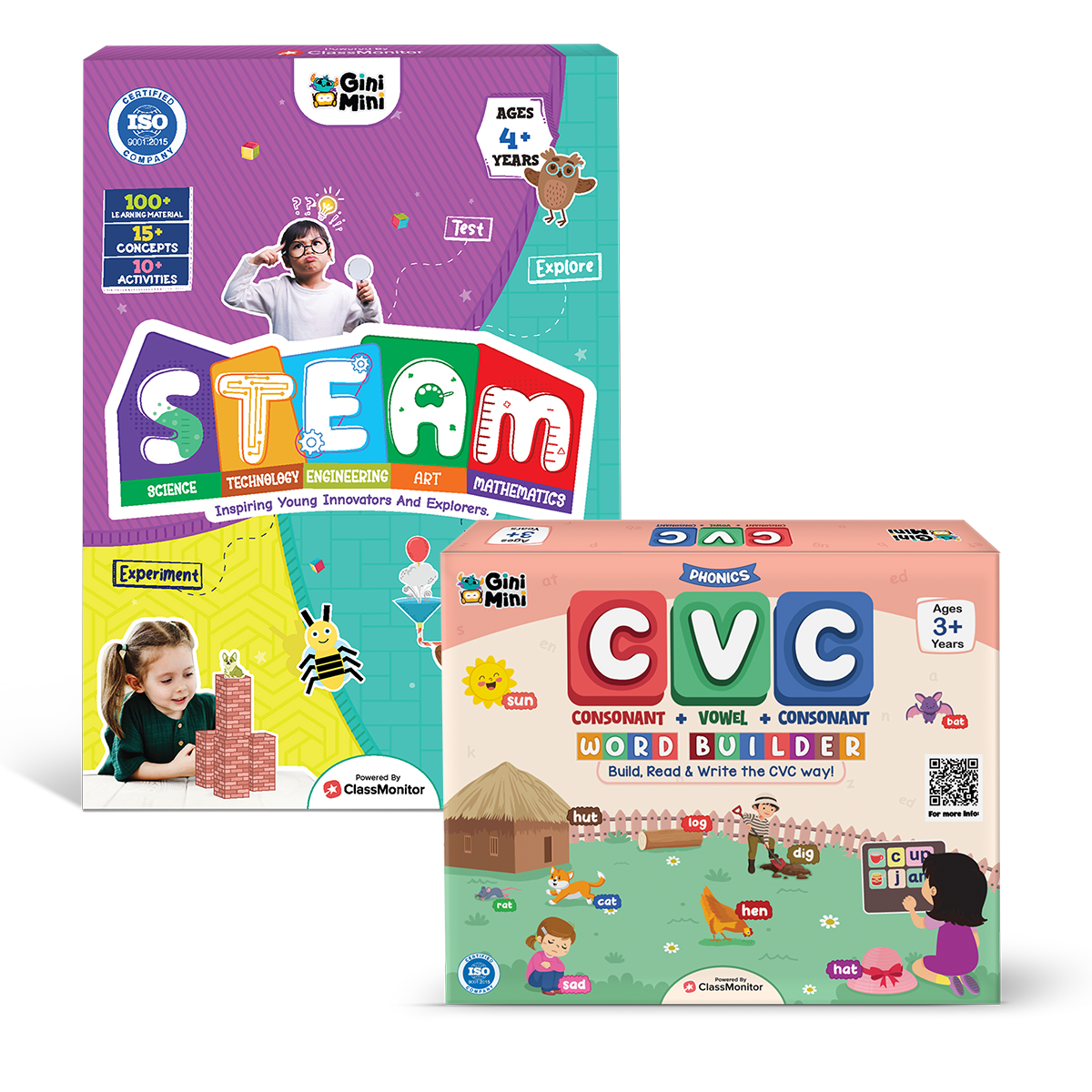
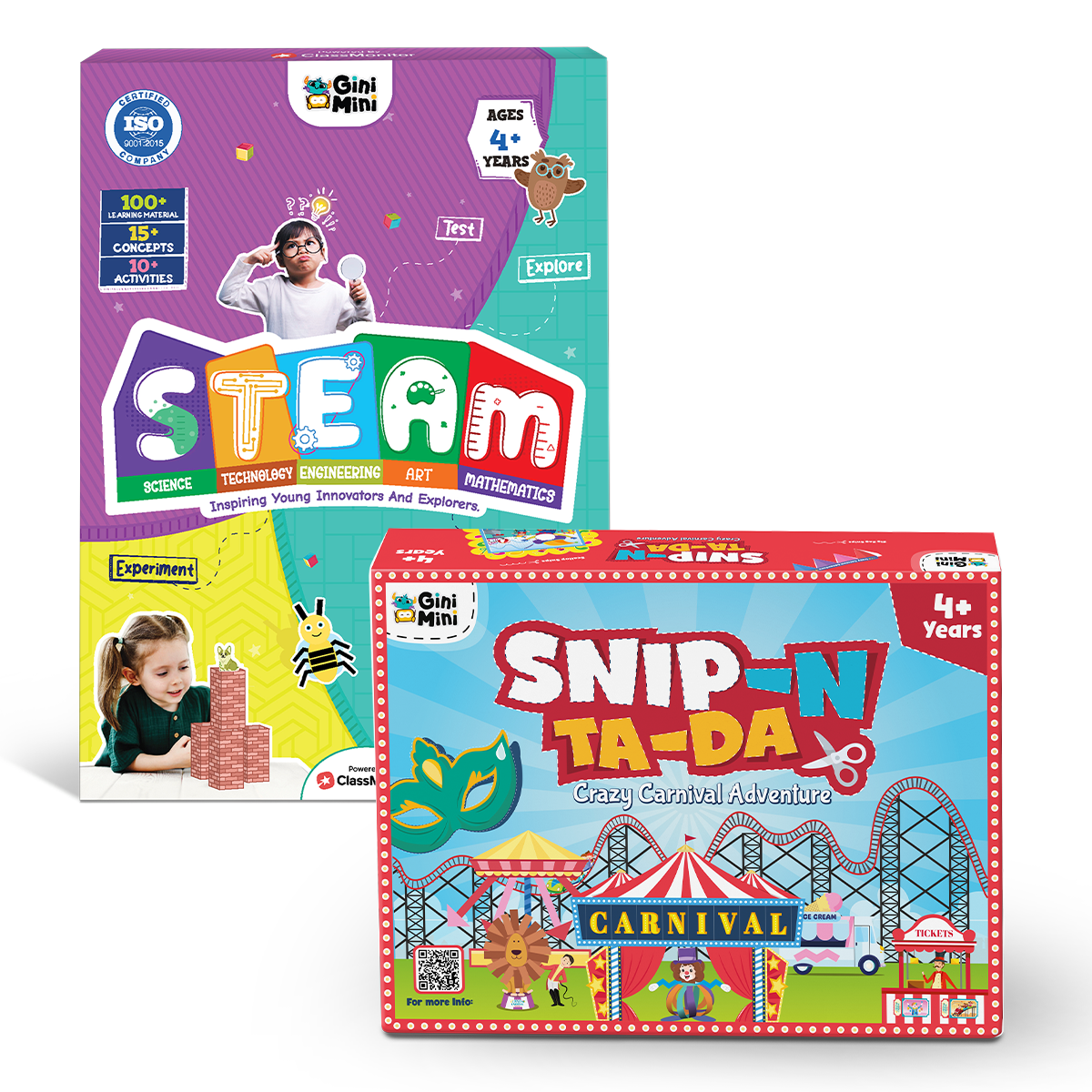
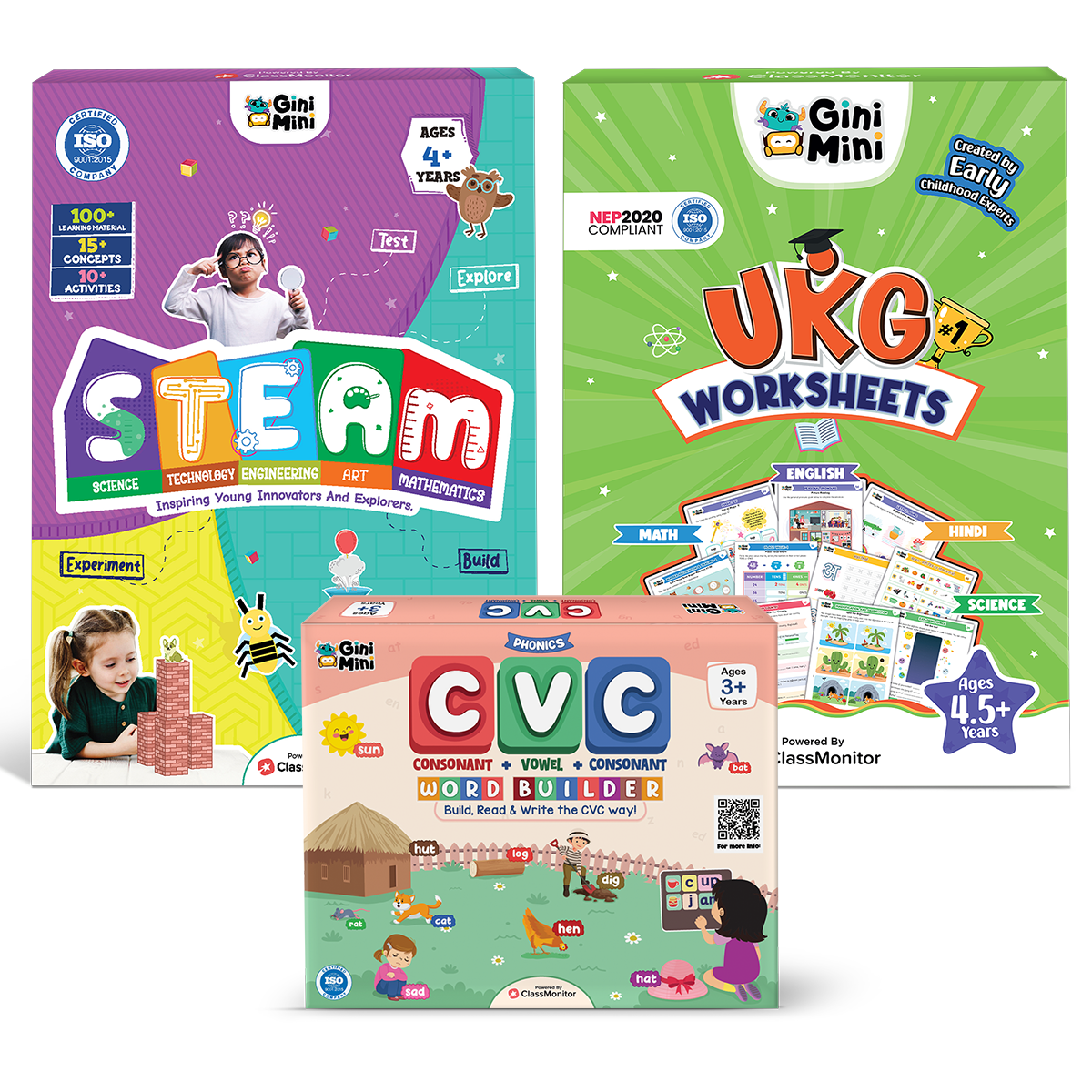
STEAM Kit (ages 4+): Includes 15+ concepts, 10+ hands-on activities and 100+ learning materials to encourage exploration, planning, questioning and creative thinking.
The goal is not to make every activity look perfect. It is to give children materials and opportunities to explore ideas in their own way, with adult guidance when needed.
Frequently Asked Questions
1. Why is my child's drawing not perfect?
Children are still developing their hand control, visual understanding and ability to express ideas. Their drawings do not need to look realistic. Encourage exploration rather than comparing their work with adult drawings or examples.
2. What is process art for kids?
Process art is an open-ended creative activity where children explore materials and express their ideas without following a fixed model. The focus is on the experience of creating rather than the finished result.
3. Should parents correct children's mistakes during art activities?
Not every mistake needs correction. Give children time to explore and make their own decisions. Offer help when they ask for it or when safety requires your intervention.
4. How can I help my child become more confident in creative activities?
Offer age-appropriate materials, allow independent choices and appreciate your child's effort. Avoid comparing their work with others or expecting every activity to produce a particular result.
5. Which activities help children learn through trial and error?
Drawing, clay modelling, collage making, building blocks, puzzles and simple construction challenges give children opportunities to experiment, observe outcomes and try again.
6. Are educational activity kits useful for creative learning?
They can be useful when they offer age-appropriate materials and opportunities for exploration. Choose kits that match your child's interests and abilities, and allow room for children to make their own choices.
Recommended GiniMini Blogs
-
The Difference Between Keeping Kids Busy and Helping Them Learn
-
How to Help Kids Handle Losing, Frustration, and Disappointment

Let Their First Attempt Be Their Own
Your child's first drawing may not look like a picture, their first clay creation may not have a recognisable shape, and their first building attempt may fall apart. But each experience gives them something valuable: a chance to explore, make choices and discover what they can do.
As parents, we do not need to make every attempt look perfect. We need to create an environment where children feel comfortable trying, experimenting and beginning again.
At GiniMini, we believe meaningful learning begins with curiosity, hands-on exploration and the freedom to learn through play.