
Not every activity that keeps a child occupied creates meaningful learning. Discover how learning activities for kids can turn playtime into opportunities for creativity, problem-solving, communication, independence, and hands-on development.
“Can you give me something to do?” is a familiar question for many parents. When children are restless, bored, or asking for a screen, it can be tempting to quickly offer a toy, video, worksheet, or activity just to keep them occupied.
But there is an important difference between keeping kids busy and helping kids learn.
Being busy simply fills time. Meaningful learning activities give children something to explore, think about, create, solve, or talk about. The activity does not need to look like schoolwork. In fact, some of the most valuable learning can happen when children are playing, experimenting, building, pretending, or trying something independently.
This is at the heart of learning through play: creating experiences where children are actively involved rather than simply entertained.
Why Is Meaningful Learning Important?
Children naturally learn through interaction with the world around them. When they sort objects, build structures, complete puzzles, tell stories, create art, or experiment with materials, they are practising different skills at the same time.
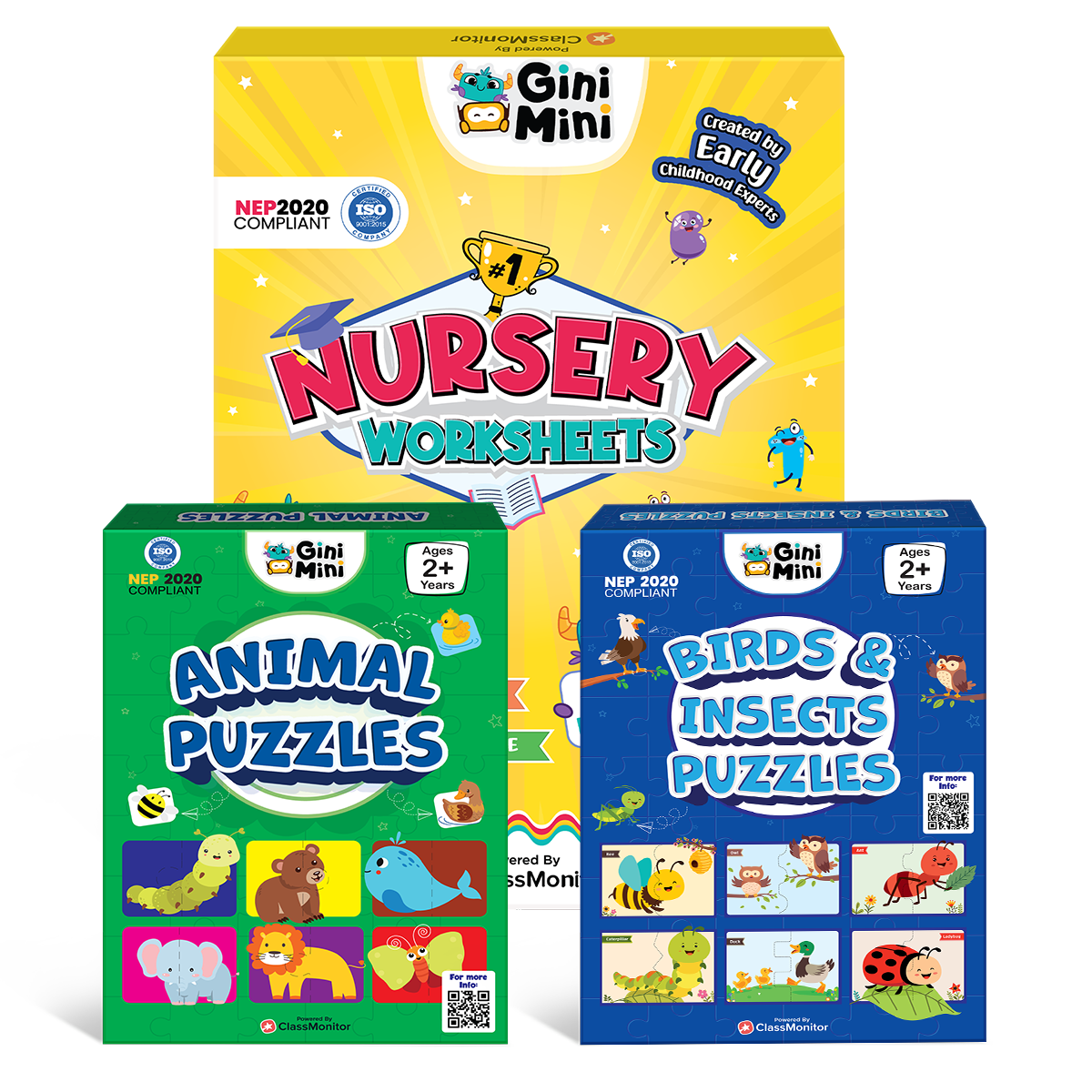
GiniMini's approach reflects this idea by focusing on playful, hands-on learning experiences that encourage children to explore concepts through doing. Its current range includes puzzles, card games, activity kits, pre-writing resources, creative activities, and other learning resources designed for different age groups.
The difference is simple: an activity becomes more meaningful when the child has to participate, make decisions, and think.
What Is the Difference Between Keeping Kids Busy and Helping Them Learn?

Keeping Kids Busy: Filling Time Without Much Engagement
An activity can keep a child occupied without requiring much thought. Watching something passively, repeatedly pressing buttons, or completing an activity simply because an adult told them to may fill twenty minutes, but it does not necessarily encourage deeper engagement.
That does not mean every moment needs to be educational. Children absolutely need rest, free play, relaxation, and entertainment. The goal is not to turn every minute into a learning opportunity.
The important distinction is whether children sometimes have access to activities that invite them to do, think, explore, and create, rather than only consume.
Helping Kids Learn: Giving Them Something to Figure Out
A meaningful activity gives children an opportunity to make choices or solve a small challenge.
A puzzle asks, “Where does this piece fit?” Building blocks ask, “How can I make this stand?” Pretend play asks children to imagine a situation and communicate within it. A simple matching game requires observation and memory.
These activities can feel like play while supporting skills such as concentration, logical thinking, communication, creativity, fine motor development, and problem-solving.
GiniMini's recent guidance similarly emphasises that puzzles, building activities, pretend play, science experiments, and educational toys can support creativity, problem-solving, communication, concentration, and independence when children actively participate.
What Makes an Activity a Meaningful Learning Activity?

It Encourages the Child to Think
The best learning activities for kids do not always provide an immediate answer. They give children a small problem, question, pattern, or challenge to explore.
A child building a tower may discover that it falls when the base is too narrow. Instead of immediately fixing it, a parent can ask, “What could make it stronger?” The child gets an opportunity to experiment and discover the answer.
Benefits: This kind of hands-on learning can encourage problem-solving, reasoning, planning, and persistence.
It Allows Children to Create
Creative activities are valuable when children have some freedom to make decisions. Drawing, clay, craft materials, building pieces, and pretend-play props can become something different every time.

GiniMini's Clay-O-Pedia, for example, is a 12-in-1 sensory activity kit for ages 3–6 that combines clay-based activities with fine motor practice, early math, colours, creativity, and problem-solving.
Benefits: Open-ended creative play can encourage imagination, self-expression, fine motor skills, and confidence.
It Connects Learning to Real Life
Children do not need a worksheet to practise concepts.
Cooking can introduce measuring and counting. Grocery shopping can involve comparing quantities. A nature walk can encourage observation. Sorting laundry can become a colour or category game. Reading a story together can lead to questions, vocabulary, and pretend play.

GiniMini's own activity guidance recommends everyday experiences such as cooking, nature walks, storytelling, memory games, and building challenges as ways to combine enjoyment with learning.
Benefits: Real-life activities help children understand that learning is not limited to school or structured lessons.
It Gives Children Room to Try Again
Learning becomes richer when children can make mistakes without immediately being corrected.
If a child builds something that collapses, chooses the wrong puzzle piece, or creates a drawing that does not look as expected, the process itself can become part of the learning experience.
Instead of saying, “That's wrong,” parents can ask, “What happened?” or “What could we try differently?”
Benefits: This supports persistence, flexible thinking, independence, and confidence.
How Can Parents Turn Ordinary Play Into Learning?
Add a Small Challenge
A simple toy can become a learning activity when you introduce a question. With blocks, ask your child to build the tallest structure they can. With toy animals, ask them to sort them by size or habitat. With cars, create a pretend parking lot and introduce colours, numbers, or simple rules.
The goal is not to make play complicated. It is to give children something interesting to think about.
Ask Questions Instead of Giving Answers
When children are stuck, it can be tempting to show them exactly what to do. Sometimes a question is more useful.
Try asking, “What do you think will happen?” “Why did that fall?” “Which piece could fit here?” or “What else could you make?”
This keeps the child involved in the thinking process.
Choose Hands-On Activities
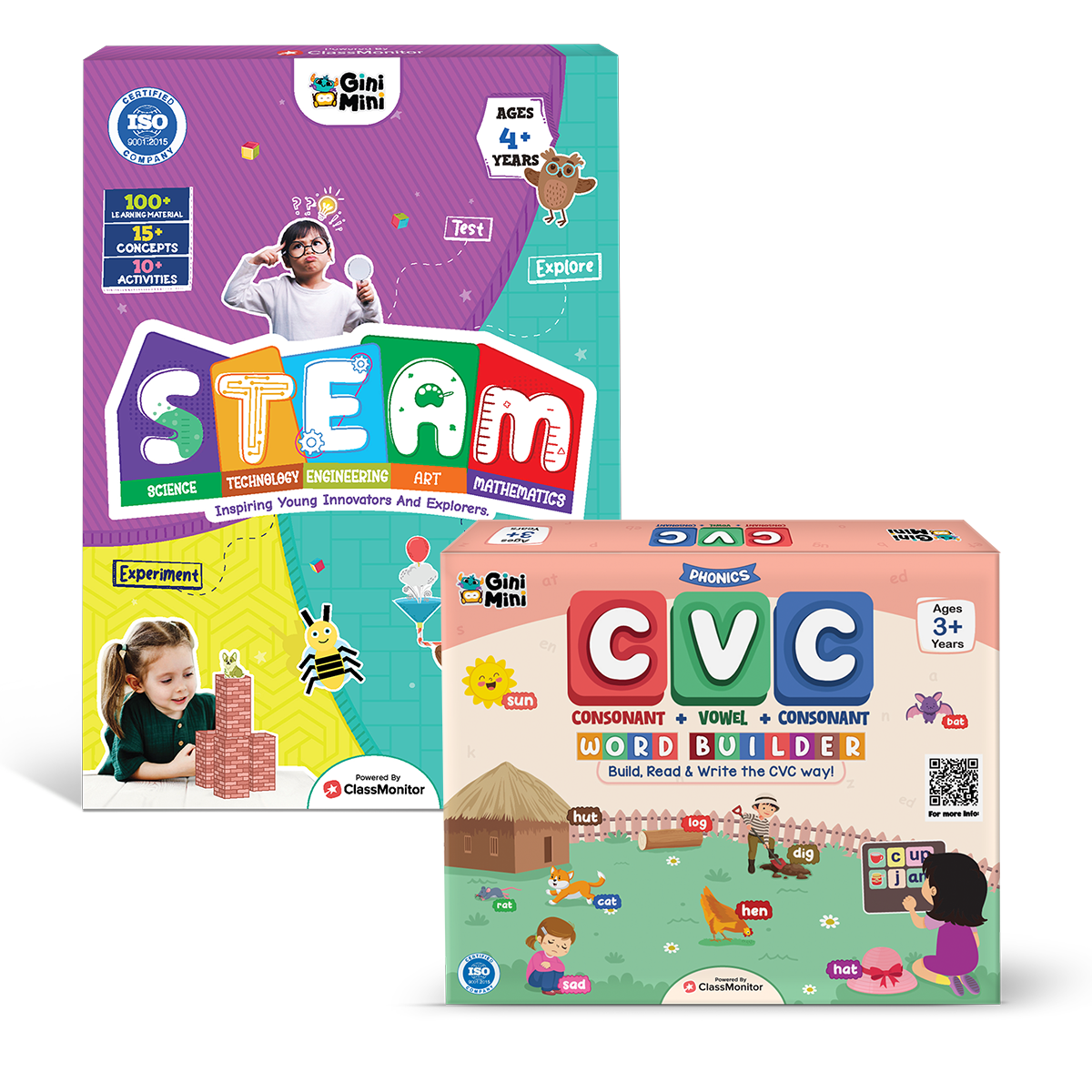
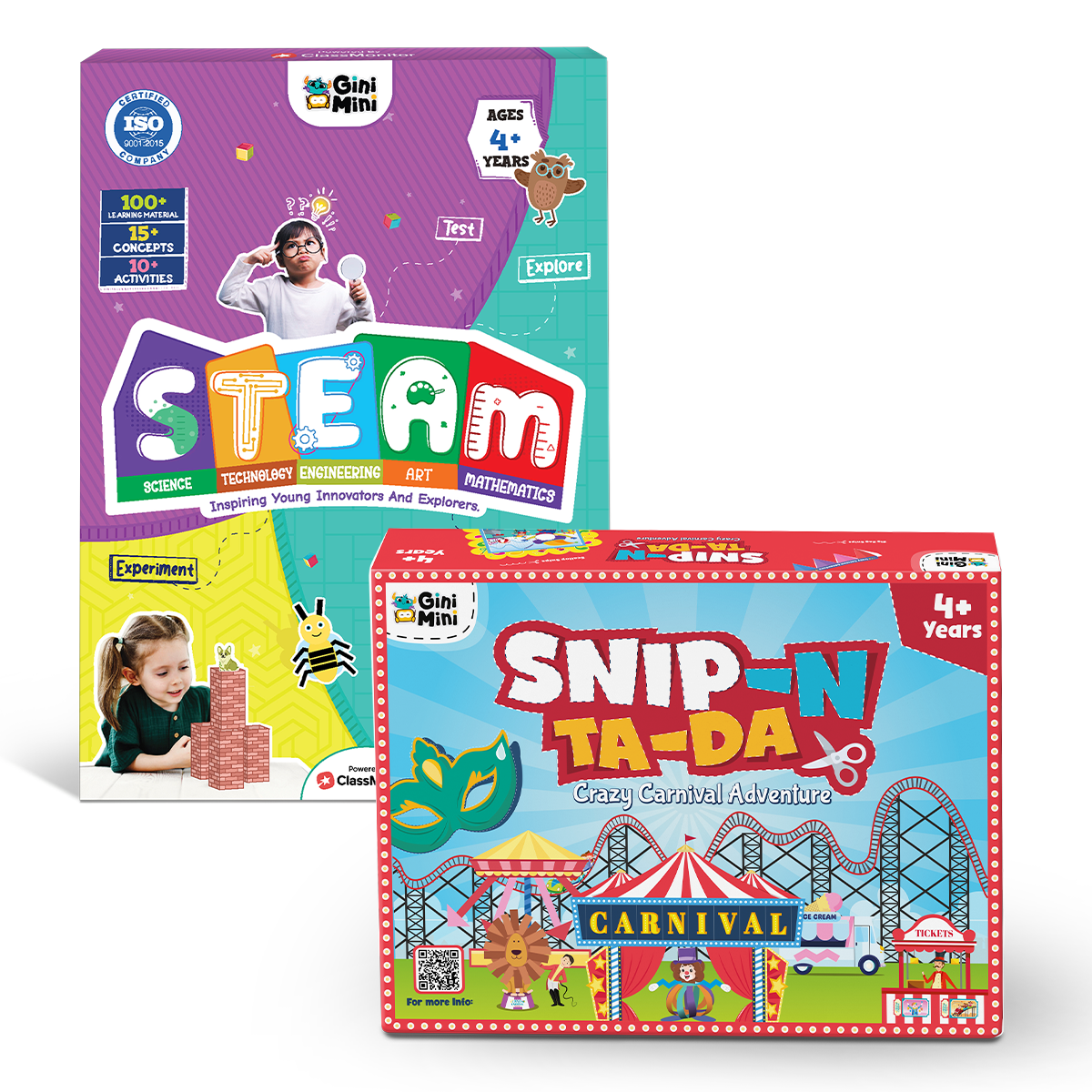
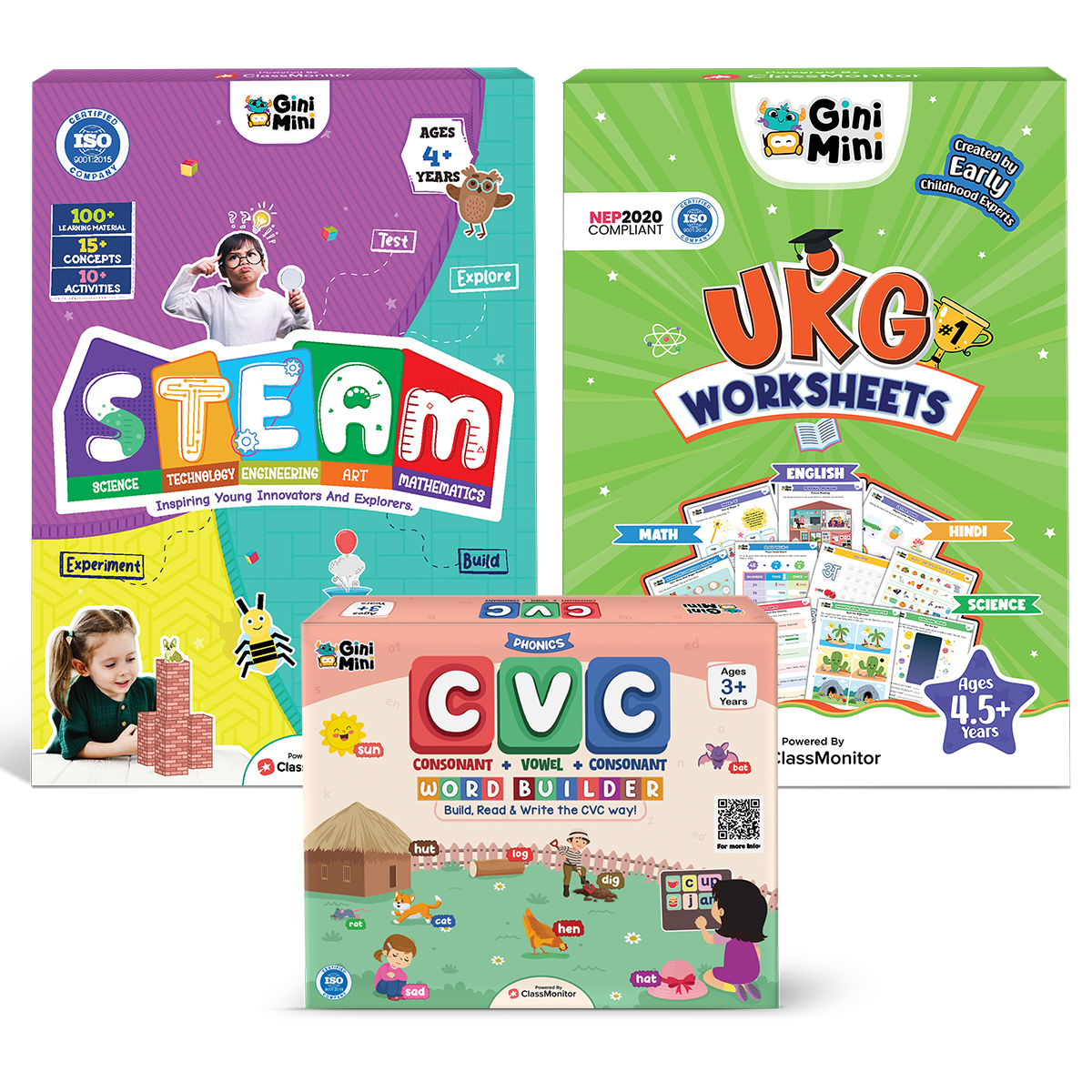
Hands-on activities allow children to touch, move, arrange, build, draw, sort, and experiment. GiniMini's STEAM Kit for ages 4+ includes 15+ concepts, 10+ hands-on activities, and 100+ learning materials, with areas such as planning and design, scientific inquiry, mathematical thinking, reflection and questioning, and creativity.

Benefits: Hands-on learning can bring together cognitive, motor, creative, and problem-solving skills within one experience.
Let Children Take the Lead
An activity does not always need to be completed exactly as an adult imagined.
If a child turns a matching game into a pretend shop or uses building blocks to create an imaginary zoo, that is not necessarily “getting distracted.” They may be extending the activity through their own imagination.
GiniMini's recent content similarly highlights the value of giving children choices, experimentation, and opportunities to make activities more interactive.
How Do Meaningful Activities Benefit Children?
Meaningful kids activities at home can support several areas of development at once. Puzzles and construction activities can encourage logical thinking and problem-solving. Drawing, clay, cutting, and building can strengthen fine motor skills. Storytelling and pretend play can support language and communication. Games can introduce focus, memory, turn-taking, and flexible thinking.
Perhaps most importantly, meaningful play can help children become active participants in their own learning. Instead of waiting for an adult to provide the next instruction, they gradually learn to ask questions, make choices, experiment, and find solutions.
That is why play-based learning does not have to compete with education. It can be one of the ways children experience education naturally.
Parent Tips: Help Children Learn Without Making Everything a Lesson
Start by asking yourself one simple question: “What is my child doing with their mind and hands during this activity?”
If they are observing, choosing, creating, sorting, explaining, building, experimenting, or solving something, there is probably meaningful engagement happening.
You also do not need to provide a new activity every day. Rotating a few open-ended toys and bringing them back after a break can make familiar materials interesting again. GiniMini recommends rotating toys and balancing active play, creative activities, reading, and quiet time rather than constantly introducing something new.
Most importantly, resist the urge to measure every activity by an obvious academic outcome. A child does not need to learn a number, letter, or fact every time they play.
Sometimes the learning is simply that they tried something, changed their approach, solved a problem, or discovered an idea of their own.
The Goal Isn't to Keep Kids Busy. It's to Keep Them Curious.
Keeping children occupied has its place. Children need downtime, entertainment, free play, and moments when they are not expected to accomplish anything.
But when parents are looking for educational activities for kids, the goal can be more meaningful than simply filling an empty hour.
Choose activities that invite children to think, create, explore, communicate, and try again. Give them enough structure to get started and enough freedom to make the experience their own.

At GiniMini, this philosophy runs across its hands-on learning resources—from puzzles and creative kits to STEAM activities and early-learning games. The focus is on making learning active, engaging, and age-appropriate rather than separating learning from play.
Because the best activity may not be the one that keeps a child quiet for the longest.
It may be the one that makes them look up and say, “What happens if I try this?”
Frequently Asked Questions
What is the difference between keeping kids busy and helping them learn?
Keeping kids busy mainly fills time, while meaningful learning activities encourage children to think, explore, create, communicate, or solve problems. An activity can be both fun and educational without feeling like formal schoolwork.
What are the best learning activities for kids at home?
Puzzles, building activities, pretend play, crafts, storytelling, sorting games, simple science experiments, nature exploration, cooking, and age-appropriate educational activity kits can all provide meaningful learning opportunities.
Does every activity need to be educational?
No. Children need free play, rest, entertainment, and unstructured time too. The goal is to create a healthy balance where children regularly experience both open-ended play and meaningful learning activities.
How can parents make play more educational?
Parents can introduce small challenges, ask open-ended questions, encourage children to explain their thinking, and connect activities to everyday life. It is usually more helpful to guide children's thinking than to give them every answer.
Are activity kits useful for learning?
They can be, particularly when they provide age-appropriate, hands-on activities that encourage children to make choices, experiment, create, and solve problems. The value depends on the activity and how actively the child participates.
Recommended GiniMini Reads
How to Keep Kids Busy at Home With Fun Screen-Free Activities – Practical ideas for combining screen-free play, creativity, problem-solving, and independent exploration.
How to Make Screen-Free Activities Feel Exciting Again – Ideas for adding challenges, stories, choices, and curiosity to everyday activities.
One Box, Five Skills: What Can a Simple Activity Kit Actually Teach? – Explore how one activity kit can support problem-solving, early math, fine motor skills, creativity, communication, and independent learning.
Fun Weekend Activities for Kids to Enjoy at Home Together – A collection of creative, educational, outdoor, and family activities for meaningful play.