

Screen-free activities for kids can become exciting again when parents turn ordinary play into small adventures filled with creativity, choices, challenges, and discovery. From art and storytelling to puzzles, building games, and hands-on learning, the right approach can help children naturally enjoy playing without screens.
How Can Parents Make Screen-Free Activities More Exciting?
Parents can make screen-free activities more exciting by changing how children experience play instead of simply offering more toys. Adding a story, introducing a challenge, giving children choices, playing together, or turning a simple activity into a mini adventure can make familiar activities feel fresh again. When children feel curious and involved, screen-free play becomes something they want to explore rather than something they are told to do.
Introduction
“I’m bored!” is something many parents hear soon after a screen is switched off. It can sometimes feel as though nothing is interesting enough to compete with the constant entertainment offered by digital devices. But the problem is not always that children dislike screen-free activities. Often, familiar activities simply start feeling predictable.
The good news is that screen-free play does not need to compete with screens by becoming louder, faster, or more complicated. It needs to become meaningful. A drawing activity can become a storytelling adventure, a puzzle can become a treasure hunt, and building blocks can become a mission to create something amazing.
The goal is not to make every activity elaborate. It is to help children rediscover the excitement of creating, exploring, solving, imagining, and playing.

Why Do Screen-Free Activities Start Feeling Boring?
Screen-free activities can start feeling boring when children experience them in exactly the same way every time. If a puzzle always means “complete the picture,” drawing always means “colour this page,” and building always means “make a tower,” children may quickly lose curiosity.
Children are naturally motivated by discovery. They enjoy activities where they can make decisions, experiment with ideas, solve problems, create something, or see their imagination come to life. This means that changing the way an activity is presented can sometimes be more effective than buying something new.
Instead of asking a child to colour a picture, parents can invite them to create a character for a story. Instead of simply completing a puzzle, they can turn it into a search game. Instead of handing children building blocks without direction, parents can ask them to design a home for their favourite toy.
These small changes can make familiar activities feel completely different.
Expert Parent Tip: You do not need a new toy every time your child loses interest. Try changing the story, challenge, setting, or rules of an existing activity first.

How Can Parents Make Screen-Free Play More Exciting?
1. Turn Ordinary Activities Into Mini Adventures
Children naturally enjoy stories, missions, and pretend play. A simple activity can become much more engaging when it has a purpose. Drawing can become “design a rocket for a space mission,” while a puzzle can become “help the animals find their homes.” Even a sorting activity can become a challenge where children need to complete a pattern or find matching objects.
The activity does not have to be complicated. Giving children a small story or mission creates a reason to participate and encourages imagination at the same time.

2. Give Children Choices
Children are more likely to become involved when they feel that they have some control over what they are doing. Instead of deciding every detail, offer two or three choices. Ask whether they would like to draw, build, solve a puzzle, or create something with craft materials.
During the activity, let them choose colours, characters, materials, or even what happens next. Giving children ownership can make familiar activities feel new because they are creating a different experience each time.

3. Add a Little Challenge
A small challenge can transform a familiar activity into a game. Ask children to build something using only certain pieces, create a picture within a few minutes, find objects around the room that match specific colours, or invent a new ending to a story.
The challenge should feel achievable rather than stressful. The purpose is to create curiosity and excitement, not pressure. When children complete a challenge they have chosen or worked toward, they also experience a sense of achievement.
What Are the Best Screen-Free Activities to Make Play Exciting Again?
Screen-free play becomes much more exciting when children have something to create, discover, solve, build, or imagine. The key is to choose activities that feel like play rather than another learning task. GiniMini’s hands-on learning products can help parents turn ordinary playtime into engaging screen-free experiences.
1. Make Art Feel Like an Adventure
Art becomes more exciting when children are not simply asked to copy a picture. Encourage them to create characters, invent stories, design imaginary places, or experiment with colours and textures. Story-based art can combine creativity with language and imaginative thinking.
GiniMini Tiny Prints & The Magical Journey can make this experience more engaging by combining creative painting with a magical story journey. Instead of completing an isolated art task, children can follow a story and explore creative activities along the way. This gives them a reason to create while encouraging imagination and self-expression.

2. Turn Puzzles Into a Discovery Game
Puzzles can become repetitive when children always use them in exactly the same way. Add a little mystery by asking children to find hidden details, solve clues, identify objects, or complete a challenge before moving to the next part.
GiniMini Jungle Jumble 3-in-1 Jigsaw Puzzle brings more variety to traditional puzzle play by combining jigsaw-solving with image-hunting and guessing activities. This allows children to explore the same theme through different kinds of play, making puzzle time feel more like a discovery adventure.
3. Make Learning Hands-On
Children often enjoy learning more when they can touch, move, match, sort, build, and experiment. Instead of presenting learning as another lesson, parents can turn concepts into small challenges that children can physically explore.
GiniMini DOT POP supports this type of play through activities involving colours, shapes, counting, matching, and patterns. Because children can physically interact with the materials, learning becomes an active experience rather than something they simply watch or listen to.
4. Give Creativity a Challenge
Sometimes children need a little direction to get started. Give them a fun challenge such as “Can you draw a funny animal?”, “Can you create a house for your toy?” or “Can you finish this picture your own way?” Challenges give children a starting point while still leaving room for imagination.
GiniMini Draw Step by Step can support this kind of creative play through drawing, tracing, and creative activities that encourage children to practise and then explore their own ideas. The focus is not on making perfect drawings but on helping children become comfortable expressing themselves creatively.
5. Let Kids Become Little Inventors
Building and experimenting can make screen-free play feel completely different from passive entertainment. Give children a simple problem to solve, such as building a structure, designing something that moves, or creating a solution for a pretend problem.
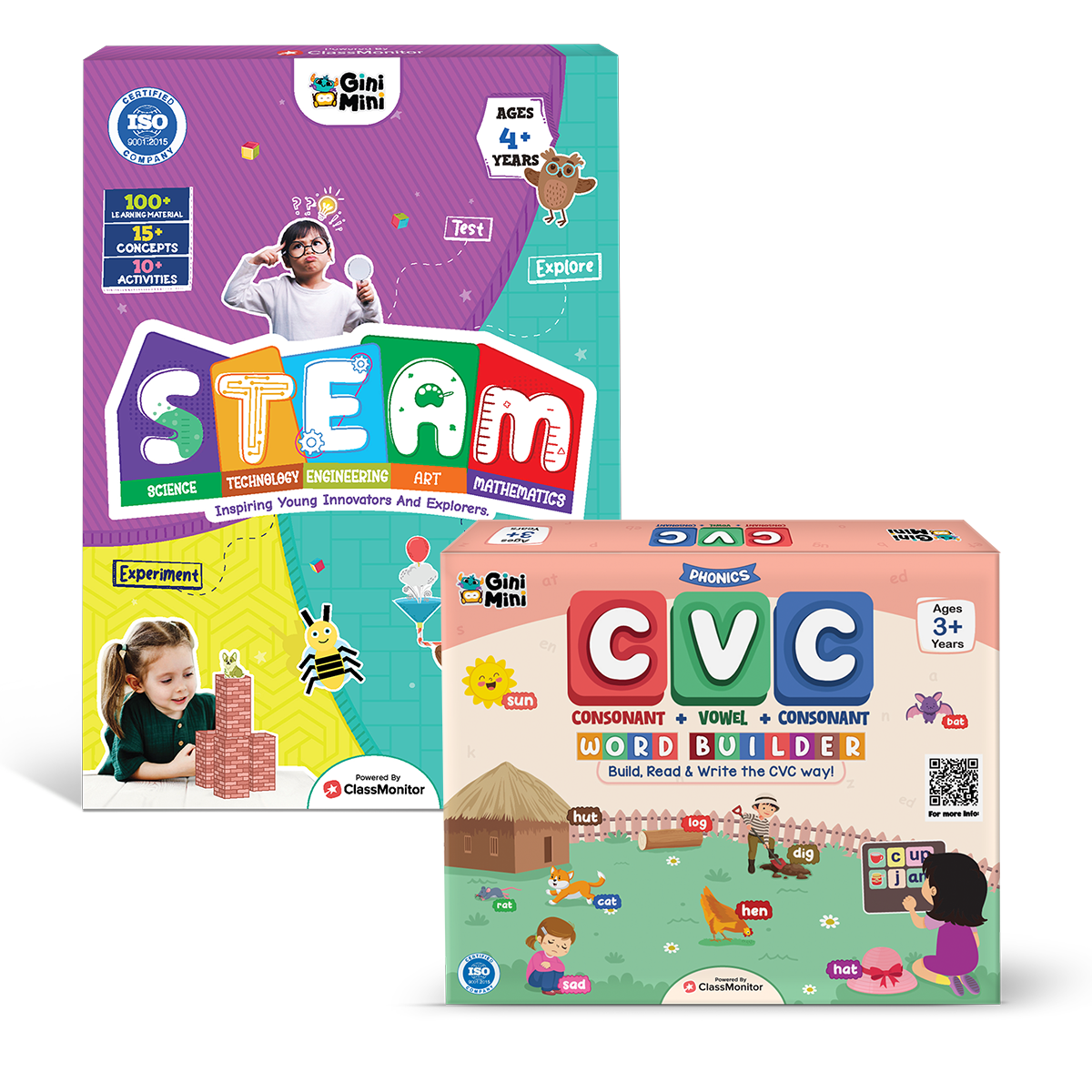
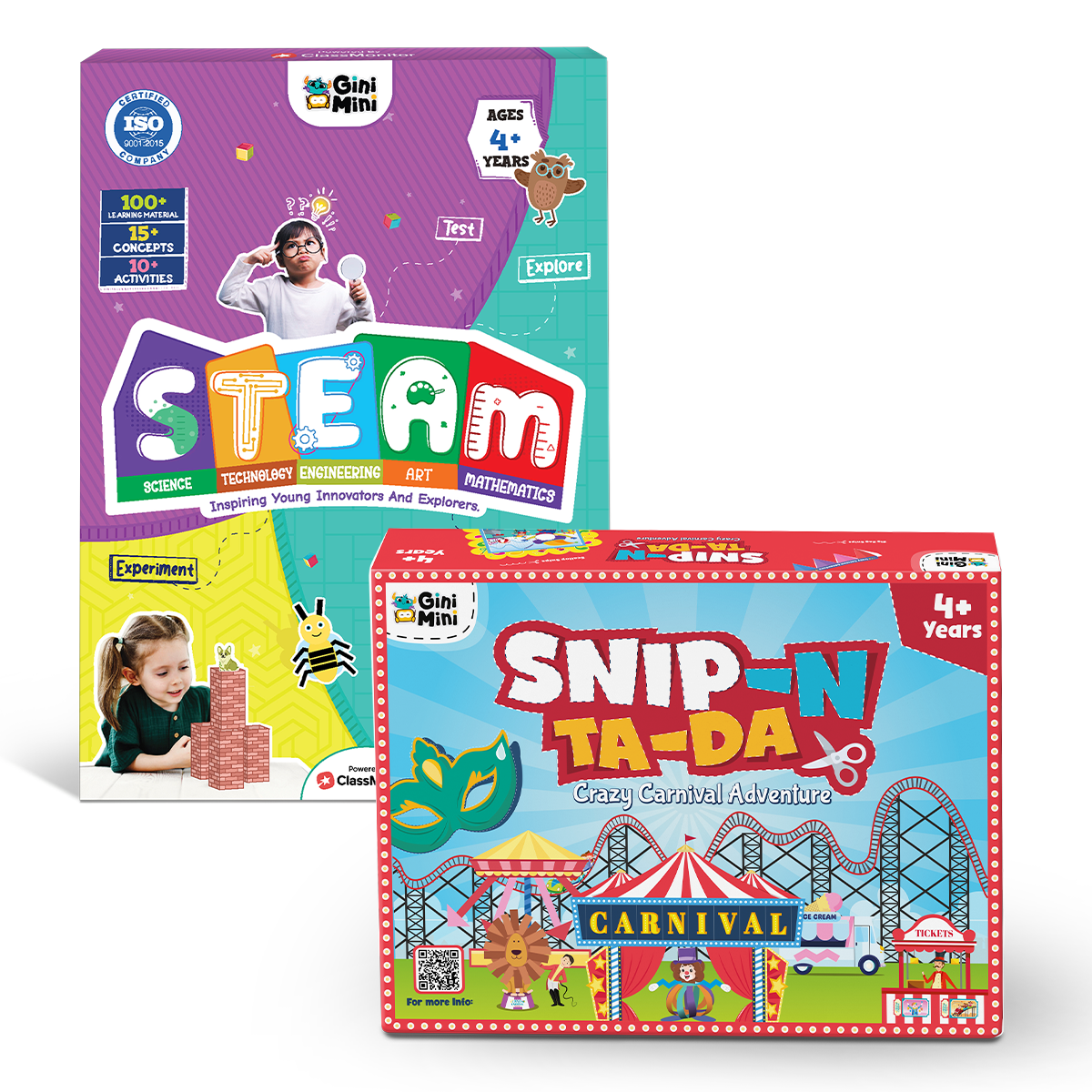
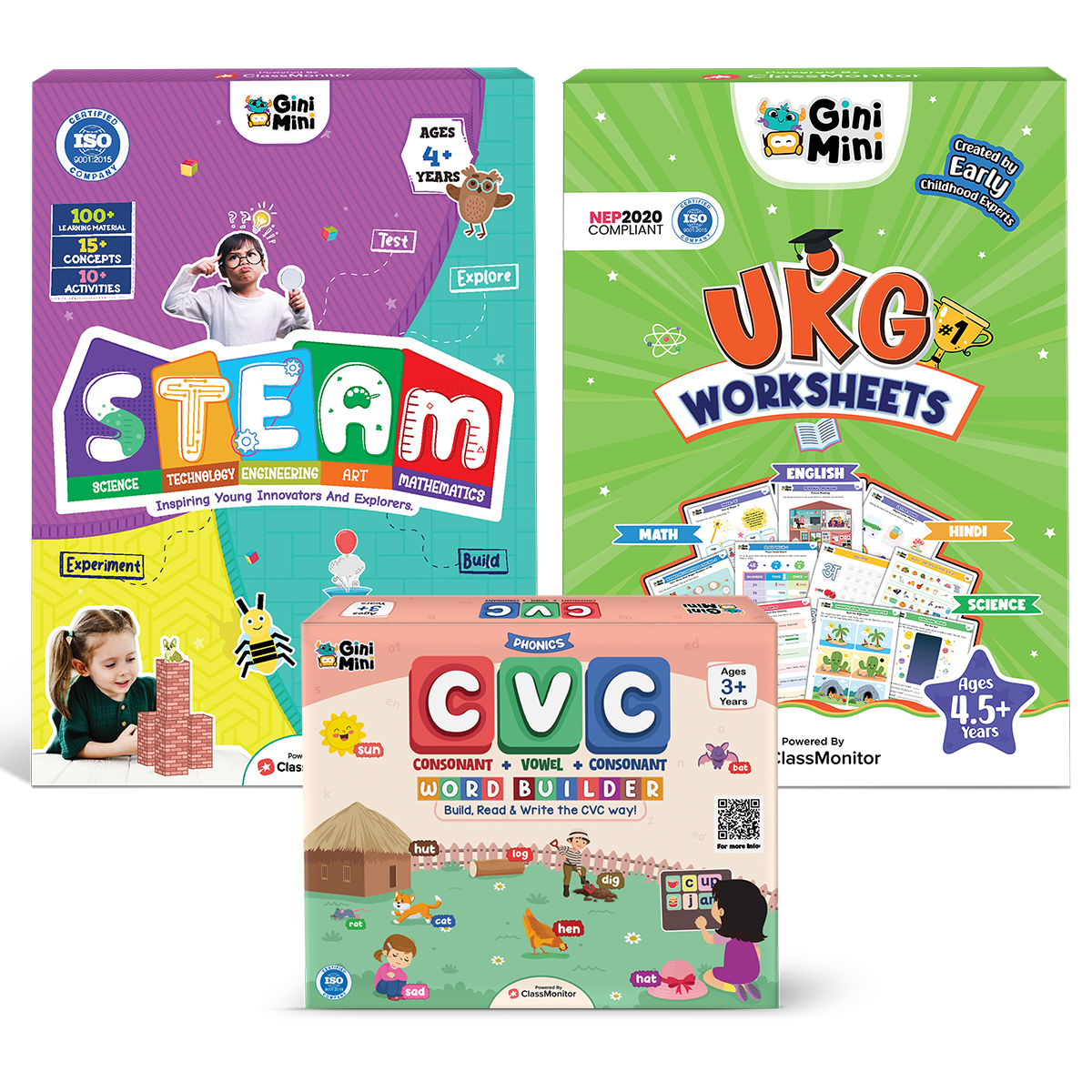
The GiniMini STEAM Kit can support this kind of exploration through hands-on activities connected to Science, Technology, Engineering, Art, and Mathematics. It gives children opportunities to explore concepts through doing, experimenting, and creating.
Expert Parent Tip: Instead of saying, “Let’s do some learning,” try saying, “I have a challenge for you!” A small change in language can make the same activity feel much more exciting.
Screen-Free Activities vs Digital Entertainment
|
Activity Type |
Engagement Style |
Key Learning Opportunities |
Best For |
|
Art & Craft |
Creative and open-ended |
Creativity, fine motor skills, self-expression |
3–8 years |
|
Puzzles |
Challenge-based |
Logic, memory, concentration |
3–8 years |
|
Building Play |
Exploratory |
Planning, imagination, spatial thinking |
3–8 years |
|
Storytelling |
Imaginative and interactive |
Language, communication, creativity |
2–8 years |
|
Educational Games |
Structured and playful |
Problem-solving, focus, early concepts |
2–8 years |
|
Digital Entertainment |
Screen-based |
Depends on content and interaction |
Varies |
Why Are Hands-On Activities Better for Child Development?
Hands-on activities give children opportunities to actively participate instead of simply watching something happen. When children draw, build, sort, solve, create, or tell stories, they make decisions and respond to what is happening around them.
Creative play can encourage self-expression, while puzzles and games give children opportunities to practise concentration and problem-solving. Building activities can introduce planning and spatial thinking, while storytelling supports vocabulary, imagination, and communication.
Another advantage is that hands-on activities can grow with the child. A simple activity can be made easier for a younger child or turned into a more challenging game for an older one.

GiniMini’s learning products follow this hands-on approach across different activity types, giving children opportunities to explore concepts through play and interaction.
Expert Parent Tip: Do not focus only on finding a replacement for screen time. Focus on creating moments that make your child curious. Curiosity is often the easiest starting point for meaningful screen-free play.
Frequently Asked Questions
1. How can I make screen-free activities interesting for my child?
Make the activity interactive by adding a story, challenge, choice, movement, or pretend-play element. You can also change the setting or let your child decide how the activity should be played.
2. Why does my child lose interest in toys quickly?
Children may lose interest when an activity becomes predictable or when they are not actively involved in making decisions. Try introducing new challenges or using the same toy in a different way before buying something new.
3. What are some easy screen-free activities for kids?
Drawing, storytelling, puzzles, building, sorting, pretend play, scavenger hunts, crafts, and simple family games are easy ways to create engaging screen-free moments at home.
4. How long should a screen-free activity last?
There is no single ideal duration for every child. Younger children may enjoy shorter activities, while older children may stay engaged longer. The quality of engagement matters more than forcing a particular amount of playtime.
5. Can educational activities be fun without screens?
Yes. Educational activities can be engaging when children get to touch, create, experiment, solve, and make choices. Hands-on learning kits and games can turn concepts into playful experiences.
6. How can I encourage independent screen-free play?
Start with an activity your child already enjoys and give them a simple challenge or goal. Once they understand the activity, gradually step back and allow them to explore independently.
7. What should I do if my child says, “I’m bored”?
Instead of immediately suggesting another activity, ask your child to choose between two or three options. You can also give them a small creative challenge, such as building something, inventing a story, or creating a drawing around a theme.
8. Do I need to buy new toys to keep screen-free play exciting?
Not necessarily. Rotating toys, changing how activities are presented, introducing challenges, and combining different activities can make familiar materials feel new again. A few versatile, hands-on resources can offer many different play possibilities.
Conclusion
Making screen-free activities exciting is about changing how children experience play. A puzzle can become a treasure hunt, drawing can become storytelling, and learning can become a fun challenge.
When children get to choose, create, explore, and solve, screen-free play becomes more meaningful. With GiniMini’s hands-on activities, parents can make everyday play more engaging while encouraging creativity, curiosity, and learning.

Recommended Related Blogs
10 Screen-Free Ways to Survive Winter Break (Without Losing Your Mind)
Fun Car Games for Kids to Enjoy During Family Travel
10 Easy Rakhi Activities for Kids to Make Raksha Bandhan Special
How Festivals Help Children Discover Culture, Traditions, Values, and Their Roots
Recommended Products
Tiny Prints & The Magical Journey – DIY Art & Craft Kit
DOT POP – Colour & Counting Activity Kit
Draw Step by Step – Creative Learning Activity Pack