
Weekend Activities for Kids
Discover 10 fun weekend activities for kids that encourage creativity,
learning, and family bonding. Find age-wise ideas, DIY games, outdoor fun, and educational toys.
Weekend activities for kids are a great way to balance fun, learning, and quality family time without relying on screens.
Whether your child enjoys creative crafts, outdoor adventures, pretend play, puzzles,
or educational games, the right weekend activities can build confidence, improve problem-solving skills,
encourage communication, and strengthen parent-child bonding. This guide shares
10 engaging weekend activities suitable for different age groups, along with
tips for choosing toys and games that make weekends both entertaining and meaningful.
Weekend Activities for Kids at a Glance
| Best For | Age | Benefits |
|---|---|---|
| Creative Crafts | 3–10 Years | Creativity & Fine Motor Skills |
| Building Toys | 3–8 Years | Problem Solving & STEM Learning |
| Pretend Play | 2–8 Years | Imagination & Communication |
| Outdoor Activities | 4–12 Years | Physical Fitness & Confidence |
| Family Board Games | 5+ Years | Teamwork & Critical Thinking |
Why Are Weekend Activities Important for Kids?
Weekends give children a chance to slow down, explore new interests,
and spend meaningful time with family. The right activities can support physical,
emotional, social, and cognitive development while reducing excessive screen time.
Whether it's building something together, playing outdoors, or solving puzzles,
every activity becomes an opportunity to learn through play.
Research from organizations like the American Academy of Pediatrics (AAP)
and UNICEF also highlights that active play, creative exploration, and positive family
interactions contribute to healthier child development and overall well-being.
10 Fun Weekend Activities for Kids

1. Build Creative Structures with Building Blocks
Building blocks encourage children to think creatively while
improving problem-solving, spatial awareness, and fine motor skills.
Challenge your child to build a house, bridge, zoo, or their dream city together.
2. Organize a Family Puzzle Challenge
Puzzles are an enjoyable way to strengthen concentration, patience,
and logical thinking. Set a timer and work together
as a family to complete an age-appropriate puzzle.
3. Create DIY Arts and Crafts
Use colored paper, glue, crayons, recycled materials, and stickers to
create greeting cards, animal masks, paper flowers, or simple decorations.
Craft activities improve creativity and hand-eye coordination.
4. Enjoy Pretend Play Adventures
Children love pretending to be doctors, chefs, teachers, astronauts,
or shopkeepers. Role-play activities encourage imagination,
communication skills, empathy, and confidence while making learning fun.
5. Go on a Nature Walk or Backyard Treasure Hunt
Take a walk in a nearby park or garden and encourage children to spot leaves,
flowers, birds, butterflies, or different shapes in nature.
You can even create a simple treasure hunt checklist to make the activity more exciting.
6. Try Simple Science Experiments at Home
Turn your kitchen into a mini science lab with safe experiments like making a
baking soda volcano, creating a rainbow with water, or watching seeds sprout.
These hands-on activities spark curiosity, observation skills, and a love for STEM learning.
7. Cook or Bake Together
Choose a simple recipe such as sandwiches, fruit salad, or homemade cookies
and let your child help with measuring, mixing, and decorating.
Cooking together teaches basic math, patience, teamwork, and healthy eating habits.
8. Read Stories and Act Them Out
Pick your child's favorite storybook and bring the characters to life through role-play.
Acting out stories improves language development, creativity, confidence, and
listening skills while making reading more engaging.
9. Play Memory and Matching Games
Memory games help children improve concentration, visual recognition,
and recall skills. Use picture cards, matching tiles, or everyday household objects
to create simple challenges that become more difficult as your child grows.
10. Build an Indoor Obstacle Course
Use cushions, chairs, pillows, tunnels, or masking tape to create a safe obstacle
course at home. Crawling, jumping, balancing, and navigating obstacles
improve gross motor skills, coordination, and confidence while keeping children active indoors.
Which Weekend Activities Are Best for Different Age Groups?
| Activity | Recommended Age | Skills Developed |
|---|---|---|
| Building Blocks | 2–5 Years | Creativity, Fine Motor Skills, Problem Solving |
| Arts & Crafts | 3–10 Years | Creativity, Hand-Eye Coordination |
| Family Puzzle Challenge | 4–10 Years | Logical Thinking, Concentration |
| Pretend Play | 2–8 Years | Communication, Social Skills, Imagination |
| Nature Walk | 3+ Years | Observation, Curiosity, Physical Activity |
| Simple Science Experiments | 5–10 Years | STEM Learning, Critical Thinking |
| Cooking Together | 4+ Years | Life Skills, Math, Teamwork |
| Story Reading & Role Play | 3–8 Years | Language, Confidence, Creativity |
| Memory Games | 3–8 Years | Focus, Visual Memory |
| Indoor Obstacle Course | 3–10 Years | Balance, Coordination, Gross Motor Skills |
Expert Tips to Make Weekend Activities More Meaningful
-
Let your child choose at least one activity each weekend to build independence and confidence.
-
Focus on enjoying the process instead of aiming for perfect results.
-
Mix creative, physical, and educational activities to support overall development.
-
Keep screens away during family playtime to encourage bettercommunication and stronger connections.
-
Praise your child's effort, curiosity, and creativity rather than just the final outcome.
-
Rotate toys and activities every few weeks to keep weekends exciting
-
and engaging without constantly buying new toys.
How to Choose the Best Weekend Activities for Kids
Every child has different interests and developmental needs, so choosing
the right weekend activity is more important than simply keeping them busy.
Look for activities that are engaging, age-appropriate,
and encourage active participation rather than passive entertainment.
Consider Your Child's Age
Toddlers enjoy sensory play, stacking toys, and simple pretend play,
while older children are ready for puzzles, STEM activities,
board games, and creative DIY projects.
Balance Fun and Learning
The best activities combine entertainment with skill development.
Building sets, puzzles, memory games, and pretend-play
toys help children learn naturally while having fun.
Choose Safe and Durable Materials
Select toys made from child-safe, non-toxic materials with sturdy construction.
Well-made educational toys can be enjoyed for years and
often grow with your child's abilities.
Encourage Family Participation
Activities become more meaningful when parents and siblings join in.
Whether you're building together, solving puzzles, or reading stories,
shared experiences create lasting memories and strengthen family bonds.
Pros and Cons of Screen-Free Weekend Activities
|
Pros |
Cons |
|
Encourage creativity and imagination |
May require some preparation |
|
Improve communication and social skills |
Certain activities need adult supervision |
|
Promote physical movement and active play |
Children may need time to adjust if they're used to screens |
|
Build problem-solving and critical thinking skills |
Outdoor activities depend on weather |
|
Create quality family bonding time |
Some educational toys involve an initial investment |
Frequently Asked Questions
1. What are the best weekend activities for kids?
The best weekend activities include building blocks, arts and crafts, puzzles,
pretend play, outdoor walks, science experiments, cooking, story reading,
memory games, and indoor obstacle courses.
These activities are fun while supporting creativity, learning, and physical development.
2. How can I keep my child busy without screen time?
Offer a mix of creative, physical, and educational activities.
Building toys, puzzles, crafts, reading, role-play, gardening, and family
games keep children engaged while reducing dependence on digital devices.
3. How long should weekend activities last?
Most children enjoy activities that last between 30 and 90 minutes.
Younger children may prefer shorter sessions, while older kids can stay
engaged for longer if the activity matches their interests.
4. Are educational toys better than digital games?
Educational toys encourage hands-on learning, creativity, problem-solving,
and social interaction. While some digital games can be educational,
balancing screen time with active play offers greater developmental benefits.
5. Which weekend activities help improve creativity?
Arts and crafts, building blocks, storytelling, pretend play, music,
and DIY projects encourage children to think creatively, express themselves,
and develop new ideas.
6. Can weekend activities improve family bonding?
Yes. Spending quality time together through games, cooking, reading,
or outdoor adventures strengthens communication, builds trust,
and creates lasting family memories.
7. What are affordable weekend activities for kids?
Nature walks, scavenger hunts, paper crafts, storytelling, gardening,
home science experiments, and family board games are budget-friendly
options that provide hours of meaningful entertainment.
8. How do I choose the right activity for my child?
Consider your child's age, interests, and developmental stage.
Choose activities that match their abilities, encourage active participation,
and provide opportunities to learn while having fun.
Make Every Weekend Count with Meaningful Play
The best weekend activities for kids don't require expensive outings or packed schedules.
Simple moments spent building, creating, exploring, reading, and
playing together can have a lasting impact on your child's confidence,
creativity, and overall development.
Choose activities that match your child's interests, encourage curiosity,
and make learning feel natural. With a thoughtful mix of educational toys,
creative games, and family experiences, every weekend can become an
opportunity to learn, laugh, and grow together.

Weekends are the perfect opportunity to move beyond routine and create
meaningful learning experiences for children. Simple activities like crafting,
solving puzzles, building, storytelling, outdoor exploration,
and family games can help children develop important skills while having fun.
The goal of weekend activities for kids is not just to keep them busy but to
encourage curiosity, creativity, confidence, and stronger family connections.
By choosing age-appropriate activities and educational toys, parents
can turn everyday play moments into valuable learning experiences.
Whether your child enjoys creating, exploring, experimenting,
or imagining new adventures, the right activities can make
every weekend exciting, engaging, and memorable.
Recommended GiniMini Products for Fun Weekend Activities
Tiny Prints & The Magical Journey – DIY Art & Craft Kit
Draw Step by Step – Creative Learning Activity Pack
Jungle Jumble – 3 in 1 Jigsaw Puzzle
DOT POP – Colour & Counting Activity Kit
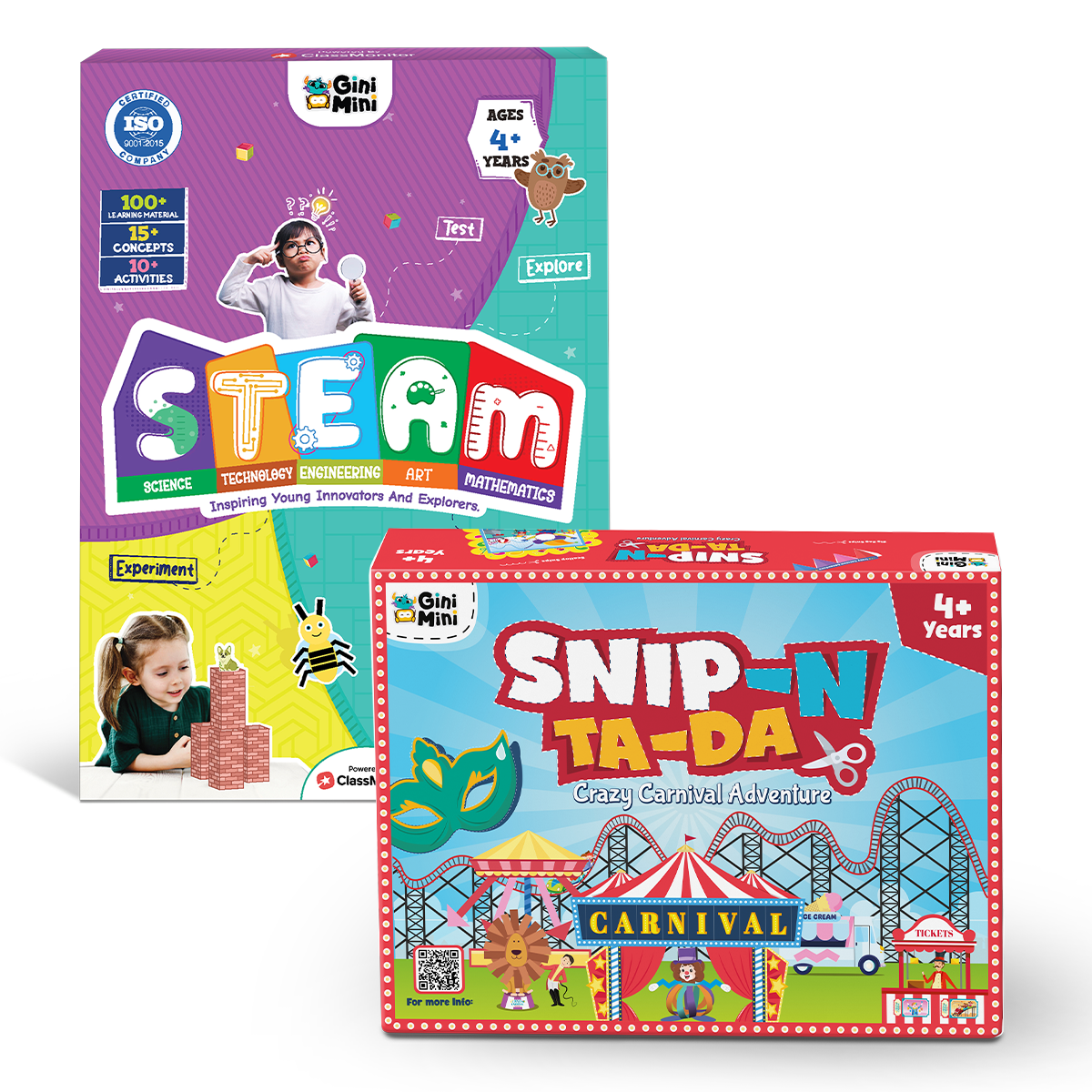
Snip 'N' Ta-Da! Scissor Skills Activity
Food Frenzy – Spot & Match Card Game
Related Blogs You May Enjoy
10 Screen-Free Ways to Survive Winter Break (Without Losing Your Mind)
Puzzles for Early Childhood Brain Development: Essential Tools for Cognitive Growth
5 Signs Your Toddler is Ready for Writing (And How to Start Today)