
Puzzles offer much more than simple entertainment for young children. These hands-on activities directly support brain development by strengthening problem-solving skills, improving memory, and building connections between different areas of the brain. From basic shape sorters for toddlers to complex jigsaw puzzles for preschoolers, these activities provide essential mental exercise during the years when young brains grow most rapidly.
Parents and educators often wonder which activities truly make a difference. Research shows that puzzle play stands out as one of the most effective tools for supporting cognitive growth. When children work on puzzles, they practice spatial reasoning, hand-eye coordination, and logical thinking without even realizing they are learning.
The benefits extend beyond just brain development. Puzzles help children build patience, increase focus, and develop confidence as they work through challenges and experience success.
Key Takeaways
-
Strengthens Neural Pathways: Puzzles reinforce connections between brain cells, improving mental speed and short-term memory.
-
Dual Skill Development: Children develop both cognitive strategies and fine motor coordination simultaneously.
-
Emotional Resilience: Regular puzzle play builds patience, focus, and the ability to handle frustration.
Understanding the Role of Puzzles in Early Cognitive Growth
Puzzles serve as hands-on tools that directly support brain growth during critical developmental periods. They strengthen multiple cognitive abilities while teaching young children how to think through challenges.
Key Stages of Development
-
0–2 Years: Children develop object permanence and basic problem-solving. Simple shape sorters and knob puzzles match their emerging abilities.

-
2–4 Years: A rapid growth period for spatial reasoning. Brains form new connections as children learn to recognize patterns. Puzzles with 4–12 pieces are ideal here.
-
4–6 Years: Logical thinking expands significantly. Children can tackle complex puzzles (24–50 pieces), using strategy rather than just trial and error.
Alt Text: A toddler placing a wooden shape into a colorful geometric sorter.
Recommended Puzzle Types by Age
Selecting the right puzzle is crucial for keeping a child engaged without causing frustration.
-
Knob and Peg Puzzles (12–24 Months): These feature large pieces with handles that help develop grip strength.
-
Recommendation: Look for puzzles like simple 2 piece puzzles which introduces basic forms.
-
-
Chunky Puzzles (18–36 Months): Thick wooden pieces that are easy to stand up and manipulate.
-
Jigsaw Puzzles (Age 3+): Starting with 4–6 pieces and progressing to more complex versions.

-
Recommendation: The Jungle Jumble - 3 in 1 Jigsaw Puzzle is perfect for this stage, allowing kids to graduate to higher piece counts.
-
-
Shape Sorters (12–30 Months): Essential for understanding geometric concepts and fine motor control.
Cognitive Benefits: Sharpening Young Minds
Puzzles actively strengthen several key brain functions. They build memory and concentration while teaching kids how to solve problems through logical thinking.
Enhancing Memory and Concentration
Puzzles require children to remember shapes, colors, and where pieces fit. This exercises short-term memory as they recall which pieces they have tried. The focused nature of the activity also naturally extends attention spans, teaching children to block out distractions—a skill that transfers directly to reading and math.
Fostering Problem-Solving Logic
Puzzles present clear problems that must be solved systematically.
-
Trial and Error: Kids learn that mistakes are just part of the process.
-
Prediction: They start predicting where pieces belong based on shape or color.
-
Sequencing: Children develop strategies, like finding corner pieces first or sorting by color.
Motor Skills and Physical Development
Puzzles require children to use their hands and fingers in precise ways, building strength in small muscles that are vital for future tasks like writing.
-
Fine Motor Skills: Picking up, pinching, and manipulating pieces strengthens the muscles in the wrist and fingers.
-
Hand-Eye Coordination: The continuous cycle of looking at a gap and moving a hand to fill it refines the connection between vision and movement.
-
Dexterity: Rotating and flipping pieces teaches children to make fine adjustments based on visual cues.
Strengthening Spatial Awareness and Visual Perception
Spatial awareness is the ability to understand how objects relate to each other in space—a critical skill for STEM (Science, Technology, Engineering, and Math) success.
Pattern Recognition
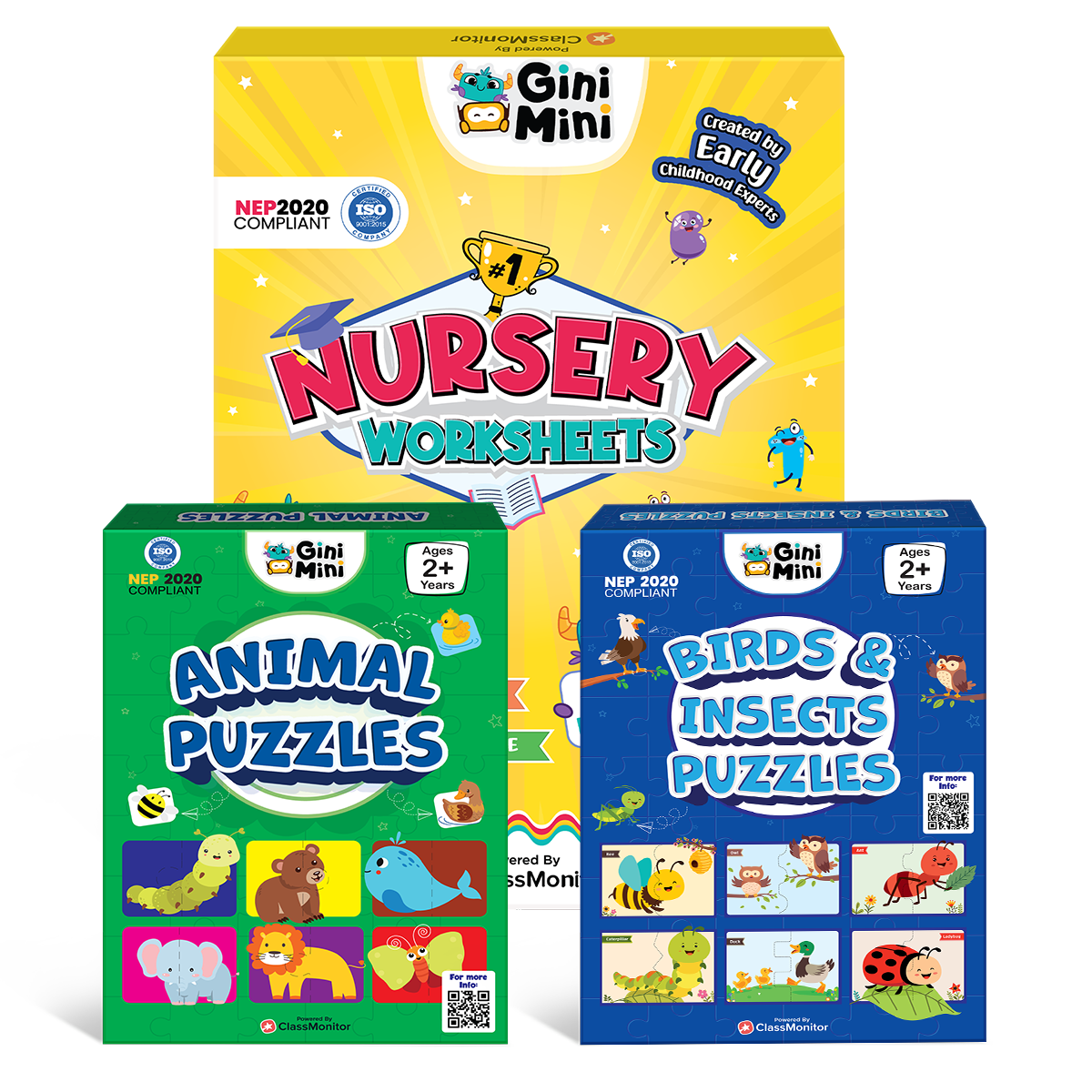
Puzzles naturally teach pattern recognition as kids look for matching colors or continuing lines. For example, the Birds & Insects Jigsaw Puzzle requires children to spot subtle differences in wing patterns and colors to find the right match.
Visual Reasoning
Children learn to visualize a whole image from scattered parts. They must rotate pieces mentally to see if they will fit, a process that significantly boosts spatial reasoning capabilities.
Emotional and Social Growth
Beyond IQ, puzzles build EQ (Emotional Intelligence). They offer a safe environment to struggle, fail, and eventually succeed.
-
Patience and Resilience: When a piece doesn't fit, children learn to step back and try a new approach rather than giving up.

-
Teamwork: solving a puzzle, like the Traffic & Transport Puzzle, with a sibling or friend teaches communication, turn-taking, and shared joy in achievement.
-
Emotional Regulation: The repetitive, meditative nature of sorting pieces can be soothing for anxious children, helping them regulate their emotions.
Language and Math Skill Building
Puzzle play is also language play. It creates natural opportunities to expand vocabulary and introduce early math concepts.
-
Vocabulary: As children solve an animal puzzle, they learn words like "trunk," "spots," or "stripes."
-
Positional Words: Parents can use terms like "above," "below," "corner," and "edge" to guide the child.
-
Early Math: Sorting pieces by color, counting the remaining holes, or organizing by size (big vs. small) are all foundational math activities.
Conclusion: A Lifelong Impact
The investment in puzzle play during early childhood pays off throughout life. These simple tools shape how children think, learn, and interact with the world. By making puzzles a regular part of playtime, parents provide a fun, screen-free way to build the neural architecture needed for reading, math, and complex problem-solving.
Ready to boost your child's brain development? Explore the full range of educational puzzles, from wooden shape sorters to complex jigsaws, at the GiniMini Puzzle Collection.