
Can sound-based games help children learn phonics and reading? Yes. Simple sound games can help young children develop phonological awareness, recognise letter sounds, blend sounds into words, and build early reading confidence. Discover fun, screen-free ways parents can use sound play to support phonics and early literacy at home.
Have you ever noticed your child making up rhymes, repeating funny sounds, clapping along to words, or asking what sound a particular letter makes? These may look like simple moments of play, but they can be important steps toward learning to read.
Before children can confidently read words, they need to understand that spoken language is made up of sounds and that letters represent those sounds. This is where sound-based games for children can make early learning more enjoyable and meaningful.
Instead of treating phonics as something children only learn from worksheets or books, parents can introduce sounds through playful activities. From identifying beginning sounds to blending simple sounds into words, everyday games can help children practise important early literacy skills without making learning feel like a lesson.
For young learners, especially preschoolers and kindergarten-age children, learning phonics through play can create opportunities to listen, experiment, repeat and discover. GiniMini's approach to early learning similarly focuses on engaging, hands-on experiences that encourage children's natural curiosity and love for learning. GiniMini
Why Are Sound-Based Games Important for Early Reading?
Reading does not begin with reading a whole sentence. It begins much earlier—with listening.
Children first need to notice and distinguish sounds in spoken language. This ability, known as phonological awareness, includes recognising rhyming words, identifying syllables, hearing beginning and ending sounds, and eventually identifying individual sounds within words.
Phonics then builds on this foundation by helping children connect sounds to letters. When children understand that the letter m represents /m/ and s represents /s/, they can begin connecting individual sounds and eventually blending them to read words.
This is why phonics games for kids can be more than entertainment. When thoughtfully designed, they give children repeated opportunities to listen to sounds, identify patterns, practise letter-sound relationships and develop confidence with early reading.
What Are the Best Sound-Based Games for Children?
Play the Beginning Sound Game

Choose a familiar object such as a ball, book, cup or spoon. Say the word slowly and emphasise its first sound. Ask your child, “What sound do you hear at the beginning of ball?”
Once your child becomes comfortable, make it a game. Place three or four objects on a table and ask your child to find something that starts with /b/, /s/ or /m/.
This simple activity helps children pay attention to the sounds at the beginning of words and strengthens their ability to connect spoken sounds with familiar objects.
Go on a Sound Hunt

Turn your home into a phonics playground. Choose one sound and invite your child to find things around the house that begin with that sound.
For example, for /c/, your child might find a cup, a comb or a cushion. You can also make the activity more challenging by asking your child to listen for a sound in the middle or at the end of a word.
A sound hunt is particularly useful because it connects phonics activities at home with real-life objects. Children are not simply memorising sounds; they are discovering how sounds exist in the words they use every day.
Try a Rhyming Game

Say a simple word such as “cat” and ask your child to think of a word that rhymes with it. You can make up silly words too. “Cat, hat, bat… what about zat?”
The goal is not always to produce a real word. Young children benefit from listening carefully and noticing that words can share similar sound patterns.
Rhyming games are a playful way to develop phonological awareness before children are ready to decode written words independently.
Clap the Sounds and Syllables
Choose familiar words and clap them out together. For example, “ta-ble” has two syllables, while “el-e-phant” has three.
For older preschoolers, you can gradually move from syllables to individual sounds. Say “sun” slowly and ask your child what sounds they can hear.
This progression helps children become more aware of the sound structure of spoken language and prepares them for more advanced phonics learning.
Build Simple CVC Words

Once your child understands several letter sounds, introduce simple consonant-vowel-consonant words such as cat, sun, dog, map and pen.
Instead of asking your child to memorise the entire word, encourage them to look at each letter, say its sound and blend the sounds together.
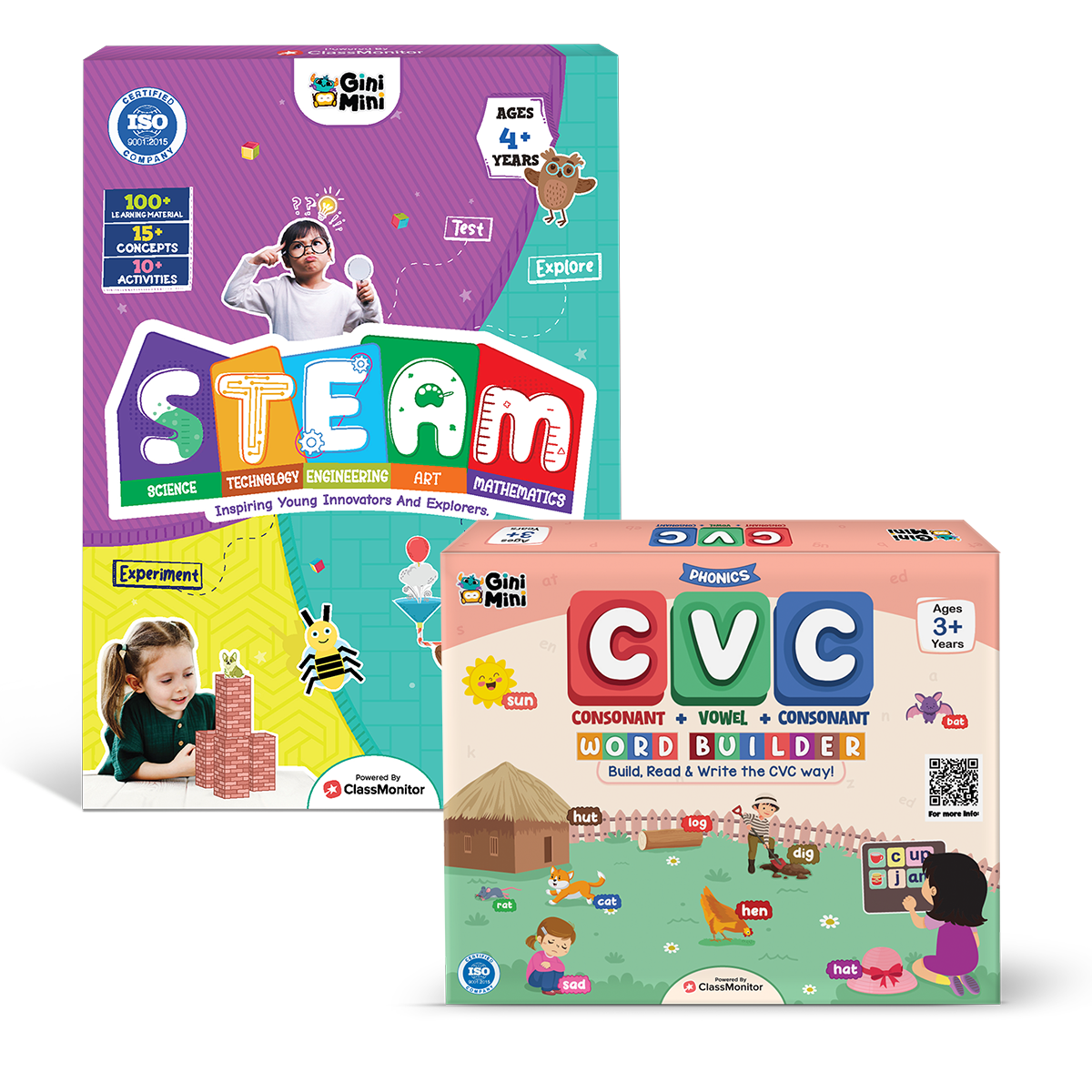
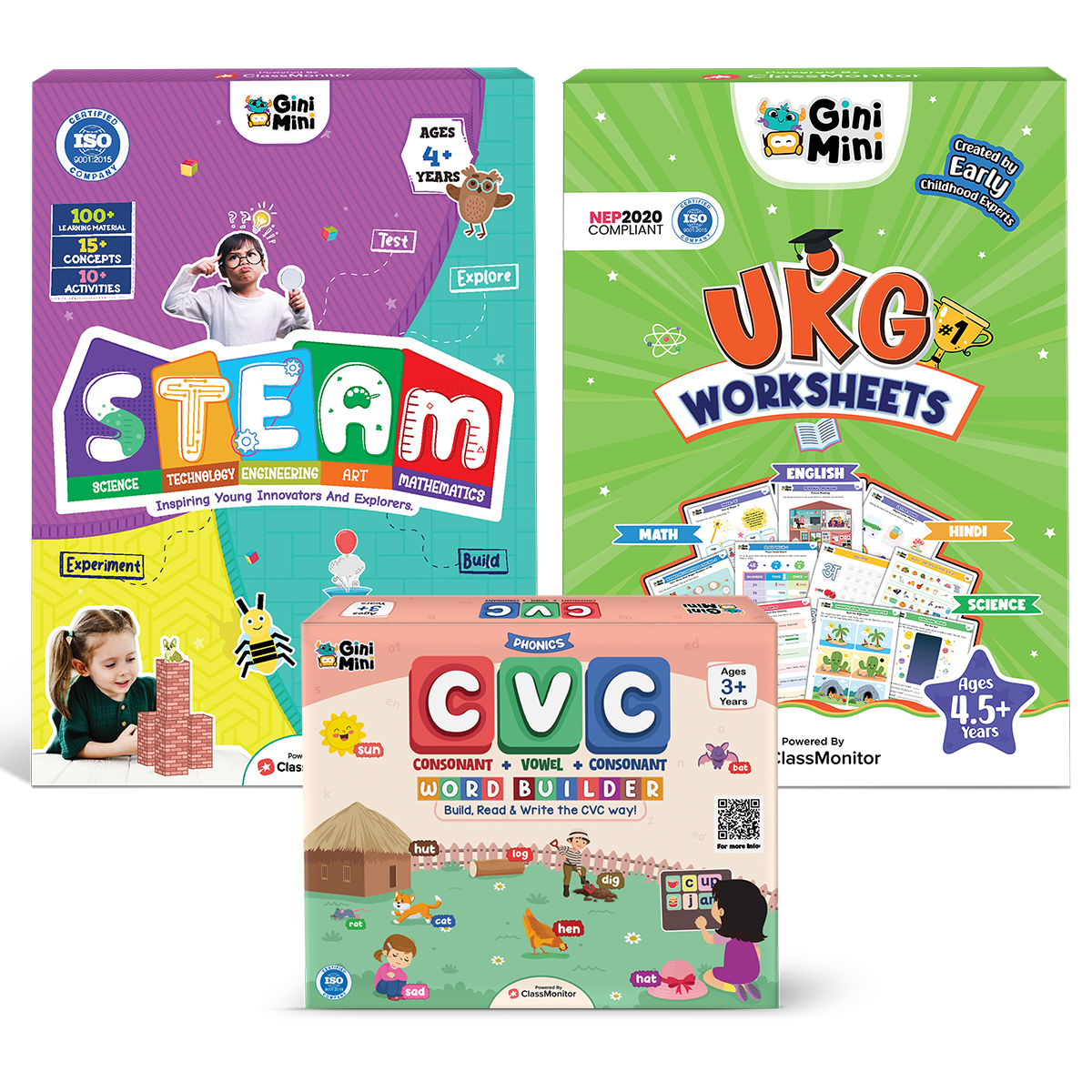
Hands-on tools can make this process especially engaging. GiniMini's CVC Word Builder is designed for children aged 3+ and includes letter tiles, sound tiles, image tiles and a reusable writing board to help children build and practise simple words. GiniMini
Explore the GiniMini CVC Word Builder
Make a “Mystery Sound” Game
Say a sound without showing the letter and ask your child to guess which letter makes that sound. Then reverse the activity: show the letter and ask your child to produce its sound.
Keep the game short and playful. If your child finds a particular sound difficult, give clues using familiar words rather than turning the activity into a test.
This game helps strengthen the connection between letter recognition and letter sounds, an important part of early phonics development.
How Does Learning Phonics Through Play Benefit Children?
Sound-based games give children opportunities to practise early reading skills repeatedly without the pressure of formal instruction.
They can support phonological awareness, vocabulary development, listening skills, letter-sound recognition and early decoding. They can also encourage children to become more confident with experimenting with language.
There is another important benefit: play gives children permission to make mistakes.

A child who is unsure about a sound can try it, hear it again, change their answer and try once more. This creates a learning environment where curiosity matters more than getting every answer right immediately.
Hands-on learning is also central to GiniMini's educational approach. The brand describes its products as engaging experiences designed to nurture curiosity and essential skills through play, with products organised across early-learning age groups including 0–2, 2–4, 4–6 and 6–8 years. GiniMini
Sound Games vs. Worksheets: Which Is Better?
It does not have to be an either-or choice.
Worksheets can provide useful opportunities for practising letter recognition, writing and early literacy concepts. However, young children also need opportunities to listen, speak, move, manipulate objects and explore sounds.
A balanced approach can combine phonics worksheets, reading aloud, sound games, hands-on activities and everyday conversations.
For example, a five-minute sound game before reading a story can help your child listen more carefully to words. After the story, you might ask your child to find words that begin with a particular sound.
The goal is not to make every moment educational. Instead, parents can create small, enjoyable opportunities for literacy to naturally become part of everyday life.
How Can Parents Make Phonics Fun at Home?
Keep Activities Short
Young children do not need long phonics lessons to practise effectively. A few minutes of focused, enjoyable sound play can be more productive than a long activity that leaves them bored.
Start With Sounds Your Child Already Knows
Begin with familiar sounds and gradually introduce new ones. Repetition is helpful, especially when children encounter the same sound in different words and activities.
Use Your Child's Interests
If your child loves animals, play a game with animal names. If they enjoy cooking, explore the sounds in words such as “pan,” “cup” and “pot.” Connecting phonics to familiar interests can make the learning more meaningful.
Let Your Child Lead Sometimes
Ask questions such as, “Can you find another word that starts like sun?” or “What sound do you hear first?” Give your child time to think rather than immediately providing the answer.
Read Aloud Every Day
Sound games work alongside reading, not instead of it. Regular story time exposes children to vocabulary, sentence patterns, sounds and the joy of books.
When Should Children Start Phonics Activities?
There is no single perfect age for every child. Many children can begin developing listening and sound-awareness skills during the preschool years through rhymes, songs, stories and playful sound activities.
More structured phonics can gradually be introduced as children become ready to recognise letters and connect them with sounds.
The important thing is to follow your child's development rather than turning early reading into a race. A child who enjoys experimenting with sounds is already developing valuable foundations for reading.
Frequently Asked Questions About Sound-Based Games and Phonics
Can sound-based games help children learn to read?
Yes. Sound-based games can support early literacy by helping children listen to, identify and manipulate sounds in spoken language. These skills form an important foundation for phonics and later reading.
What are the best phonics games for preschoolers?
Beginning-sound games, rhyming games, sound hunts, syllable clapping, mystery-sound games and simple word-building activities are all playful ways to introduce phonics concepts.
What is the difference between phonics and phonological awareness?
Phonological awareness is the broader ability to hear and work with sounds in spoken language. Phonics specifically involves understanding the relationship between letters and the sounds they represent.
How can I teach letter sounds at home?
Start with a few familiar letters and sounds. Use everyday objects, songs, books, sound hunts and hands-on games to practise them. Keep sessions short and positive.
Are phonics games suitable for 3-year-olds?
Some 3-year-olds may enjoy simple sound and listening games, especially rhyming, beginning sounds and playful letter recognition. More structured phonics activities should be adjusted according to the child's readiness.
Can screen-free games help with early reading?
Yes. Hands-on, screen-free activities can give children opportunities to listen, speak, manipulate letters and practise sounds. GiniMini offers screen-free, hands-on learning products designed around playful skill development. GiniMini
Recommended GiniMini Reads
Stop Asking “What Did You Learn?” Try These Questions Instead
The “One More Episode” Problem: Making Offline Play Appealing
The Science of “One More Time!” — Why Repetition Helps Kids Learn
Can sound-based games help children learn phonics and reading? Absolutely—but the real magic is in making sounds something children enjoy exploring.
A rhyme in the car, a beginning-sound hunt at home, a silly word game before bedtime or a few minutes spent building a CVC word can all become valuable learning moments.
Children do not need every learning experience to feel like a lesson. When phonics becomes part of play, children get to listen, experiment, make connections and discover how spoken sounds become written words.
And that is a powerful first step toward becoming confident readers.
GiniMini believes learning is most meaningful when children can explore it through play. Its hands-on learning resources are designed to encourage curiosity, skill development and screen-free engagement for young learners. GiniMini