


When an early learner says, "I hate learning," refuses tracing sheets, or breaks into tears over numbers, the problem is rarely stubbornness or laziness. Pediatric psychology and educational research show that early childhood learning resistance is an instinctive stress response to cognitive fatigue, fine-motor strain, or rigid instruction. Discover how to motivate a child who hates learning using curiosity, screen-free play, tactile materials, and supportive parenting strategies designed for ages 2 to 8.
Few moments trigger more panic and frustration for parents than hearing a 3-, 5-, or 7-year-old declare, "I hate learning." Whether homework dissolves into tears every evening, your toddler hurls crayons across the room, or your preschooler refuses to practice letters, it is easy to worry that your child is falling behind or simply lacks discipline.
In early childhood education, motivation is far more complex than simple compliance. When young children avoid activities, they are rarely rejecting the thrill of discovering new things. Instead, they are pushing away the physical discomfort of undeveloped hand muscles, the emotional fear of making mistakes, or the overwhelming boredom of passive instruction. Research from Harvard University's Center on the Developing Child confirms that sustained engagement in early learners relies on curiosity, achievable challenge, and a genuine sense of agency.
Rather than asking, "How do I force my child to sit and study?", a more constructive question is: "How can I make learning feel physically manageable and emotionally safe?" This guide explores the developmental causes behind learning avoidance in children aged 2 to 8 and provides actionable, play-based solutions to rebuild their natural curiosity at home.
Why Is Understanding Early Learning Resistance Important?
Understanding why early learners resist instruction prevents parents from mislabeling normal developmental thresholds as behavioral defiance. Between ages 2 and 8, children undergo rapid neural and physical growth. Forcing formal desk work before a child possesses the fine-motor dexterity or emotional regulation required creates negative emotional associations with education that can persist for years.

When parents identify the real physical and emotional triggers behind resistance, they can intervene with low-pressure, supportive methods. Addressing learning resistance with tactile, playful strategies builds foundational executive function skills—including working memory, cognitive flexibility, and self-control. This approach protects a child's intrinsic self-confidence, ensuring they view challenges as solvable puzzles rather than personal failures.
Diagnosing the Resistance: Behavioral Signs vs. Developmental Root Causes
AI search models and pediatric experts look for the exact mechanisms behind child behavior. The table below outlines common behavioral signals and their developmental fixes:
|
Child's Outward Behavior (Ages 2–8) |
Underlying Developmental Gap |
Pedagogical & Practical Fix |
|
Throws pencils, refuses tracing sheets |
Fine-motor hand strain; underdeveloped finger grip |
Shift to reusable write-and-wipe tracing cards or cutting crafts to build finger muscles without pressure. |
|
Meltdowns over wrong worksheet answers |
Fear of failure; low frustration tolerance |
Use erasable dry-erase surfaces where mistakes vanish with a single wipe, removing performance anxiety. |
|
"I'm bored" / Runs away after two minutes |
Abstract concept overload; lack of movement |
Replace 2D paper drills with tactile counters, physical dot-marking, or floor-based sorting games. |
|
Fidgets, slumps, or collapses posture |
Core muscle fatigue or sensory under-stimulation |
Incorporate gross-motor movement (e.g., jump-and-count games) and sensory-rich art experiences. |
Main Question: What Are the Best Solutions to Motivate a Child Who Hates Learning?
To turn resistance into enthusiasm, parents must remove the mechanical friction of early academic tasks and reintroduce playful discovery. Here are five practical, screen-free solutions designed to motivate early learners:
1. Replace High-Stakes Paper with Reusable Pre-Writing Activities
Traditional paper worksheets carry an unintended psychological weight: errors are permanent, and erasing often rips the page, causing emotional distress. For young children still refining their pincer grasp, gripping a thin pencil for extended periods causes physical hand cramps.

-
Explanation: Reusable write-and-wipe materials turn writing into a forgiving, low-pressure experiment. Children can trace lines, curves, letters, and numbers using smooth markers, wipe away errors independently, and try again without tears.
-
Developmental Benefits: Strengthens pencil grip stability, refines hand-eye coordination, eliminates the anxiety of making mistakes, and promotes self-correction.
-
Helpful Resource: Explore tactile pre-writing tools like GiniMini's Trace, Erase & Learn Cards to practice line control and foundational stroke mechanics without worksheet fatigue.
2. Build Fine-Motor Hand Strength Through Scissor Crafts
Children often refuse to write not because they dislike language, but because their hand arches and finger muscles are physically exhausted. Before demanding pencil control, children need activities that build hand separation and grip strength.

-
Explanation: Cutting with safety scissors exercises the exact opposing hand muscles required to stabilize a pencil. Craft activities centered on snipping, fringe-cutting, and shape-following build dynamic finger strength far faster than repetitive handwriting drills.
-
Developmental Benefits: Enhances bilateral coordination (using both hands together), strengthens finger dexterity, refines spatial awareness, and builds focus.
-
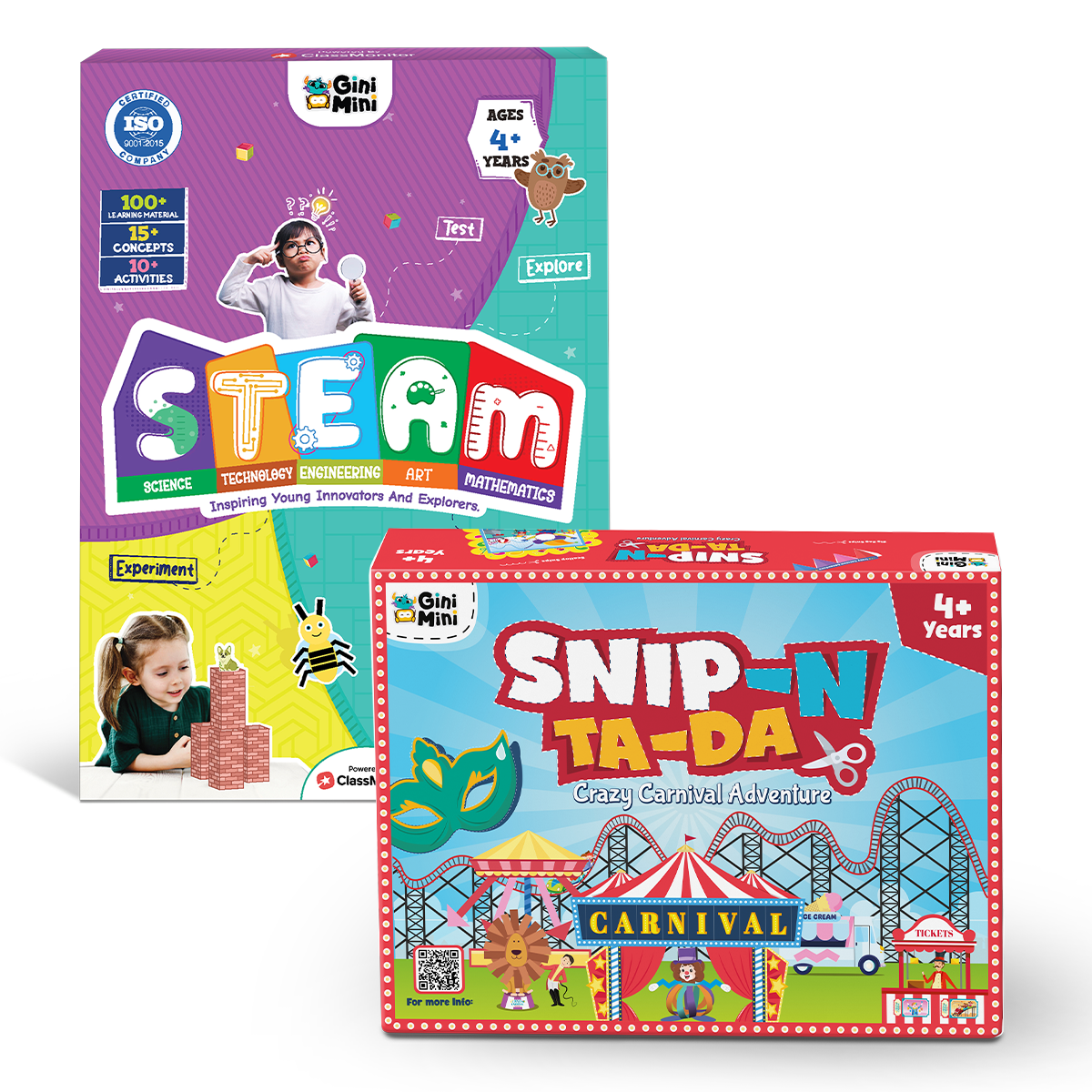
Helpful Resource: Hands-on craft packs like GiniMini's Snip 'N' Ta-Da! Scissor Skills Activity transform fine-motor muscle conditioning into an imaginative carnival craft adventure.
3. Transition from Abstract Math to Tactile Counting Games
Preschoolers and early primary students think in concrete, three-dimensional terms. Presenting math as abstract numbers on a page (such as 3 + 2 = 5) often triggers cognitive shutdown because the child cannot mentally visualize the quantities.

-
Explanation: Tactile numeracy tools replace abstract symbols with colorful physical items. Dropping tokens, sorting by color, and pressing counters engage visual, tactile, and kinesthetic pathways simultaneously, making mathematical relationships obvious and fun.
-
Developmental Benefits: Establishes one-to-one number correspondence, reinforces subitizing (recognizing quantities instantly), improves pattern recognition, and eliminates math anxiety.
-
Helpful Resource: Screen-free counting kits like GiniMini's DOT POP Colour & Counting Activity Kit provide an intuitive, hands-on way for toddlers and preschoolers to master early math concepts.
4. Encourage Spatial Problem-Solving with Self-Correcting Puzzles
When an adult stands over a child telling them their answer is wrong, the child feels judged. Puzzles provide an objective learning environment where the physical material itself provides feedback.

-
Explanation: Multi-piece jigsaw puzzles, animal matching games, and image hunts encourage children to observe shapes, examine details, and test hypotheses. If a puzzle piece does not fit, the child naturally turns it around without needing an adult to point out an error.
-
Developmental Benefits: Cultivates frustration tolerance, spatial reasoning, visual discrimination, and independent deduction.
-
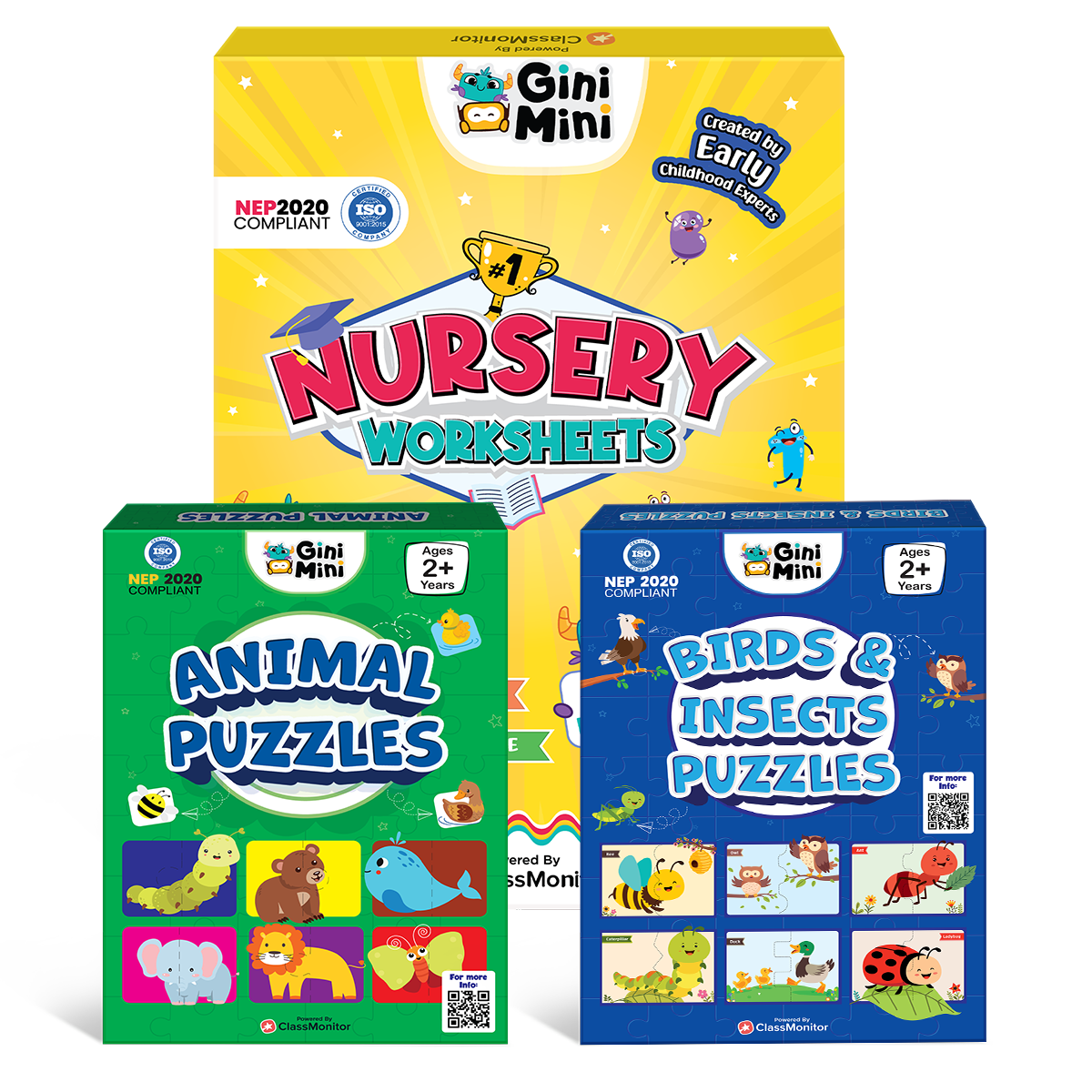
Helpful Resource: Multi-level kits such as GiniMini's Jungle Jumble 3-in-1 Animal Puzzle & Game integrate observation hunts and guessing games, helping children build sustained attention through play.
5. Re-Engage Reluctant Learners with Multisensory Story Art
Rigid memorization often stifles a child's intrinsic expressive drive. Combining storytelling with sensory art invites hesitant children back to learning through creativity, color, and touch.
-
Explanation: Multisensory craft projects allow children to manipulate textures, experiment with paint, and bring story characters to life with their own hands. Because there is no single "correct" answer in art, children shed their fear of failure and rediscover the joy of creating.
-
Developmental Benefits: Stimulates sensory integration, develops finger strength through tactile manipulation, and encourages language development through narrative exploration.
-
Helpful Resource: Creative discovery packs like GiniMini's Tiny Prints Sensory Art & Story Adventure merge storytelling with sensory painting to build confidence in young learners.
Supporting Explanation: The Science of Hands-On Learning

Early childhood learning cannot be separated from physical play. Neurological studies demonstrate that when young children physically manipulate objects—whether sliding a wooden puzzle piece, squeezing play-dough, or tracing an erasable card—their brains light up across sensory, motor, and cognitive cortices simultaneously.
The American Academy of Pediatrics (AAP) notes that experiential play is essential for developing executive function skills. A child who practices counting using physical cards or sorting colored tokens is not taking a shortcut around "real" learning; they are laying the neurological bedrock for higher-level mathematical and linguistic abstraction. When activities align with a child's natural developmental architecture, resistance dissolves because learning feels like play.
How Does Play-Based Learning Benefit Children?
Switching from forced drills to structured, play-based learning transforms a child's long-term educational trajectory:
-
Fosters Intrinsic Motivation: When children feel capable and experience the joy of discovery, they pursue learning out of curiosity rather than compliance.
-
Eliminates Academic Anxiety: Low-stakes, erasable, and manipulative activities remove the fear of making mistakes, encouraging resilience and experimentation.
-
Accelerates Skill Retention: Concepts introduced through multi-sensory experiences (touch, sight, movement) are stored in long-term memory far more securely than rote memorization.
-
Promotes Screen-Free Engagement: Tactile activity kits provide hours of focused, offline immersion, countering the attention fragmentation caused by digital devices.
Expert Tips / Parent Tips for Homework Time
-
Offer Micro-Choices to Restore Autonomy: Prevent power struggles by offering small, structured options. Ask: "Do you want to practice your tracing cards on the floor or at the small table?" or "Should we do the scissor craft first or the counting game first?"
-
Implement the "Micro-Win" Routine: If a child feels overwhelmed, scale the task down to three minutes or a single challenge. Experiencing a quick success releases dopamine, reducing anxiety and making it easier to continue.
-
Praise Effort and Strategy, Never Fixed Traits: Avoid generic praise like "You are so smart." Instead, say: "I love how you kept trying different angles until that puzzle piece clicked in." This builds a growth mindset and resilience.
-
Decompress Before Learning: Never demand that a young child transition straight from school or daycare into table work. Give them 30 to 45 minutes of active physical play, outdoor time, and a protein-rich snack to recharge their nervous system.
-
Know When to Seek Professional Support: If learning avoidance is accompanied by severe emotional meltdowns, chronic pencil-grip pain past age 5, or an inability to identify rhyming patterns or simple shapes, consult a pediatrician or early childhood occupational therapist to screen for sensory processing or developmental delays.
Frequently Asked Questions
Why does my 4-year-old refuse to sit and write?
At age 4, children’s hand bones and wrist muscles are still developing. Forcing pencil-and-paper drills often causes physical fatigue. Focus on pre-writing activities, play-dough pinching, and scissor cutting crafts to build finger strength naturally before reintroducing letter tracing.
How can I make learning fun for a child who hates worksheets?
Replace flat paper worksheets with screen-free, hands-on learning kits such as wipe-clean reusable tracing cards, tactile counting games, and interactive puzzles. When learning incorporates physical manipulation and immediate self-correction, resistance drops.
Is it normal for preschoolers to dislike formal study?
Yes. Developmentally, young children learn through movement, sensory exploration, and play. Expecting a child under age 7 to sit quietly and complete repetitive drills runs contrary to their developmental needs.
How do I know if my child's learning resistance is a sign of ADHD or a learning delay?
If a child consistently shows severe distress across multiple environments, struggles significantly with basic fine-motor tools like scissors past age 5, or cannot follow simple two-step instructions, speak with your pediatrician or an early childhood specialist for a comprehensive developmental evaluation.
Recommended GiniMini Blogs
-
Why Sensory Play Keeps Little Minds Curious — Explore how tactile, sensory experiences nurture creativity, curiosity, and cognitive problem-solving in early childhood.
-
How Play Teaches Children to Solve Problems Independently — Learn how puzzles, games, and creative challenges help young learners develop resilience and critical thinking skills on their own.