
An activity kit for kids can be much more than a box of materials. With the right activities, one simple kit can help children build problem-solving, fine motor, creativity, early math, communication, and independent learning skills—all through hands-on play.
Parents often wonder whether an activity kit for kids is really teaching anything or simply keeping children busy. The answer depends on how children use the materials. A thoughtfully designed kit can encourage them to explore, create, solve problems, count, communicate, and try again—all through hands-on play. Instead of treating every skill as a separate lesson, one meaningful activity can support several areas of development at once.
Why Can One Activity Kit Teach More Than One Skill?
Young children rarely learn in neatly separated categories. When they build something, for example, they may be using their hands, thinking about shapes, making decisions, counting pieces, and explaining what they have created at the same time.
This is one reason learning activity kits for kids can be useful at home. They give children a structured starting point while still leaving room for exploration.
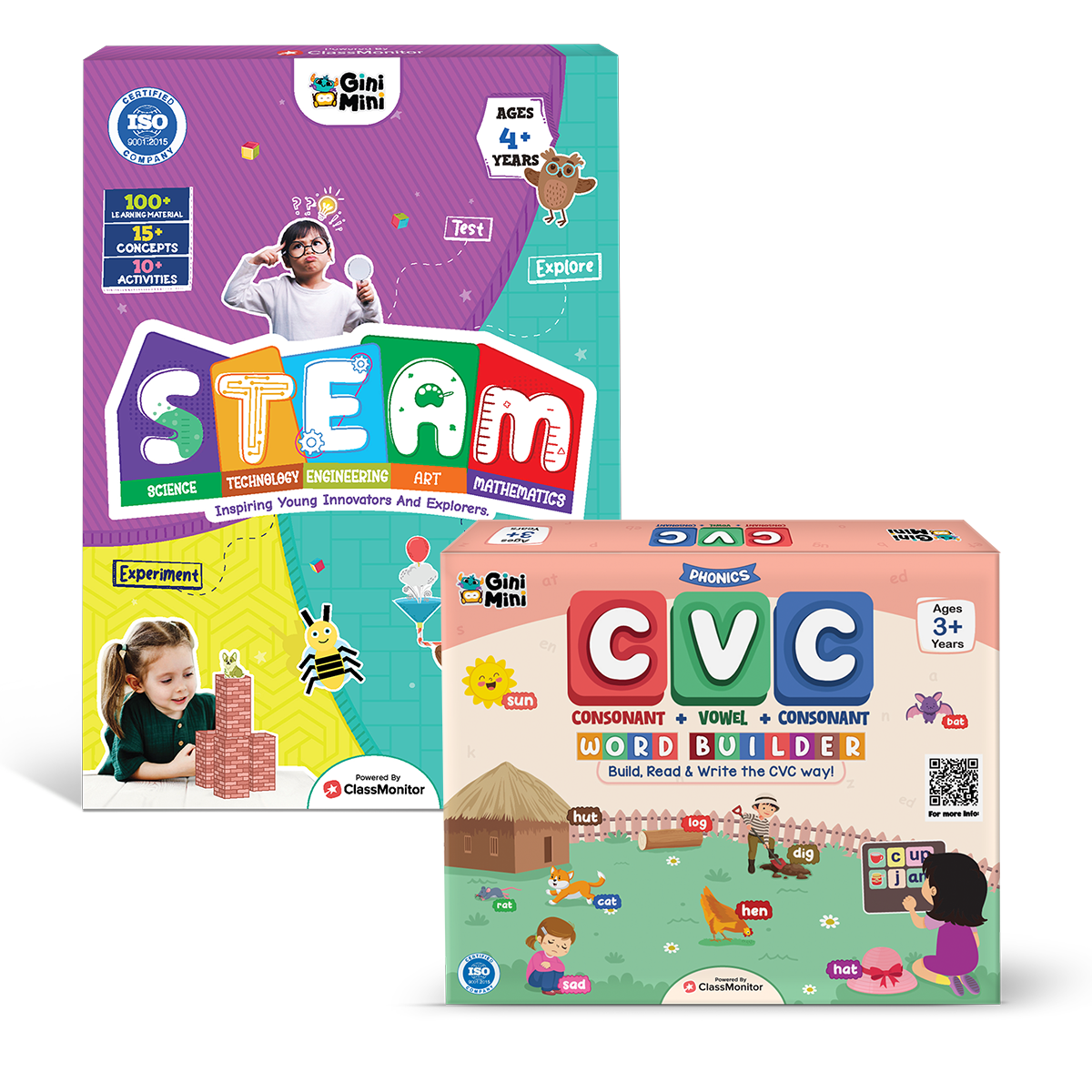
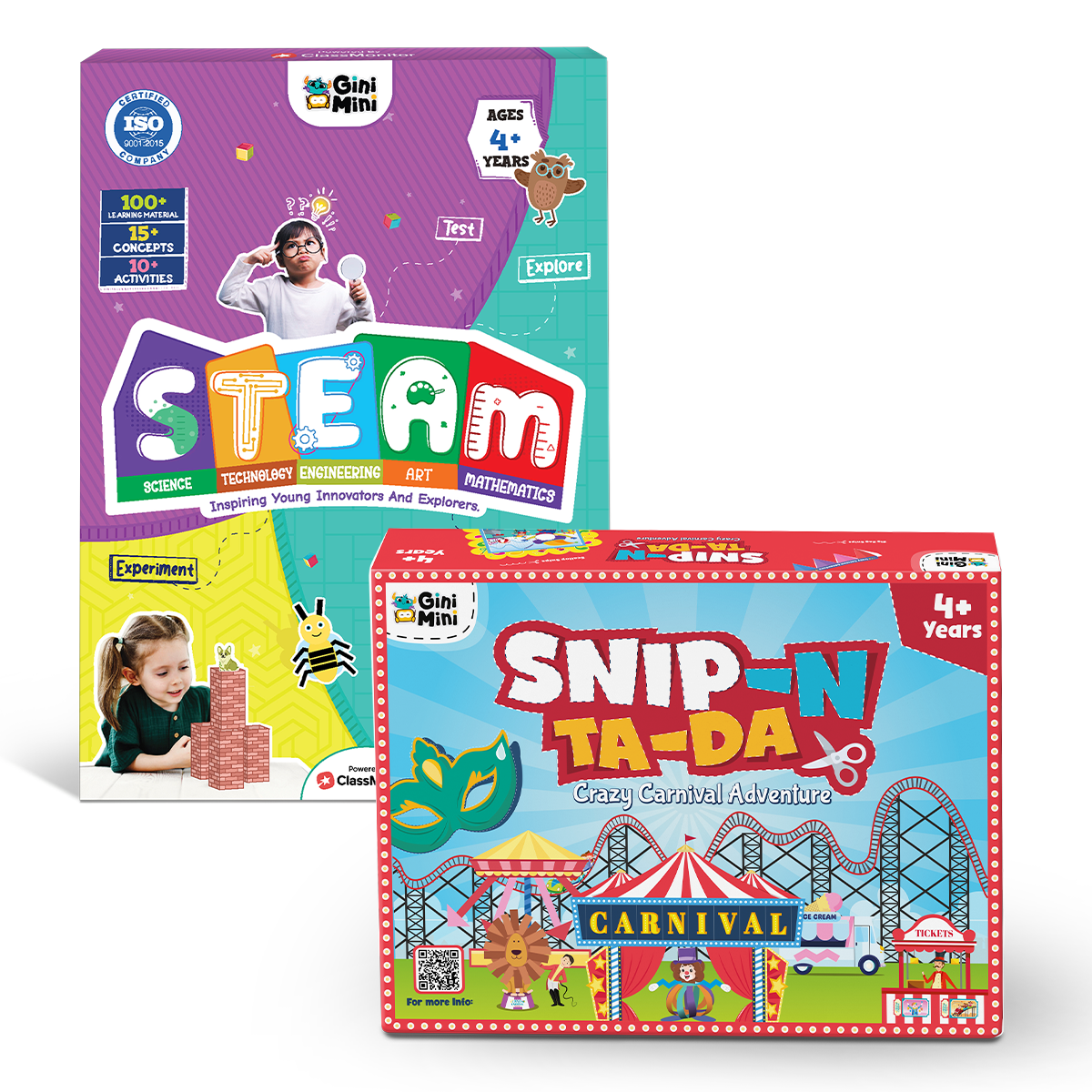
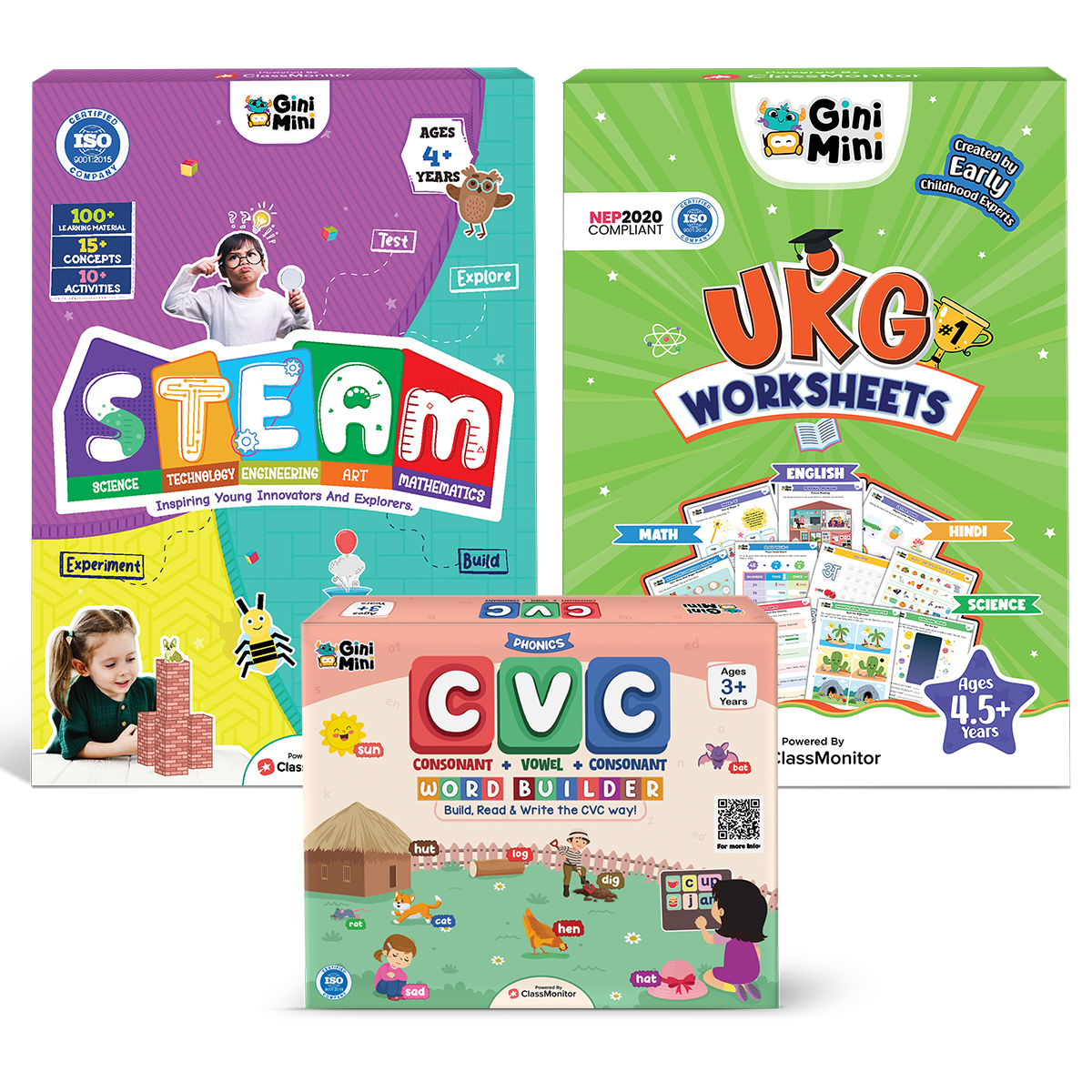
GiniMini follows this hands-on approach across its range of learning experiences. Its STEAM Kit, for example, is designed for children aged 4+ and includes 15+ concepts, 10+ hands-on activities, and 100+ learning materials, with skills such as planning and design, scientific inquiry, mathematical thinking, reflection, questioning, creativity, and early engineering concepts.
So, what can one activity kit actually teach?
Five Skills Hidden Inside a Simple Activity Kit
1. Problem-Solving Skills
Give a child a challenge without immediately giving them the answer, and something interesting happens: they have to think.
They may try one approach, discover that it does not work, change their plan, and try again. This simple process builds problem-solving skills for kids. They begin to understand that problems can have multiple possible solutions and that getting something wrong is not necessarily the end of the activity.
Challenge cards, building tasks, puzzles, experiments, and open-ended activities are particularly useful because they encourage children to make decisions rather than simply follow instructions.

A hands-on STEAM activity kit for kids can bring science, creativity, mathematical thinking, and problem-solving together through playful challenges.
2. Early Math and Logical Thinking
Math does not always have to begin with numbers written on a worksheet.
Children encounter mathematical thinking when they compare sizes, count objects, recognise patterns, sort materials, identify shapes, sequence steps, or work out how many pieces they need.
An educational activity kit for kids can turn these moments into playful early math experiences. For example, a child might count materials before beginning an activity, compare two objects, create a repeating pattern, or decide which piece belongs where.
GiniMini's activity range includes products designed around counting, colour recognition, pattern building, shapes, and logical thinking. Its DOT POP activity kits, for instance, combine counters, cards, mats, and pattern activities to support counting, sorting, pattern recognition, fine motor skills, focus, and logical thinking.
For younger learners, activities such as Numberful Picnic Day can turn counting and early number concepts into hands-on play.

3. Fine Motor Skills and Coordination
Small hands need opportunities to practise controlled movements. Picking up pieces, placing objects, threading, arranging, rolling, drawing, cutting, or manipulating materials all require coordination.
These everyday actions can strengthen fine motor skills for kids, hand-eye coordination, finger control, and the foundations needed for later tasks such as writing.
Activities such as A Day in the Sun Lacing Activity give children opportunities to practise fine motor control, hand-eye coordination, pincer grip, and concentration.
The beauty of activity kits is that children often do not realise they are practising a developmental skill. They are simply trying to complete the next part of the activity.
4. Creativity and Imagination
Not every activity needs to have one correct answer.
When children are given materials and some freedom to decide what to make, they begin to experiment with ideas. They may change the design, combine materials differently, invent a story, or create something completely different from what the parent expected.
This is where creative activities for kids become particularly valuable. Creativity is not only about making something visually appealing. It involves generating ideas, making choices, adapting plans, and expressing yourself.
Open-ended creative activities, such as GiniMini's Origami DIY Craft Kit, give children opportunities to experiment, create, and develop imagination while working with their hands.

5. Communication, Questioning, and Confidence
There is another skill hiding inside many hands-on activities: communication.
Ask a child, “What are you making?” or “Why did you choose that piece?” and the activity suddenly becomes a conversation. Children get opportunities to describe what they see, explain their choices, predict what might happen, and listen to another person's ideas.
This can support vocabulary, questioning, reasoning, and confidence in expressing thoughts.

A parent does not need to turn the activity into an interview. Even simple questions such as “What do you think will happen?”, “What could we try differently?”, or “Tell me about what you made” can extend the learning.
For more ideas, explore How to Make Screen-Free Activities Feel Exciting Again.
The Real Value of an Activity Kit Is What Happens Beyond the Box
The materials themselves are only one part of the experience.
A child might use an activity kit for twenty minutes, but the skills practised during that time can appear again elsewhere. A child who learns to compare shapes may notice shapes around the house. A child who practises patterns may start spotting patterns in clothing, tiles, or nature. A child who learns to keep trying after a failed attempt may become more comfortable approaching a new puzzle or challenge.
That is why hands-on learning activities can be so powerful. They connect ideas with action.
Instead of simply hearing about a concept, children get to touch it, move it, change it, test it, and experience the result.
How Do Activity Kits Benefit Children?
A thoughtfully designed activity kit for kids can support several developmental areas at once. It can encourage cognitive development through problem-solving and reasoning, physical development through fine motor practice, creativity through open-ended exploration, early academic understanding through numbers and patterns, and social-emotional growth through communication and shared play.
It can also encourage independent learning.
When a child knows how to begin an activity and has age-appropriate materials available, they can gradually take more ownership of the experience. Instead of waiting for an adult to demonstrate every step, they can look at a challenge, make a prediction, try something, and decide what to do next.
That small shift—from “Tell me what to do” to “Let me try”—can be meaningful.
Parent Tips: Get More Learning From One Activity Kit
You do not need to complete every activity exactly as instructed. Let your child explore the materials and see where their curiosity takes them.
Try asking open-ended questions instead of immediately correcting mistakes. “What could you try next?” is often more useful than “That's wrong.”
Avoid focusing only on whether the final result looks right. Pay attention to the process: Did your child make a plan? Did they notice a pattern? Did they keep trying? Did they explain their idea?
You can also extend the activity into everyday life. If your child is working with shapes, look for shapes around the house. If they are practising counting, count toys during cleanup. If they are exploring patterns, make a simple pattern together using household objects.
Most importantly, give children time. An activity kit does not need to be finished in one sitting. Repeating an activity, changing the rules, or trying a different approach can create new learning opportunities.

One Box Can Become Many Learning Experiences
A good educational activity kit for kids is not valuable simply because it contains many pieces. Its real value lies in what those pieces encourage a child to think, create, explore, and communicate.
One box can become a math activity, a problem-solving challenge, a fine motor exercise, a creative project, and a conversation starter.
And perhaps that is the bigger idea behind play-based learning: children do not always need five separate lessons to practise five different skills. Sometimes, one meaningful activity is enough to bring them together.
At GiniMini, the focus is on creating playful, hands-on learning experiences that help children explore skills through doing rather than simply being told. From STEAM activities and puzzles to clay, drawing, lacing, and early learning games, the goal is to make learning feel active, engaging, and age-appropriate.
Frequently Asked Questions
What should I look for in an activity kit for kids?
Look for age-appropriate materials, clear instructions, opportunities for hands-on exploration, and activities that encourage more than one skill. Kits that allow children to make choices and solve problems can provide richer learning experiences.
Are educational activity kits better than worksheets?
They serve different purposes. Worksheets can provide focused practice, while activity kits can offer hands-on opportunities to explore, experiment, create, and apply concepts. Using both thoughtfully can support different types of learning.
What skills can children develop through activity kits?
Depending on the activity, children can practise fine motor skills, early math, language and communication, creativity, observation, problem-solving, logical thinking, focus, and independent learning.
Can activity kits support independent play?
Yes. Age-appropriate kits with clear activity prompts can give children a starting point for exploring independently. Parents can gradually step back while remaining available when children need support.
How can parents make activity kits more educational?
Instead of giving children all the answers, ask questions, encourage them to explain their thinking, allow them to experiment, and connect the activity to everyday experiences.

Recommended GiniMini Reads
If you enjoy exploring how simple activities can support children's development, you may also like: