
Looking for craft activities for kids that are more than just a way to keep little hands busy? Discover 7 simple ways to turn art and craft time into meaningful learning experiences that build creativity, fine motor skills, language, problem-solving, confidence, and early learning skills.
For children, craft time can look like nothing more than paper, crayons, clay, scissors, stickers, and a little bit of mess. But when parents look closely, something much bigger is happening. A child choosing colours, cutting shapes, creating a character, folding paper, or building a picture is making decisions, solving small problems, strengthening hand muscles, and expressing ideas.
That is what makes craft activities for kids so valuable. They do not have to feel like a lesson to support learning. In fact, children often learn best when they are actively creating, experimenting, and making something of their own.
At GiniMini, learning is built around playful and enriching experiences that encourage children's natural curiosity and help develop essential skills. Its approach combines play with hands-on learning, creativity, and age-appropriate activities.
So, how can parents turn ordinary craft time into an opportunity for learning? Here are seven simple ways to get started.
Why Is Turning Craft Time Into Learning Important?
Arts and crafts for kids can support several areas of development at the same time. Drawing and colouring encourage creative expression, while cutting, folding, sticking, and shaping materials give children opportunities to practise fine motor control and hand-eye coordination.
Crafting can also become a natural setting for conversations. Parents can introduce new vocabulary, ask open-ended questions, encourage children to explain their choices, or turn a simple craft into a story.
The key is not to make every craft activity academic. Instead, parents can add small learning opportunities while allowing children to enjoy the creative process.
What Are the Best Ways to Turn Craft Time Into Learning Time?
1. Add Early Math to Craft Activities
Crafting can become a simple math activity for kids without looking like one.
Ask your child to count buttons, compare the number of stickers, sort materials by colour, identify shapes, or create repeating patterns. When making a paper decoration, for example, you could ask them to create a pattern using two or three colours.
For younger children, counting and colour sorting are useful starting points. Older preschoolers can explore shapes, sequences, symmetry, size comparisons, and simple measurements.
Benefits: Craft-based math activities can encourage counting, pattern recognition, classification, spatial awareness, and logical thinking.

2. Build Fine Motor Skills Through Cutting, Folding, and Sticking
Small hands need plenty of opportunities to practise controlled movements. Cutting paper, peeling stickers, folding paper, threading materials, rolling clay, and placing small objects can all turn craft time into fine motor activities for kids.
The important thing is to choose activities appropriate for your child's age and supervise tools such as scissors.
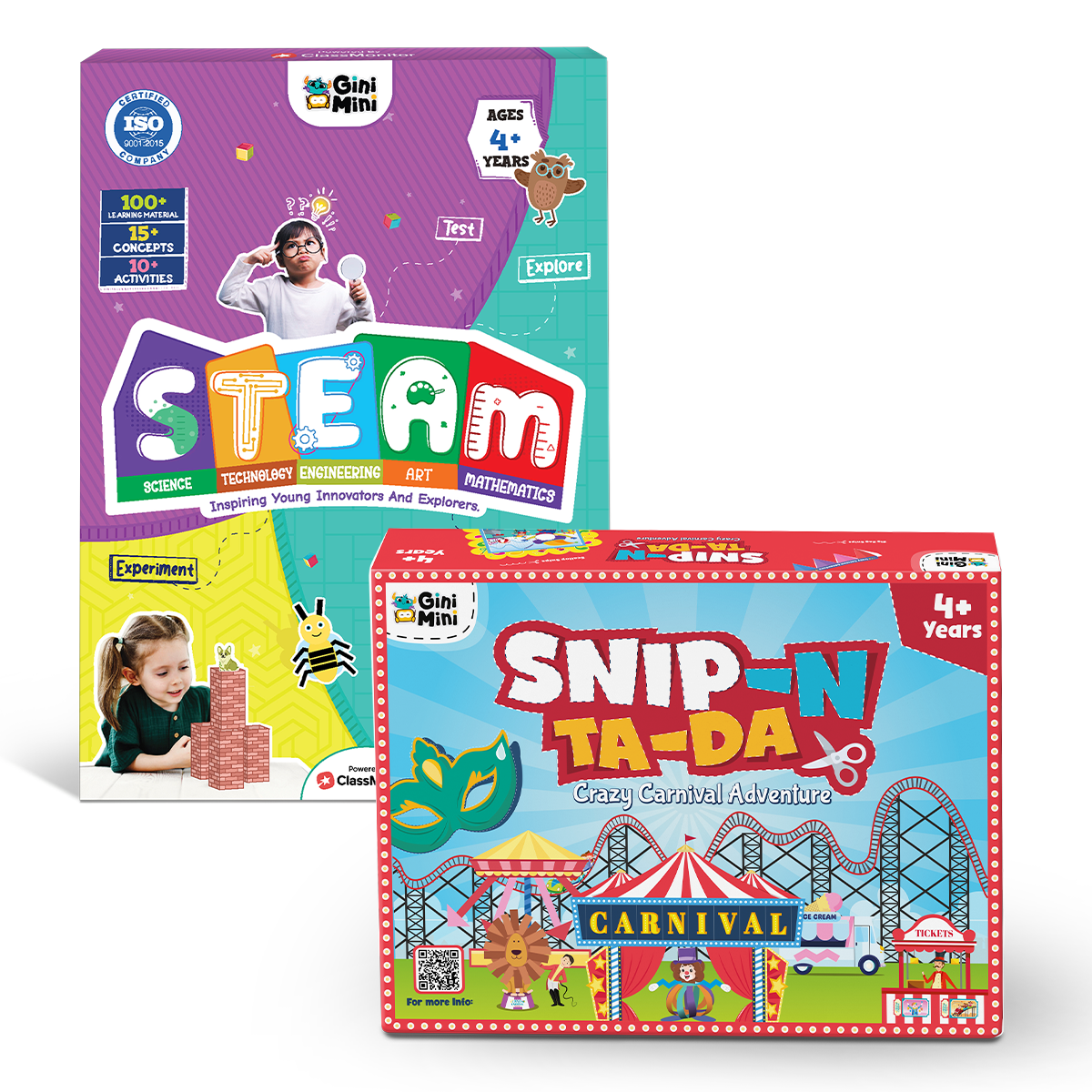
GiniMini's Snip 'N' Ta-Da! Crazy Carnival is one example of a hands-on activity designed around scissor practice. The kit turns cutting challenges into playful activities, helping children practise cutting while creating carnival-themed characters and objects.
Benefits: These activities can support hand strength, coordination, precision, hand-eye coordination, and skills needed for later writing.

3. Turn a Craft Into a Storytelling Activity
A paper character can become the beginning of a story.
After your child creates an animal, person, puppet, or imaginary creature, ask questions such as, “What is its name?”, “Where does it live?”, “What happened today?”, or “What happens next?”
You can even create three simple craft scenes representing the beginning, middle, and end of a story. This transforms creative activities for kids into opportunities to develop language and narrative thinking.
GiniMini's Origami Story Theatre combines origami, storytelling, and pretend play. The kit includes story mats and prompt cards and focuses on skills such as storytelling, expression, sequencing, communication, creativity, and fine motor development.
Benefits: Story-based crafts can encourage vocabulary, communication, sequencing, imagination, and confidence in expressing ideas.

4. Use Crafting to Explore Science and Nature
Craft time does not have to stay indoors or focus only on art.
Collect leaves, observe flowers, make a simple paper butterfly, create a weather wheel, or build a model of the solar system. While crafting, talk about what your child notices.
For example, while making a paper tree, ask why leaves are different colours, what plants need to grow, or which animals might live in trees.
This turns a simple project into a hands-on learning activity for kids and gives children a reason to observe the world around them.
Benefits: Nature-based crafts can encourage observation, questioning, vocabulary, creativity, and early scientific thinking.

5. Let Your Child Create Their Own Design
One of the easiest ways to turn craft time into meaningful learning is to stop giving children every step.
Instead of saying, “Make it exactly like this,” give them a simple challenge: “Can you make a house for this animal?” or “Can you design a vehicle that can travel underwater?”
There may be ten different answers, and that is exactly the point.
Open-ended craft activities allow children to make choices, test ideas, change their designs, and decide what they want their final creation to look like.
Benefits: This approach supports creativity, decision-making, problem-solving, independence, and confidence.

6. Introduce Sensory Learning Through Clay and Tactile Crafts
Craft materials do not always have to be paper-based. Clay, dough, textured materials, and other tactile activities can give children another way to explore and create.
Rolling, squishing, pressing, shaping, and arranging clay can be combined with colour recognition, counting, shapes, patterns, and imaginative play.
GiniMini's Clay-O-Pedia is a 12-in-1 sensory activity kit for children aged 3–6, combining clay activities with early math, patterns, problem-solving, creativity, fine motor skills, and hand-eye coordination.
Benefits: Sensory craft activities can support fine motor development, creativity, tactile exploration, early math concepts, and problem-solving.

7. Turn Stickers and Paper Crafts Into Language Games
You do not need complicated materials to encourage language development.
Give your child a few stickers and ask them to create a scene. Once the picture is ready, encourage them to describe what is happening. You can introduce new words, ask them to name objects, or invite them to make up a short story.
GiniMini's Stick-A-Story uses stickers and illustrated story mats to encourage children to create scenes and stories while developing vocabulary, early language skills, fine motor control, and sequencing.
Benefits: These activities can support vocabulary, storytelling, communication, imagination, sequencing, and concentration.
How Does Craft Time Benefit Children's Development?
The biggest advantage of learning through crafts is that several skills can develop within one activity.
A child cutting paper may be strengthening fine motor skills. At the same time, they might be following instructions, identifying shapes, making choices, and talking about what they are creating.
A child making a puppet might be practising hand coordination while also developing vocabulary and storytelling skills. A child creating a pattern may be exploring early mathematical thinking without completing a single worksheet.
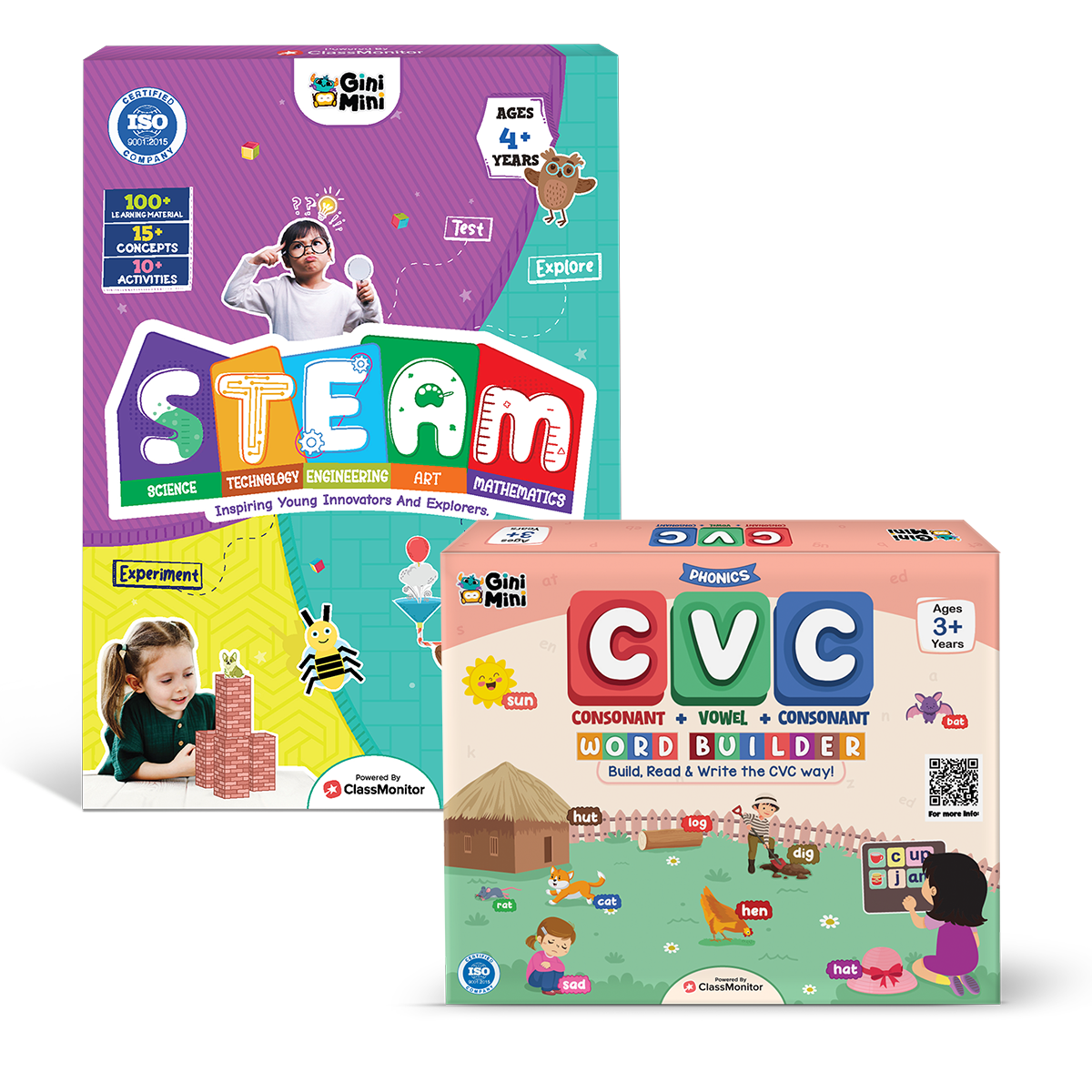
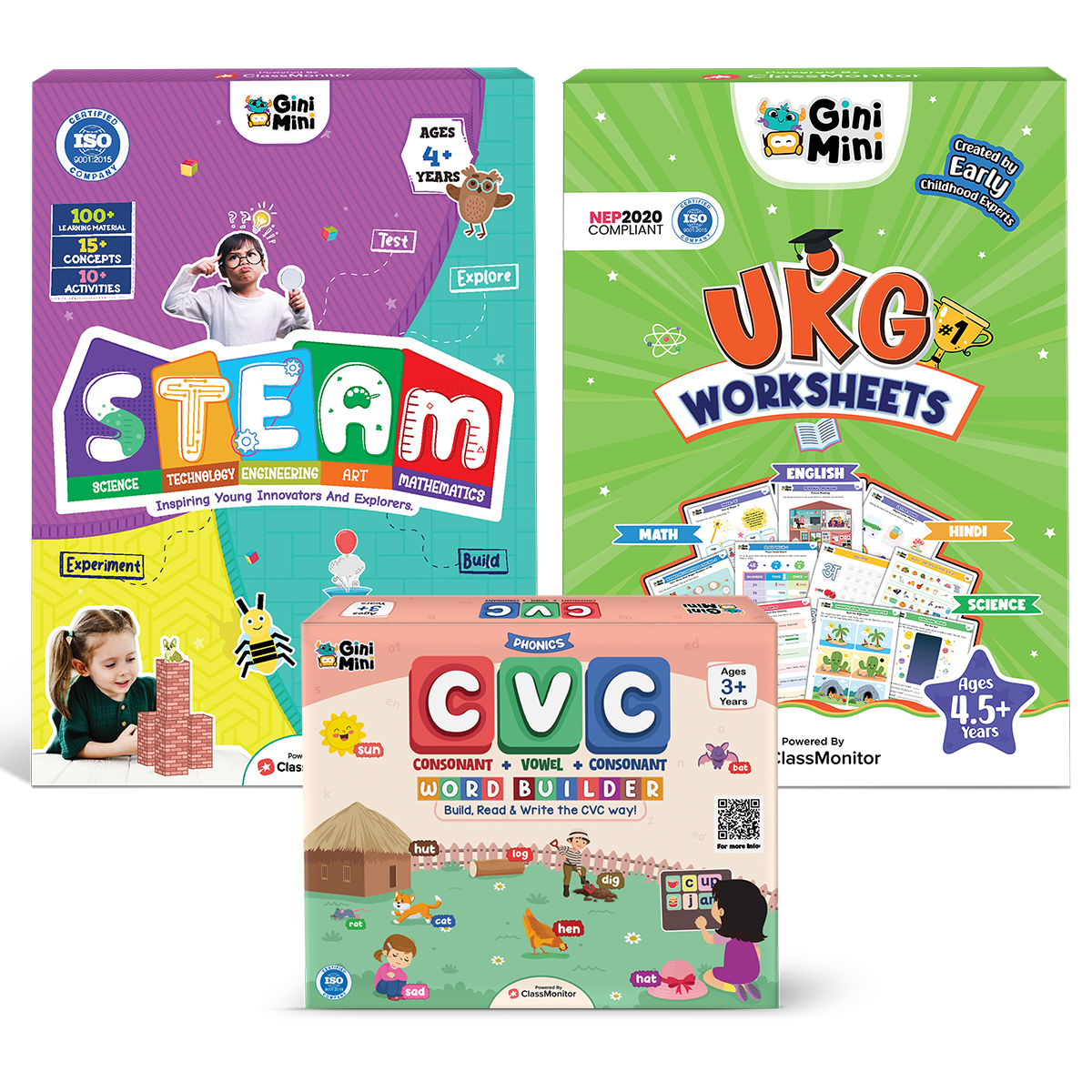
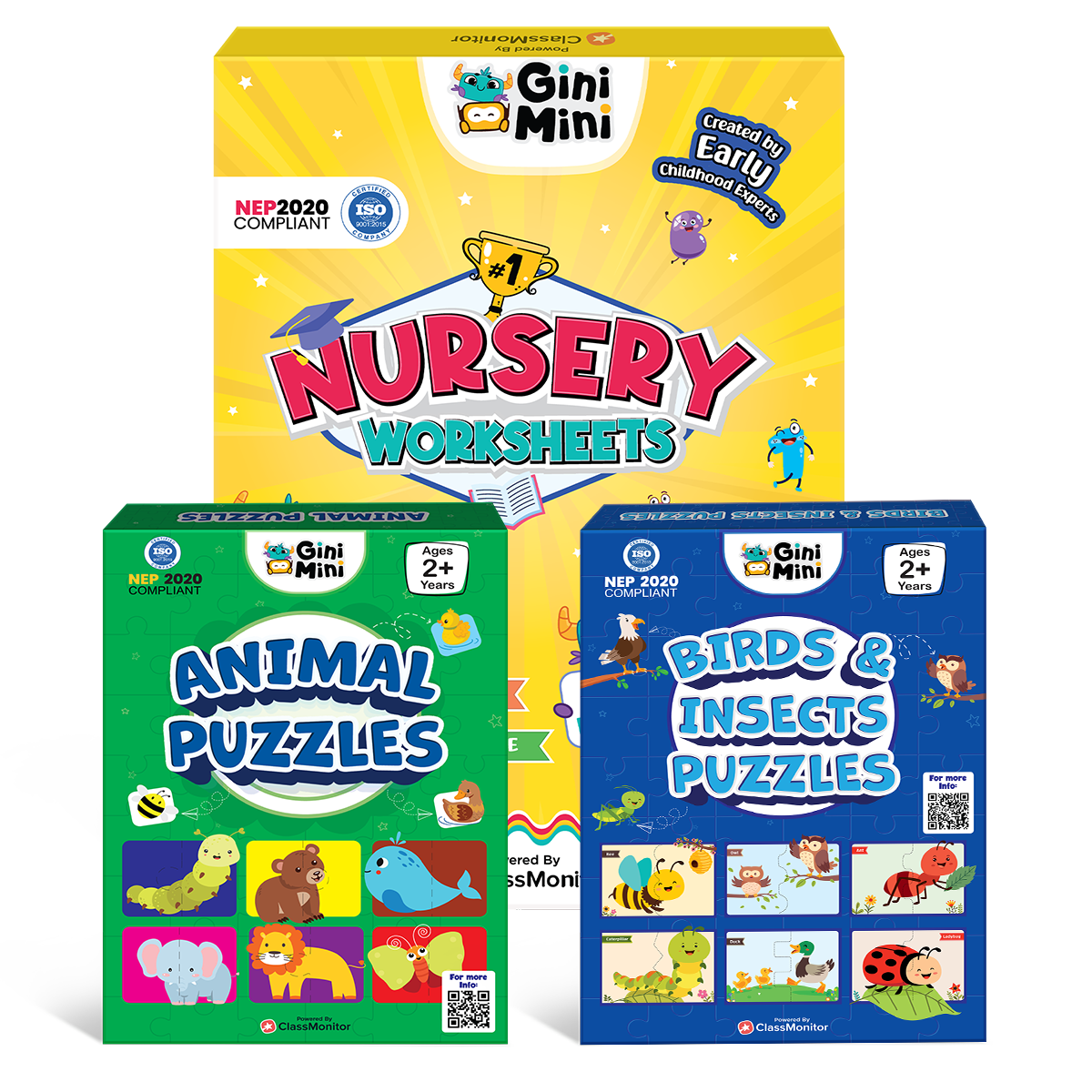
This is the value of play-based learning: the learning is integrated into an activity children already enjoy. GiniMini's current product range includes creative, sensory, storytelling, puzzle, STEAM, and other hands-on learning experiences designed to make learning interactive and playful.
Expert Tips for Making Craft Time More Meaningful
Follow Your Child's Interests
If your child loves animals, create animal crafts. If they love space, make planets and rockets. If they enjoy stories, create characters and story scenes. Children's existing interests can make creative learning more engaging.
Ask Questions Instead of Giving Answers
Try asking, “What are you making?”, “Why did you choose that colour?”, “What could you add?”, or “What do you think will happen next?” Open-ended questions encourage children to think and communicate.
Don't Focus on Making It Perfect
The goal of children's crafts is not a perfect final product. Give children room to experiment, make mistakes, change their ideas, and create something that feels like their own.
Keep It Age-Appropriate
Choose materials and instructions based on your child's age and abilities. Younger children may benefit from larger pieces and simple activities, while older preschoolers can handle more detailed challenges with appropriate supervision.
Let the Learning Happen Naturally
You don't need to turn every craft into a formal lesson. Sometimes the most valuable part is simply allowing your child to explore, create, talk, and enjoy the process.
What Makes Craft Activities Good Learning Activities for Kids?
The best educational craft activities for kids are not necessarily the most complicated ones. They are activities that give children opportunities to create, make choices, explore materials, communicate ideas, and solve small challenges.
A cardboard box can become a rocket. A few paper shapes can become an animal. Clay can become numbers, food, characters, or anything a child imagines.
When parents look beyond the finished craft and notice the thinking happening along the way, everyday creativity becomes a meaningful learning opportunity.
At GiniMini, this idea fits naturally with a play-based philosophy focused on joyful, enriching experiences that nurture children's curiosity and skills.
Craft time does not have to be separate from learning time.
With a few thoughtful questions and small changes, colouring can become vocabulary practice, cutting can support fine motor development, patterns can introduce math, and storytelling crafts can build communication skills.
Most importantly, children get to learn by doing, creating, experimenting, and imagining.
So the next time your child reaches for paper, crayons, clay, or stickers, don't worry about whether they are “just crafting.” They may already be learning more than you think.
FAQs
What do children learn from craft activities?
Craft activities can support creativity, fine motor skills, hand-eye coordination, communication, vocabulary, problem-solving, concentration, and early mathematical thinking.
How can I make craft activities educational?
You can add learning naturally by asking children to count materials, identify colours and shapes, create patterns, describe their creations, tell stories, or solve simple design challenges.
What are good craft activities for preschoolers?
Simple activities such as colouring, sticker scenes, clay play, paper crafts, cutting practice, folding, and storytelling crafts can be suitable for preschoolers when matched to their age and abilities.
Can crafts help develop fine motor skills?
Yes. Activities such as cutting, peeling stickers, folding, threading, rolling clay, drawing, and placing small pieces can provide opportunities to practise fine motor control.
How can parents encourage creativity without taking over?
Give children a simple starting point or challenge, then let them decide how to complete it. Avoid correcting every detail and allow them to experiment with their own ideas.

Recommended GiniMini Reads
-
How to Keep Kids Busy at Home With Fun Screen-Free Activities — ideas for creative, educational, and screen-free activities at home.
-
Fun Weekend Activities for Kids to Enjoy at Home Together — creative crafts, building, puzzles, pretend play, and other family activities.
-
Discover Simple Ways to Reduce Screen Time for Kids Today — practical screen-free alternatives including drawing, colouring, crafts, puzzles, and building activities.